

SMITE : The Mythology Behind Gaming’s Most Divine Battle Arena
| Description | |
|---|---|
| Inspiration | Greek, Norse, Egyptian, Hindu, Mayan, Roman, Chinese |
| Developer | Hi-Rez Studios (video game), Roger & Sue Daniel (2005 board game) |
| Type | Video Game (MOBA), Board Game (Smite Tactics, God Smite), Wooden Outdoor Game |
| Release Year | 2005 (Wooden board game), 2014 (Video game), 2017 (Smite Tactics) |
| Storyline | Mythological gods battling for supremacy across pantheons |
Mythlok Perspective
In Mythlok’s Perspective, SMITE represents a modern mythological crossroads where gods from civilizations separated by geography and centuries share the same narrative space. While these deities never met in their original traditions, bringing them together highlights the universal roles they play as rulers, tricksters, protectors, warriors, and creators. Zeus, Odin, Amaterasu, and Ra belong to different cultures, yet each reflects humanity’s attempt to explain power, order, and the forces of nature. Across world mythologies, divine conflicts are rarely just battles for dominance, they symbolize competing ideals, cosmic balance, and the relationship between mortals and the sacred. SMITE reminds us that although myths differ in language and culture, they often explore the same timeless questions about power, destiny, and the human condition.
SMITE
Introduction
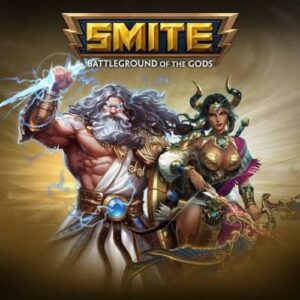
SMITE is one of the most recognizable mythology-inspired multiplayer games ever created. Developed by Hi-Rez Studios and first released in 2014, it transformed the Multiplayer Online Battle Arena (MOBA) genre by replacing the traditional top-down viewpoint with an immersive third-person perspective. Instead of commanding anonymous fantasy heroes, players step into the roles of gods, heroes, monsters, and legendary figures drawn from mythologies around the world.
What makes SMITE stand out is its commitment to making mythology the heart of the experience rather than simply using famous names for decoration. Every playable character is inspired by established myths, with abilities, visual designs, and personalities reflecting their legendary origins. While the game freely adapts ancient stories for competitive gameplay, it has also introduced millions of players to cultures and mythological traditions they might never have encountered otherwise.
Today, with an ever-growing roster of mythological characters and the arrival of SMITE 2, the franchise continues to demonstrate that ancient legends can thrive in modern interactive entertainment.
Game Overview
At its core, SMITE is a free-to-play team-based MOBA where two teams compete to destroy the opposing Titan while defending their own. Players select a mythological character before each match, with every god belonging to a specific class such as Warrior, Mage, Hunter, Guardian, or Assassin. Each role contributes differently to the team’s overall strategy.
The game’s flagship mode, Conquest, features three lanes connected by jungle paths filled with neutral objectives and powerful monsters. Success depends on teamwork, positioning, map awareness, and efficient resource management rather than individual combat alone. Players earn gold and experience throughout a match, allowing them to purchase items and strengthen their chosen deity as the battle progresses.
Unlike many MOBAs that rely on click-to-move controls from an overhead camera, SMITE places players directly behind their chosen god. Most abilities require manual aiming, making positioning, movement, and timing feel more like an action game than a traditional strategy title. This unique perspective has remained one of the franchise’s defining features and continues to distinguish it within the competitive gaming landscape.
Mythological Inspirations
The defining strength of SMITE lies in its remarkable celebration of world mythology. Instead of focusing solely on Greek legends, the game features characters from numerous traditions, including Greek, Roman, Norse, Egyptian, Celtic, Chinese, Japanese, Hindu, Slavic, Babylonian, Arthurian, Yoruba, Polynesian, Maya, Voodoo, and Great Old Ones inspired by the works of H. P. Lovecraft.
This diversity allows players to experience vastly different mythological traditions within a single universe. Greek gods like Zeus and Hades can fight alongside Norse warriors such as Thor and Odin, while Egyptian deities including Ra and Anubis battle Chinese legends like Sun Wukong or Japanese gods like Amaterasu.
The game also includes legendary heroes and mythical creatures alongside traditional deities. Figures such as Achilles, King Arthur, Merlin, Medusa, Baba Yaga, and Mulan demonstrate that mythology extends beyond gods alone. Although these characters originate from different literary and cultural traditions, SMITE unites them within a shared mythical arena that celebrates storytelling across civilizations.
It is worth noting that not every playable figure represents an ancient deity. The Great Old Ones pantheon, led by Cthulhu, comes from modern cosmic horror literature rather than historical mythology. While this addition sparked debate among mythology enthusiasts, it reflects the game’s broader vision of bringing together influential legendary beings from different traditions.
Characters
The diverse roster is one of SMITE’s greatest achievements. Every playable character has a distinct visual identity, combat style, and set of abilities inspired by their mythological background. Rather than simply assigning generic attacks, the developers often translate famous myths into gameplay mechanics.
Zeus commands devastating lightning strikes that reflect his role as king of the Greek gods. Thor charges into battle wielding Mjölnir, using thunder-based attacks and powerful leaps reminiscent of Norse legends. Medusa’s signature ability allows her to petrify enemies by invoking the terrifying gaze described in Greek mythology.
Loki emphasizes stealth, deception, and sudden attacks, mirroring his reputation as the Norse trickster. Sun Wukong relies on agility, transformations, and unpredictable movement inspired by the Chinese classic Journey to the West. Egyptian gods such as Anubis draw upon themes of death, mummification, and the afterlife through abilities focused on curses and magical damage.
The roster continues to grow, with new gods regularly introduced from different cultures. Although gameplay balance sometimes requires departures from traditional stories, most characters remain immediately recognizable to anyone familiar with their myths.
Symbolism & Gameplay Mechanics
One of SMITE’s greatest strengths is how effectively it transforms mythological symbolism into gameplay mechanics. Rather than treating mythology as background decoration, the game allows each deity’s legendary attributes to shape how they play.
Storm gods wield lightning-based attacks, tricksters rely on deception, healing deities support allies, and gods associated with death often specialize in curses or life-draining abilities. These mechanical choices help reinforce each character’s mythological identity while giving players an intuitive understanding of their roles.
Character progression during matches also mirrors mythological narratives. As players gain experience, purchase powerful artifacts, and unlock stronger abilities, their chosen deity evolves into an increasingly formidable force. This gradual rise in power echoes many ancient stories in which divine beings unleash their full strength only during decisive confrontations.
The third-person perspective further enhances this symbolism by placing players directly within mythological battles. Instead of watching gods from a distant strategic viewpoint, players actively dodge attacks, aim divine powers, and engage in close-quarters combat. This creates a stronger sense of participating in legendary conflicts rather than merely observing them.
Cultural Impact
Since its launch, SMITE has played an important role in bringing mythology to mainstream gaming audiences. Millions of players have encountered gods and heroes from cultures they may never have studied in school, encouraging curiosity about the stories behind these legendary figures.
The game’s broad representation of global mythologies has also helped diversify the fantasy genre. While Greek and Norse mythology remain popular across entertainment, SMITE has introduced wider audiences to Yoruba deities, Polynesian legends, Babylonian gods, Slavic folklore, and many other traditions that are less frequently represented in major video games.
Its competitive esports scene further expanded the franchise’s influence. International tournaments, livestreams, and community discussions transformed mythological characters into familiar icons for players worldwide. For many fans, SMITE served as an entry point into researching the real myths that inspired their favorite characters.
Beyond gaming, the franchise has inspired novels, comics, merchandise, and an active fan community that continues to celebrate mythology through artwork, cosplay, and educational discussions.
Creative Liberties
Like most adaptations of mythology, SMITE prioritizes engaging gameplay over complete historical accuracy. Characters from civilizations separated by thousands of years fight side by side, while abilities are redesigned to create balanced competitive matches rather than faithfully reproduce ancient texts.
Some gods possess powers that differ from traditional myths, while others emphasize only the most recognizable aspects of their legends. These adaptations help ensure every character has a distinct role without overwhelming players with excessively complex lore.
The game’s crossover approach is also entirely fictional. There is no ancient source in which Zeus battles Amaterasu or Thor duels Anubis. These encounters exist purely to create an entertaining celebration of world mythology rather than a historically accurate retelling.
Even the inclusion of Lovecraft’s Cthulhu illustrates the developers’ willingness to expand beyond classical mythology into influential modern myth-making. Although this choice remains controversial among some scholars, it reflects the evolving nature of mythology in contemporary popular culture.
Ultimately, SMITE succeeds because it respects the identities of its mythological figures while embracing the creative freedom necessary for compelling gameplay. It is best understood as a mythological crossover that encourages players to explore the original stories behind its unforgettable cast.

Sources
Hi-Rez Studios. (n.d.). SMITE® on Steam. Steam. https://store.steampowered.com/app/386360/SMITE/
Hi-Rez Studios. (n.d.). What is SMITE? https://www.ksbe.edu/athletics/maui/What_is_SMITE_v2.3.pdf
Gillen, K. (2015, November 26). The making of a Smite god: from mythology to main stage. PCGamesN. https://www.pcgamesn.com/smite/how-smite-s-gods-go-from-mythology-to-main-stage
Gillen, K. (2014, September 17). Picking faith: how the Smite team turn gods into game mechanics. PCGamesN. https://www.pcgamesn.com/smite/picking-faith-how-the-smite-team-turn-gods-into-game-mechanics
Guenette, J. (2016, June 30). Smite (for PC). PCMag. https://uk.pcmag.com/pc-games/82662/smite-for-pc
Reuters. (n.d.). SMITE review coverage. GameReactor. https://www.gamereactor.eu/smite-review/
Smith, J. (2018, November 21). Merlin and Arthur will rub shoulders with the gods in Smite. PCGamesN. https://www.pcgamesn.com/smite/smite-gods-arthur-merlin
Smite (video game). (n.d.). Wikipedia. https://en.wikipedia.org/wiki/Smite_(video_game)
Frequently Asked Questions
What is SMITE?
SMITE is a free-to-play multiplayer online battle arena (MOBA) developed by Hi-Rez Studios where players control gods, heroes, and legendary figures from mythologies around the world in team-based battles.
Is SMITE based on real mythology?
Which mythologies are featured in SMITE?
How accurate is SMITE to mythology?
The game captures the identities and defining traits of many mythological figures but takes creative liberties with their powers, appearances, and interactions to ensure balanced and enjoyable gameplay.
What makes SMITE different from other MOBAs?
Unlike most MOBAs that use a top-down camera, SMITE features a third-person perspective with manual aiming, creating a more action-oriented experience while allowing players to fight as famous mythological gods and heroes.
