Prophetic Vision : Quetzalcoatl’s Divine Blessing of Cosmic Clarity
Listen
At a glance
| Description | |
|---|---|
| Mythology | Aztec Mythology |
| Bestowed Upon | Priests, rulers |
| Granted By | Quetzalcoatl |
| Primary Effect | Spiritual foresight and clarity |
| Conditions Attached | Ritual devotion, purity, humility, offering |
Mythlok Perspective
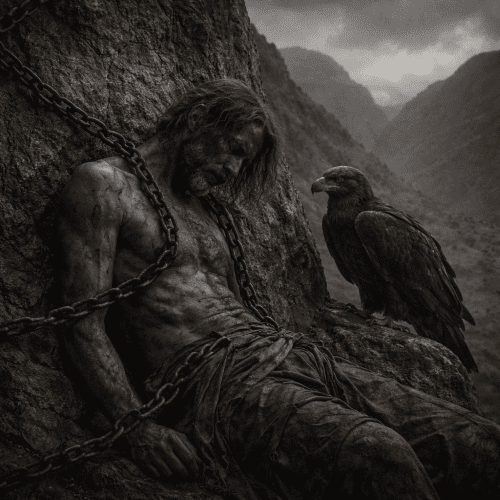
In Mythlok’s perspective, Quetzalcoatl’s Boon of Vision is less about prophecy and more about alignment. The Feathered Serpent represents the fusion of grounded instinct and elevated intellect. Unlike purely warrior deities, he symbolizes civilization through consciousness. Across cultures, similar archetypes emerge. The Greek Prometheus brings fire as enlightenment, while Odin sacrifices an eye for wisdom. Yet Quetzalcoatl’s gift feels more communal than individual. His vision sustains society itself, reminding us that true insight must serve balance, not ego.
Boon of Vision
Introduction
Among the great deities of Mesoamerican tradition, Quetzalcoatl stands as one of the most profound symbols of wisdom, wind, renewal, and sacred knowledge. Known as the Feathered Serpent, he embodies the union of earth and sky, instinct and intellect, matter and spirit. Across Aztec tradition and earlier Toltec influences, Quetzalcoatl was not merely a god of power but a bringer of civilization.
At the heart of his legacy lies what can be described as the Boon of Vision—a sacred empowerment associated with foresight, clarity, and spiritual awareness. While not recorded as a single named ritual in surviving codices, the concept emerges clearly through myths in which Quetzalcoatl grants knowledge, calendar wisdom, moral guidance, and cosmic understanding to humanity. This article explores the mythological foundations, spiritual meaning, and cultural legacy of what we call Quetzalcoatl’s Boon of Vision, understood through historical sources and symbolic interpretation.
Mythological Background
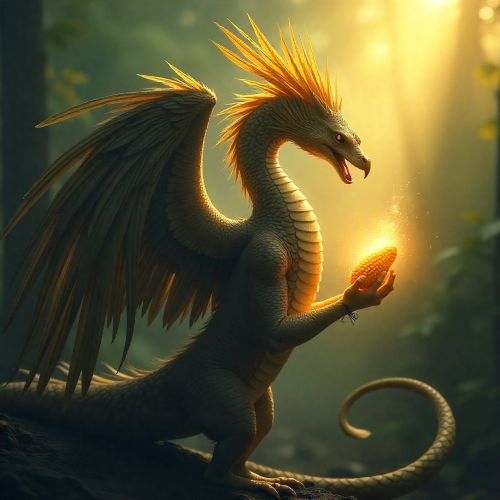
The name Quetzalcoatl combines quetzal, the brilliant green-feathered bird of Mesoamerica, and coatl, meaning serpent. The imagery is deliberate. The serpent represents earthly life and primal force, while the quetzal feathers evoke the heavens. Together, they form a being who bridges worlds.
In Aztec cosmology, Quetzalcoatl was a creator deity. He helped shape humanity in the current cosmic era by retrieving bones from the underworld and giving them life through his own blood sacrifice. He was also credited with bringing maize to humankind, establishing calendrical systems, and teaching arts such as writing, astronomy, and craftsmanship.
As the morning star, associated with Venus, Quetzalcoatl represented renewal after darkness. This celestial role reinforced his identity as a revealer of hidden cycles. Unlike war-centered deities such as Huitzilopochtli, Quetzalcoatl’s influence centered on knowledge, breath, and ethical order. His wind aspect, known as Ehecatl, symbolized invisible yet transformative force.
Within this framework, the Boon of Vision emerges naturally. A deity who governs wind, learning, and cosmic cycles becomes the divine source of insight and foresight.
Granting of the Boon/Blessing
The Boon of Vision was not a casual favor. In Aztec religious life, spiritual clarity required ritual discipline. Priests fasted, performed blood offerings, and engaged in ceremonial invocation to establish communion with the divine. Visionary experience was often connected to trance states, dream symbolism, and astronomical interpretation.
Quetzalcoatl, as patron of priests and scholars, was believed to inspire clarity through sacred breath. The wind, his domain, symbolized revelation. Just as wind parts clouds to reveal the sky, divine insight parts confusion to reveal truth.
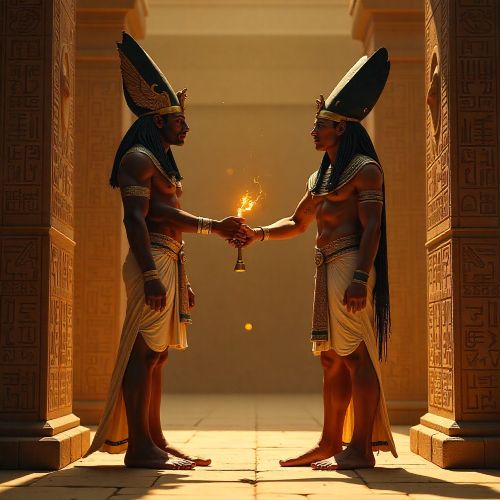
Rulers known as tlatoani depended heavily on priestly interpretation of omens and celestial movements. In this sense, the Boon of Vision functioned as divine authorization. Leaders governed not merely through force, but through alignment with cosmic order. The blessing created a covenant between deity and devotee: knowledge was granted, but responsibility followed.
The myth of the Toltec priest-king Topiltzin Quetzalcoatl reflects this tradition. Remembered as a wise and morally upright ruler, he became associated with Quetzalcoatl’s civilizing virtues, embodying enlightened leadership.
Nature of the Boon/Blessing
The Boon of Vision was not simply the ability to predict events. It represented layered perception. Spiritually, it meant understanding cosmic cycles. Aztec cosmology emphasized repeating eras of creation and destruction. To see clearly was to understand humanity’s fragile position within these cycles.
Politically, the boon meant foresight. Agricultural timing, ritual scheduling, and military campaigns depended on accurate celestial interpretation. Visionaries perceived patterns in the movements of Venus and seasonal changes.
Culturally, it inspired artistic creation. Codex painters depicted elaborate star charts and sacred narratives. Architects aligned temples with celestial events. Insight shaped civilization itself.
Morally, the boon demanded restraint. Knowledge without humility invited imbalance. The dual nature of Quetzalcoatl reflected this truth: enlightenment must remain grounded in ethical responsibility. Vision was illumination, not domination.
Recipients and Key Figures
Primary recipients of visionary insight were priests devoted to Quetzalcoatl. They interpreted celestial signs, guided ritual calendars, and preserved sacred knowledge. Their authority rested not on personal ambition but on divine clarity. Aztec rulers also depended on this blessing. A tlatoani who ignored omens risked cosmic disorder. Divine vision reinforced political legitimacy.
The legendary Topiltzin Quetzalcoatl stands as the archetype of the enlightened ruler. In later traditions, his exile symbolized the loss of wisdom through deception, often attributed to the trickster deity Tezcatlipoca. This narrative reinforces the fragile balance between clarity and illusion.
Poets, healers, and initiates could also receive glimpses of insight through ritual devotion. However, such experiences required discipline and moral purity.
Effects and Consequences
The Boon of Vision strengthened governance and reinforced cosmic harmony. Accurate calendrical knowledge allowed agricultural stability. Prophetic interpretation prevented panic during eclipses. Ritual alignment fostered unity.
Yet the burden of foresight was immense. To perceive possible catastrophe or cosmic decline meant carrying psychological weight. Visionaries were expected to guide society without succumbing to despair.
Misinterpretation or arrogance led to downfall. Myths repeatedly warn that divine gifts can be obscured by pride or deception. Vision demanded humility. Thus, the boon functioned as both empowerment and trial. Insight illuminated the path forward but required unwavering ethical grounding.
Symbolism and Spiritual Meaning
At its core, the Boon of Vision symbolizes transcendence of ignorance. The serpent’s grounded presence merges with the quetzal’s soaring flight. Earthly perception rises toward divine understanding.
The association with Venus reinforces cyclical awareness. The morning star appears after darkness, reminding observers that clarity follows confusion. Spiritually, the blessing suggests that enlightenment is not escapism but responsibility. To see clearly is to act wisely. Knowledge must serve communal balance rather than personal glory.
In modern interpretation, the Boon of Vision resonates as a metaphor for conscious awareness. Whether through scholarship, artistic insight, or disciplined reflection, the quest for clarity remains timeless.
Cultural Impact and Legacy
Quetzalcoatl’s influence extended across Mesoamerica. His counterpart Kukulkan appears in Maya tradition, showing shared reverence for the Feathered Serpent archetype. Aztec codices recorded astronomical data tied to Venus cycles. Temples aligned with equinoxes reflect visionary cosmology embedded in architecture.
After Spanish contact, legends evolved, sometimes blending Quetzalcoatl with narratives surrounding Hernán Cortés. While the popular claim that the Aztecs believed Cortés was Quetzalcoatl is debated by modern scholars, the persistence of the myth highlights the deity’s powerful symbolic presence. Today, Quetzalcoatl remains a symbol of indigenous wisdom, renewal, and intellectual awakening. His Boon of Vision endures as a metaphor for leadership rooted in clarity rather than force.


Source
Ancient Scholar. (2024, October 27). Quetzalcoatl’s impact on Aztec religion and society. https://ancientscholar.org/quetzalcoatls-impact-on-aztec-religion-and-society/
Britannica. (2025, December 2). Quetzalcoatl: Definition, myth, & meaning. https://www.britannica.com/topic/Quetzalcoatl
Carrasco, D. (1999). Quetzalcoatl and the irony of empire: Myths and prophecies in the Aztec tradition. University of Chicago Press.
EBSCO Research Starters. (2018, December 31). Quetzalcóatl (mythology).
https://www.ebsco.com/research-starters/literature-and-writing/quetzalcoatl-mythology
Fernández, C. (2015). Aztec mythology and religion. Oxford University Press.
History Cooperative. (2024, October 30). Quetzalcoatl: The feathered serpent deity of ancient Mesoamerica. https://historycooperative.org/quetzalcoatl/
León-Portilla, M. (1963). Aztec thought and culture. University of Oklahoma Press.
Wikipedia. (2001, September 16). Quetzalcōātl. https://en.wikipedia.org/wiki/Quetzalcoatl
Frequently Asked Questions
What is Quetzalcoatl’s Boon of Vision?
It refers to the symbolic blessing of foresight and spiritual clarity associated with Quetzalcoatl. The concept reflects his role as a deity of wind, learning, and cosmic understanding.
Did Aztec priests believe they received divine visions?
Yes. Priests interpreted celestial movements, dreams, and omens as forms of divine communication. Their authority depended on perceived spiritual insight.
How is Venus connected to Quetzalcoatl?
Quetzalcoatl was associated with the morning star, Venus. Its cycles symbolized renewal, prophecy, and cosmic rhythm.
Was Quetzalcoatl opposed to human sacrifice?
Some Toltec traditions portray him as favoring offerings of birds and serpents instead of human sacrifice. However, Aztec religious practice was complex and varied regionally.
What does the Feathered Serpent symbolize?
It represents unity between earth and sky, instinct and intellect. The imagery expresses balance between material existence and spiritual awareness.