
Caribbean Mythology
Caribbean mythology encompasses a diverse collection of Indigenous traditions, African-derived religions, European influences, and local folklore that developed across the islands of the Caribbean. Rather than representing a single belief system, it reflects centuries of cultural exchange, migration, colonization, resistance, and adaptation. The traditions preserved by the Taíno, Creole communities, Vodou practitioners, Santería practitioners, and Kalinago reveal different ways of understanding the sacred, the natural world, ancestors, supernatural beings, and the relationship between human communities and unseen forces.
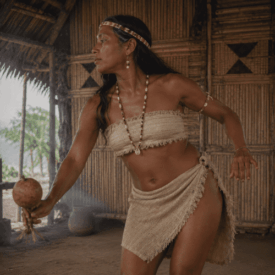
Taíno mythology represents one of the most important Indigenous traditions of the Caribbean, particularly among the peoples of the Greater Antilles before European colonization. Taíno religious life involved powerful spiritual forces known as zemí or cemí, which could be associated with deities, ancestors, natural forces, and sacred objects. Figures such as Atabey, associated with water and fertility, and Yúcahu, connected with cassava and agricultural abundance, appear in surviving accounts of Taíno religious traditions. Sacred caves, mountains, rivers, and other landscapes also played important roles in Taíno cosmology and ritual life.
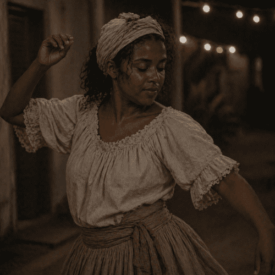
Creole mythology reflects the cultural blending that developed across Caribbean societies. Indigenous traditions, African beliefs, European folklore, Christianity, and local experiences contributed to a rich body of stories about spirits, ghosts, tricksters, supernatural creatures, and magical beings. Figures such as the Soucouyant, a shape-shifting being from Trinidad and other parts of the Caribbean, demonstrate how folklore could combine supernatural imagery with local ideas about danger, community, and the unknown. Creole traditions vary significantly between islands and communities, making them a diverse collection of regional folklore rather than a single mythology.
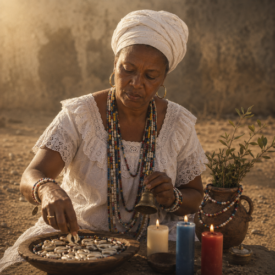
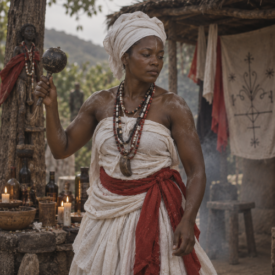
Vodou, particularly Haitian Vodou, is a living religion shaped by West and Central African traditions, Catholicism, and the historical experiences of Haitian communities. Practitioners maintain relationships with the lwa, spiritual beings who serve as intermediaries between humans and Bondye, the supreme creator. Figures such as Papa Legba, associated with communication and access between spiritual and human realms, and Ezili and Baron Samedi, who have different roles within Vodou traditions, are among its best-known spiritual figures. Vodou ceremonies incorporate prayer, song, drumming, dance, possession, and offerings.
Santería, more properly known as Regla de Ocha or Lucumí, developed primarily in Cuba among communities shaped by Yoruba traditions and the experience of colonialism. Its religious world centres on the orishas, powerful spiritual beings associated with different aspects of nature and human life. Oshun, associated with rivers, beauty, fertility, and <a class="wpil_keyword_link" href="https://mythlok.com/gods-of-love/" title="Gods of Love Across Cultures : Deities and Legendary Figures of Passion” data-wpil-keyword-link=”linked” data-wpil-monitor-id=”207977″>love, and Shango, associated with <a class="wpil_keyword_link" href="https://mythlok.com/archetypes/thunder-lightning/” title=”Lightning and Thunder : Gods, Spirits and Legendary Figures of the Storm” data-wpil-keyword-link=”linked” data-wpil-monitor-id=”228109″>thunder, lightning, and authority, are among the best-known orishas. Catholic imagery and practices became intertwined with Yoruba traditions in the historical development of Santería, producing a distinctive Cuban religious tradition.
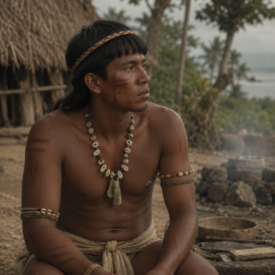
Kalinago mythology represents the Indigenous traditions of the Lesser Antilles and should be understood separately from Taíno traditions. Kalinago communities developed their own relationships with ancestors, supernatural beings, nature, and the sea, shaped by life across the Caribbean islands. European colonization caused severe disruption to Indigenous communities and religious practices, but Kalinago identity and cultural traditions continue today, particularly in Dominica.
Caribbean mythology remains both a record of the region’s past and part of its living cultural landscape. Its stories, rituals, music, art, and oral traditions preserve Indigenous memories while reflecting African, European, and Caribbean experiences. Exploring Caribbean mythology reveals a region where the sacred can be found in ancestors, nature, spirits, oceans, and community life, and where mythology continues to evolve alongside the cultures that preserve it.