Vodou Mythology
Vodou mythology encompasses the sacred stories, spiritual beings, rituals, and religious traditions of Haitian Vodou, a living Afro-Caribbean religion that developed in Haiti during the colonial period. Its foundations were shaped by the religious traditions of numerous African peoples brought to Saint-Domingue through the transatlantic slave trade, including Fon, Ewe, Yoruba, Kongo, and other communities. Catholic practices and imagery also became part of Haitian Vodou, while Indigenous Caribbean influences have been identified in aspects of its ritual culture. Rather than representing a single African tradition transplanted unchanged to the Caribbean, Vodou emerged through generations of cultural interaction, adaptation, and religious creativity.
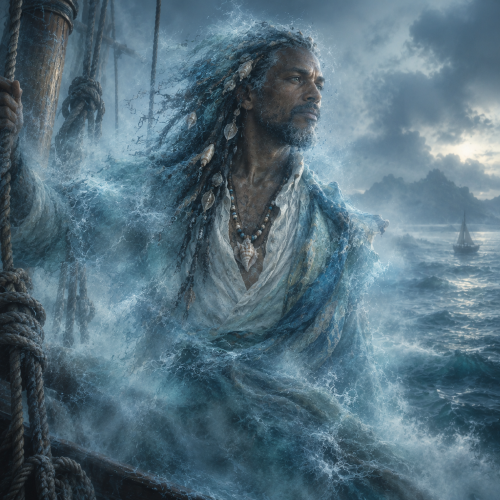
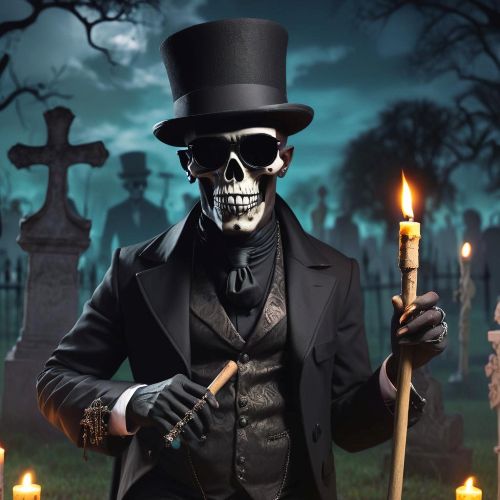
At the center of Vodou theology is Bondye, the supreme creator, alongside numerous lwa who serve as spiritual intermediaries between the human and divine realms. The lwa have individual personalities, histories, ritual associations, songs, rhythms, and sacred symbols. Among the best-known is Legba, who is associated with crossroads and opening communication between the human world and the spiritual realm. The Gede spirits are associated with death, ancestors, sexuality, humor, and the cemetery, while Ezili lwa encompass several distinct spiritual figures, including Ezili Freda, associated with love, beauty, and desire, and Ezili Dantor, who is often associated with motherhood, protection, and strength. Vodou traditions contain many other lwa organized into different ritual families or nations, including Rada and Petwo.
Catholic influence is one of the most recognizable features of Haitian Vodou. During French colonial rule, enslaved Africans were officially required to practice Catholicism, creating circumstances in which African religious traditions interacted with Catholic saints, prayers, images, and rituals. Over time, particular lwa became associated with particular Catholic figures, although these relationships should not be understood as simple one-to-one identities. Scholars have also debated whether Catholic imagery was incorporated into Vodou theology, adapted as a protective cover for African religious practice, or both. The resulting religious landscape reflects the complex history of cultural survival and transformation in colonial Haiti.
<a class="wpil_keyword_link" href="https://mythlok.com/archetypes/music-dance/” title=”Music and Dance : Gods, Spirits and Legendary Figures of Rhythm” data-wpil-keyword-link=”linked” data-wpil-monitor-id=”534518″>Music, dance, drumming, possession, prayer, and offerings are central to many Vodou ceremonies. Rituals may take place in a peristil, a ceremonial space where participants gather around a central ceremonial area. Houngan and manbo, male and female religious practitioners, may lead ceremonies and maintain relationships between families, communities, ancestors, and the lwa. Sacred veve are intricate designs drawn on the ground to represent particular lwa and form an important part of ritual preparation. Drumming and sacred rhythms are equally significant, with different traditions maintaining particular musical relationships with different lwa. During possession, a lwa may be understood to “mount” a practitioner, allowing communication between the spiritual and human worlds.
Vodou also has a significant relationship with Haitian history and identity. Religious communities preserved African cultural traditions under slavery and colonial oppression, while Vodou became intertwined with ideas of community, resistance, healing, and social life. The 1791 Bwa Kayiman ceremony is particularly important in Haitian historical memory and has been associated with the beginning of the uprising that developed into the Haitian Revolution, although historians continue to examine the precise historical circumstances surrounding the event.
Today, Haitian Vodou remains a living religious tradition in Haiti and among Haitian communities throughout the diaspora. Its influence can be seen in music, dance, visual art, literature, ritual objects, and cultural identity. Understanding Vodou mythology therefore requires moving beyond the sensationalized images of “voodoo” found in popular culture. It is a complex religious tradition in which African heritage, Haitian history, Catholic influence, ritual practice, and relationships with the lwa continue to shape spiritual life across generations.