North African Mythology
North African mythology encompasses a diverse range of religious traditions, creation narratives, supernatural beings, and legendary stories that developed across the lands stretching from the Nile Valley to the Maghreb and the Sahara. Rather than belonging to a single pantheon, these traditions reflect centuries of cultural exchange among indigenous Amazigh communities, ancient Egyptian and Libyan societies, Carthaginians, Greeks, Romans, and later Arab and Islamic cultures. Their stories explore creation, kingship, death, nature, and the relationship between humanity and the unseen world.
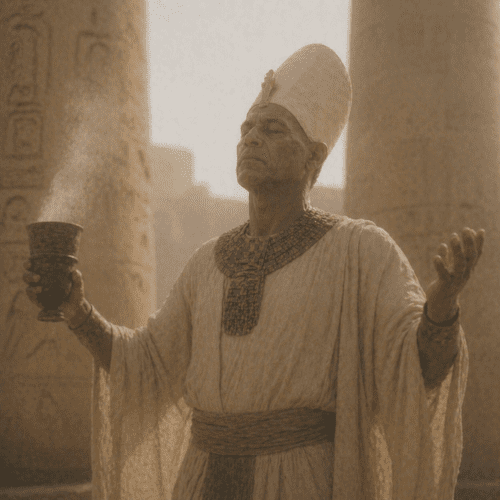
One of the region’s most influential mythological traditions is that of ancient Egypt. Its gods and goddesses formed a complex religious world in which divine powers governed the natural environment, royal authority, fertility, and the afterlife. Amun, originally associated with Thebes, eventually became one of Egypt’s most important deities. His identification with Ra produced Amun-Ra, a powerful divine figure combining aspects of Amun and the sun god. Bastet, represented as a cat or a woman with a feline head, was associated with protection, fertility, childbirth, and domestic life. These deities belonged to distinct Egyptian religious traditions, which evolved over thousands of years and influenced neighbouring societies.
Beyond Egypt, the ancient peoples of North Africa developed their own religious systems. Amazigh communities across the Maghreb and Sahara maintained diverse beliefs connected with local deities, ancestors, sacred places, and the forces of nature. Ancient Libyan religious traditions interacted with Egyptian, Greek, and other Mediterranean cultures, while Carthage developed a religious landscape shaped by Phoenician heritage and North African experience. These traditions were not identical, and much of what is known about them comes from archaeological evidence and written accounts produced by outsiders. Their surviving traces nevertheless demonstrate that North Africa possessed a rich religious history beyond the famous gods of Egypt.
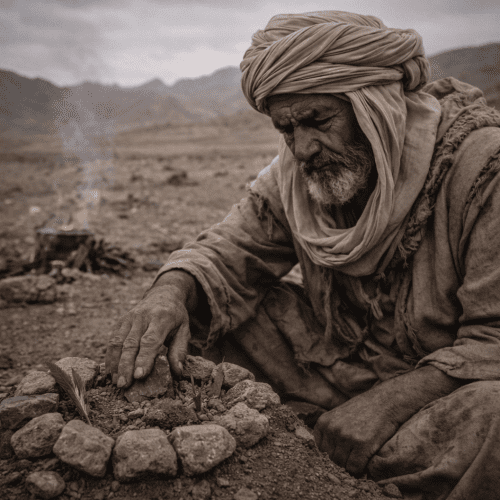
The Sahara and its surrounding regions also became settings for stories about extraordinary beings, dangerous landscapes, and encounters with the supernatural. Some traditions associated particular places with spiritual power, while oral narratives explored the risks of travelling through unfamiliar territory. Such stories reflected the importance of deserts, mountains, oases, and trade routes in the lives of communities across the region. Their details varied between cultures, making it important not to treat every North African story as part of one shared mythology.
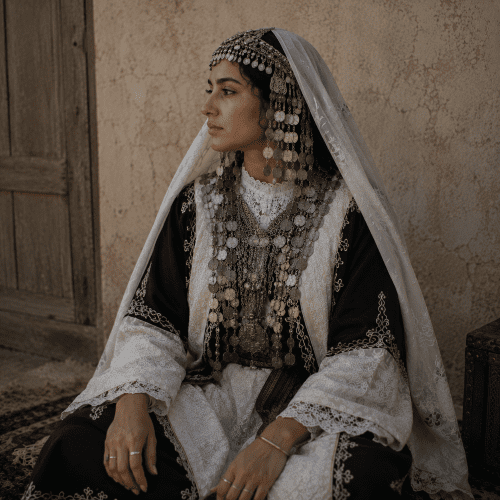
With the spread of Islam, Arabic religious and folkloric traditions became increasingly influential across North Africa. Among the best-known supernatural beings in this wider tradition are the jinn, beings described in Islamic scripture as created from fire and possessing forms of existence distinct from humans. Stories about jinn vary considerably: some portray them as dangerous, others as helpful or indifferent, and many explore the consequences of human encounters with the unseen. The ifrit, commonly depicted as a particularly powerful supernatural being, appears in Arabic and Islamic storytelling. Ghouls also feature in Arabic folklore, often associated with desolate places, deception, and threats to travellers. Although these beings are familiar throughout North Africa, they are not exclusive to the region.
Arabic literary traditions have contributed another layer to North Africa’s cultural heritage. The story of Layla and Majnun, centred on an intense and tragic love, became one of the best-known romances in the wider Islamic literary world. Likewise, the legendary adventures of Antarah ibn Shaddad inspired a celebrated heroic romance rooted in pre-Islamic Arabia. These stories travelled across linguistic and geographical boundaries, becoming part of a broader literary heritage enjoyed by audiences in North Africa and beyond. Their importance lies in their reception and influence, rather than in treating them as originally North African myths.
Today, North Africa’s mythological heritage survives through archaeological discoveries, oral storytelling, literature, local customs, and the continuing study of ancient religions. Some traditions remain closely connected to cultural identity, while others survive mainly through historical texts and artistic representations. Together, they reveal a region shaped by indigenous traditions and successive waves of cultural exchange. From the gods of ancient Egypt to Amazigh religious heritage and the supernatural beings of Arabic folklore, North African mythology offers not one unified story but a remarkable collection of narratives about the world, human destiny, and the mysteries that lie beyond ordinary experience.