


Yakush : The Mysterious Rain Deity of Berber Belief
At a glance
| Description | |
|---|---|
| Origin | Berber Mythology |
| Classification | Gods |
| Family Members | N/A |
| Region | Morocco, Libya |
| Associated With | Rain |
Mythlok Perspective
In Mythlok’s Perspective, Yakush reflects how even the most obscure deities reveal what a society valued most. Unlike Anzar, whose rain myths survived through oral tradition, Yakush remains a fragmented figure known from limited historical records. That contrast highlights an important truth about mythology: some gods become enduring cultural icons, while others survive only as faint echoes, reminding us that history preserves belief unevenly.
Yakush
Introduction
Yakush is one of the lesser-known figures associated with Berber mythology and religious tradition. References to Yakush are scarce, and much of what is known comes from discussions of the Berghwata, a Berber confederation that established an independent kingdom in present-day Morocco between the eighth and eleventh centuries. The Berghwata developed a distinct religious tradition that blended local Amazigh beliefs with elements adapted from Islam, making their faith one of the most unusual religious movements in medieval North Africa.
Within this tradition, Yakush has been associated with rain and the life-giving importance of seasonal rainfall. In an environment where agriculture depended heavily on regular precipitation, rain represented survival, prosperity, and the continuation of daily life. A deity connected with rainfall would therefore have held considerable symbolic importance.
At the same time, the historical evidence surrounding Yakush remains limited. Some modern writers describe Yakush as a rain deity, while several academic studies argue that Yakush was actually the Berghwata word for God, rather than the name of a separate divine being. Since medieval records about the Berghwata are incomplete and often written by outside observers, many aspects of Yakush’s identity remain open to interpretation.
Physical Traits
No surviving historical source provides a physical description of Yakush. Unlike many well-documented mythological figures whose appearance is described in literature or artwork, Yakush is never depicted with identifiable features, clothing, weapons, or symbols.
This absence of description is not unusual for ancient religious figures whose traditions were primarily preserved through oral transmission. Many early Berber beliefs emphasized the spiritual significance of natural forces rather than detailed artistic portrayals of their deities.
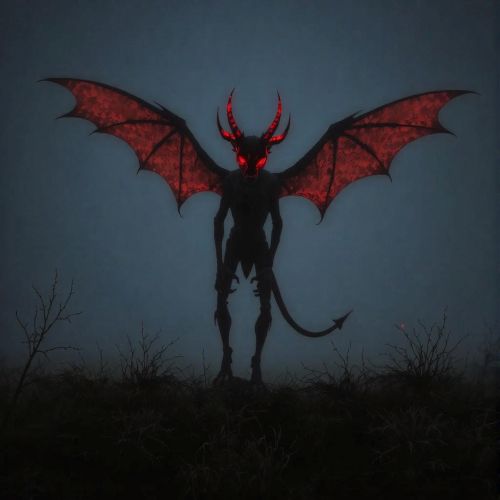
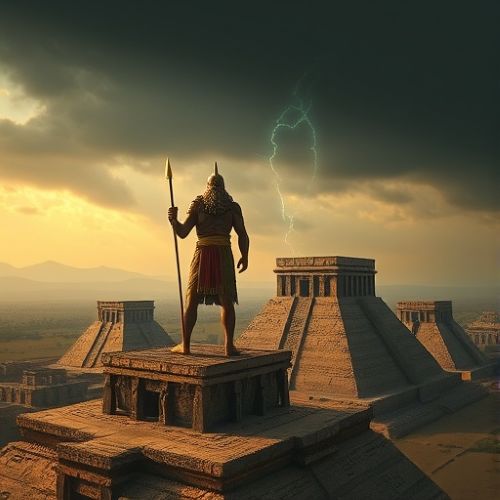
As a result, any modern illustration of Yakush is necessarily an artistic interpretation rather than a reconstruction based on historical evidence. While artists may choose to associate Yakush with clouds, rain, or water, these visual elements are creative choices and are not supported by surviving medieval accounts.
Family
The available historical sources do not record any family relationships for Yakush. No myths describe parents, siblings, spouses, or descendants, nor do they place Yakush within a larger genealogy of Berber deities.
This lack of information reflects the fragmentary nature of the surviving evidence concerning Berghwata religious beliefs. Although Berber mythology as a whole contains numerous supernatural beings, local spirits, and deities connected with nature, there is no documented tradition linking Yakush to any specific divine family. Consequently, Yakush should be regarded as an independent figure whose familial connections, if they ever existed in oral tradition, have not survived in written records.
Other Names
Yakush has occasionally been referred to by the alternative name Iguc in discussions of Berghwata traditions, although references are limited and the historical evidence remains sparse. The spelling of Yakush also varies across modern publications because medieval Berber names have been transliterated from Arabic manuscripts into different modern languages. Variations in spelling are therefore largely the result of differences in transliteration rather than evidence of separate identities.
Some academic studies also suggest that Yakush was the Berghwata term used for the supreme God within their religious system rather than the name of a distinct deity. This interpretation continues to be debated among historians studying the Berghwata religion.
Powers and Abilities
The primary attribute associated with Yakush is rain. In regions where farming relied heavily on seasonal rainfall, the ability to bring rain represented one of the most valuable divine powers imaginable. Rain determined harvests, supported livestock, replenished water sources, and ultimately ensured the survival of communities living in the challenging landscapes of North Africa.
Because of this connection, Yakush came to symbolize the life-sustaining power of nature. Rather than representing warfare or conquest, Yakush’s significance lies in the essential role that rainfall played in everyday existence.
Beyond this association with rain, however, historical sources provide little additional information about Yakush’s powers. There is no reliable evidence that Yakush governed fertility, acted as a guardian deity, or possessed other supernatural responsibilities frequently attributed to more extensively documented gods. Any broader list of powers would therefore extend beyond what the available evidence can support.
Modern Day Influence
Yakush remains one of the least documented figures connected with Berber religious history, and there is no clear evidence of active worship or continuing religious traditions specifically dedicated to this figure today.
Nevertheless, Yakush continues to attract interest among historians, mythologists, and researchers studying the religious traditions of the Berghwata. Because so little is known, Yakush serves as an example of how many aspects of indigenous North African belief systems have been lost or survive only in fragmentary medieval accounts.
More broadly, Berber mythology continues to influence Amazigh cultural identity through folklore, oral storytelling, traditional music, jewellery, artistic motifs, and the preservation of indigenous heritage. Although Yakush himself is rarely mentioned in contemporary cultural practice, the study of figures like Yakush contributes to a deeper understanding of the spiritual traditions that existed in North Africa before and alongside the spread of Islam.
Today, Yakush stands less as a fully documented mythological figure and more as a reminder of the richness—and the mysteries—of Berber religious history. The limited historical record encourages continued research into the beliefs of the Berghwata and the wider Amazigh world, ensuring that even obscure names like Yakush remain part of the broader conversation about the mythology and cultural heritage of North Africa.
Related Images





Sources
Encyclopaedia Britannica. (1911). Berbers. Wikisource. https://en.wikisource.org/wiki/1911_Encyclop%C3%A6dia_Britannica/Berbers
Temehu. (n.d.). Berber mythology: List of Libyan mythological goddesses & gods. https://www.temehu.com/imazighen/tamazight-mythology.htm
Temehu. (n.d.). Berber bibliography: Books & publications about the Berbers and North Africa. https://www.temehu.com/imazighen/bibliography.htm
Encyclopédie berbère. (n.d.). Yakush. OpenEdition Journals. https://journals.openedition.org/encyclopedieberbere/2406
Brett, M., & Fentress, E. (1996). The Berbers. Blackwell Publishers.
Camps, G. (1980). Berbères: Aux marges de l’histoire. Éditions des Hespérides.
Westermarck, E. (1926). Ritual and belief in Morocco (Vols. 1–2). Macmillan.
El Mouden, A. (2025). The kingdom of Berghwata: A heresy-tattooed memory. International Journal of Language and Literary Studies, 7(1). https://www.ijlls.org/index.php/ijlls/article/view/2139
Frequently Asked Questions
Who is Yakush in Berber mythology?
Yakush is an obscure divine figure associated with the Berghwata of medieval Morocco. Some sources describe Yakush as a rain deity, while others suggest the name referred to the supreme God in the Berghwata religious tradition.
Is Yakush the same as Anzar?
No. Anzar is the best-known rain deity in Berber mythology with surviving myths and rituals. Yakush is linked specifically to the Berghwata tradition and is far less documented, making the relationship between the two figures uncertain.
What powers did Yakush possess?
Yakush is primarily associated with rain in some historical sources. Beyond this connection, there is little reliable evidence describing additional powers or abilities, and many aspects of the figure remain uncertain.
Where was Yakush worshipped?
Yakush is associated with the Berghwata, a medieval Berber confederation that ruled parts of present-day Morocco. There is no clear evidence that Yakush was widely worshipped outside this regional tradition.
Why is so little known about Yakush?
Most information about the Berghwata religion comes from limited medieval accounts written by outside observers. As a result, many details about Yakush, including the deity’s role and significance, have been lost or remain the subject of scholarly debate.
