

Tartarus : The Deepest Realm of Greek Underworld
| Description | |
|---|---|
| Mythology | Greek Mythology |
| Description | Cold, shadowy underworld beneath Yggdrasil |
| Ruler/Guardian | Zeus, Hecatoncheires |
| Inhabitants | Titans such as Cronus, Typhon, and mortals punished for extreme transgressions including Sisyphus, Tantalus, and Ixion |
| Nature | Suffering and containment |
Mythlok Perspective
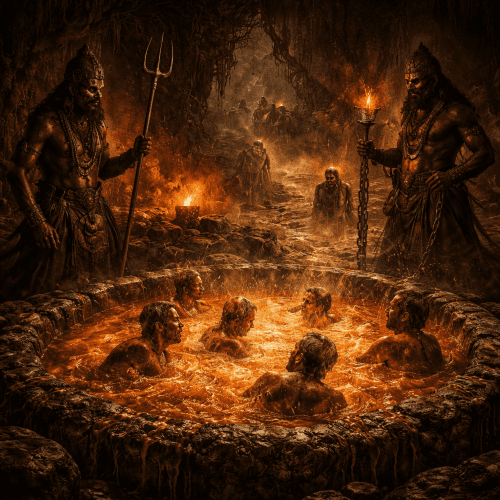
In Mythlok’s View, Tartarus is less a place of punishment and more a boundary of existence itself. It represents the necessity of containing chaos to preserve balance. Unlike later interpretations of hell, Tartarus is not about moral judgment for all but about isolating forces that disrupt cosmic order. This idea finds parallels in Norse myth with deep voids like Niflheim and in Indian thought through Naraka, where punishment reflects action. Yet Tartarus remains unique in its role as both prison and primordial force, a reminder that creation and destruction are inseparable aspects of the same universe.
Tartarus
Introduction
Tartarus stands as one of the most terrifying and conceptually rich realms in Greek tradition. It is not simply a place of the dead but something far deeper and more primal. In early cosmology, Tartarus existed as a vast abyss beneath the earth, even below the domain commonly associated with the dead. Over time, it evolved into a space of punishment, reserved for those who challenged divine order or committed unforgivable acts.
What makes Tartarus unique is its dual nature. It is both a place and a primordial force, born alongside the earliest elements of existence. Unlike other realms, it is not meant for ordinary souls. Instead, it represents the ultimate boundary, where chaos is contained and justice is absolute.
Description
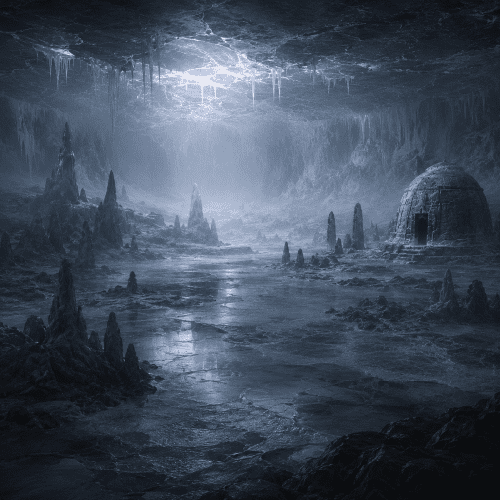
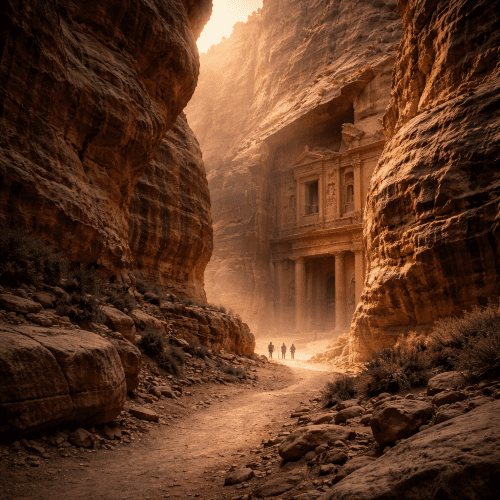
Tartarus is consistently described as a vast, lightless chasm far beneath the surface of the world. Ancient sources emphasize its unimaginable depth. Hesiod famously described it as being as far below the earth as the heavens are above it, illustrating a perfectly symmetrical cosmic structure.
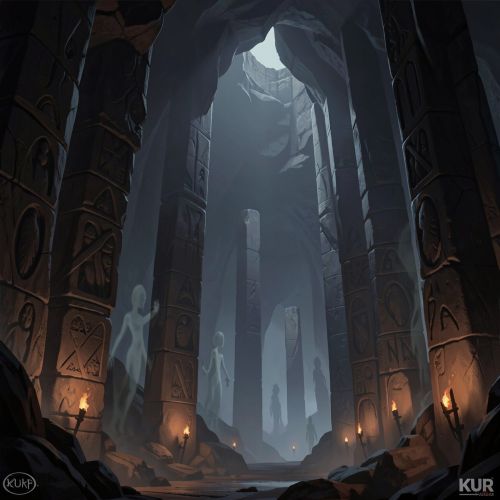
The environment itself is hostile and oppressive. It is a place without sunlight, filled with darkness, echoing emptiness, and suffocating stillness. Later descriptions add layers of complexity, portraying it as surrounded by bronze walls and guarded gates, reinforcing the idea that nothing enters or escapes without divine will.
Rather than a natural landscape, Tartarus feels constructed for confinement. It is not merely a location but a deliberate containment zone within the cosmos, designed to hold forces too dangerous to exist freely.
Ruler/Guardian
Tartarus does not have a traditional ruler in the way Olympus has Zeus. Instead, it functions as both a place and a primordial entity. In early cosmology, it is personified as a force of existence, though it rarely acts in mythological narratives.
After the rise of the Olympians, Zeus became the ultimate authority over Tartarus, using it as a prison for defeated enemies. The actual guardians, however, were the Hecatoncheires, the hundred-handed beings tasked with ensuring that no prisoner could escape.
In later interpretations, figures associated with judgment appear, but they do not rule Tartarus itself. Instead, they determine who is sent there, reinforcing the idea that Tartarus is less a kingdom and more a cosmic mechanism of punishment.
Inhabitants
The inhabitants of Tartarus reveal its true purpose. It is not meant for ordinary existence but for punishment and containment.
The earliest prisoners were powerful beings who threatened cosmic stability. The Cyclopes and Hecatoncheires were initially imprisoned there, followed by the Titans after their defeat in the great war against the Olympians.
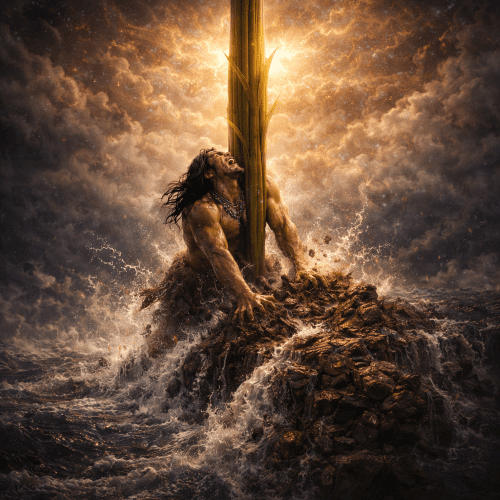
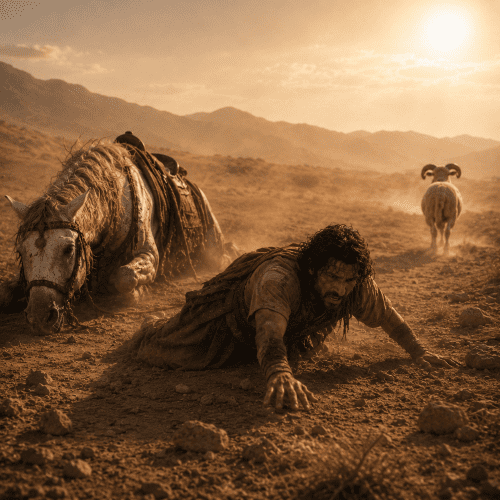
Over time, Tartarus became associated with the punishment of mortals who committed extreme acts. Figures like Sisyphus, Tantalus, and Ixion became symbols of eternal suffering. Their punishments were not random but deeply tied to their actions, creating a moral narrative that reinforced divine justice.
Each punishment reflects a deeper idea. Endless labor, unreachable desires, and perpetual torment all represent consequences that mirror the crimes committed. Tartarus becomes a place where actions echo forever.
Access
Reaching Tartarus is not simply difficult; it is nearly impossible. It lies beneath even the deepest layers of the underworld, requiring passage through realms already inaccessible to the living.
Descriptions often include massive gates made of bronze or iron, guarded by powerful beings and reinforced by divine design. These barriers emphasize that Tartarus is not meant to be entered casually or escaped under any circumstance.
Some traditions hint at physical entry points through caves or chasms, but these are symbolic rather than literal. The journey to Tartarus represents a descent beyond the limits of life and death, into a realm where finality is absolute.
Instances of Visit
Unlike other parts of the underworld, Tartarus is rarely visited in myth. This absence is significant. It reinforces the idea that Tartarus is not a place meant for interaction but for permanent confinement.
While heroes like Orpheus or Heracles are said to have entered the broader underworld, there is little evidence that they truly reached Tartarus itself. Most stories focus on its prisoners rather than visitors, highlighting its role as an endpoint rather than a destination. This lack of successful journeys adds to its mystique. Tartarus is not a place of adventure but a boundary that even myths hesitate to cross.
Symbolism
Tartarus represents the ultimate expression of consequence. It embodies the idea that certain actions lead to irreversible outcomes. At a deeper level, it symbolizes chaos contained. As a primordial force, Tartarus reflects the darker aspects of existence, those that must be restrained for order to survive.
Its punishments also carry psychological meaning. Endless repetition, unattainable relief, and perpetual suffering mirror human fears of failure, regret, and loss of control. Over time, Tartarus became a moral framework. It demonstrated that the universe operates on balance, where extreme actions lead to equally extreme consequences.
Comparative Analysis
Tartarus differs significantly from other underworld concepts. While Hades serves as a general resting place for souls, Tartarus is reserved for the most severe cases. In comparison to other traditions, Tartarus shares similarities with realms of punishment but maintains a distinct focus. It is less about moral judgment for all and more about containing threats to cosmic order. This distinction makes it unique. It is not just a place of suffering but a structural necessity within the mythological universe.
Modern Influence
The idea of Tartarus has had a lasting impact on storytelling and philosophy. Its structure influenced later depictions of hell and eternal punishment, particularly in Western traditions. Concepts like endless labor or unreachable desire continue to appear in literature, psychology, and modern media. The term “Sisyphean” remains widely used, showing how deeply these ideas have entered everyday language. In modern storytelling, Tartarus often appears as a prison for powerful beings, reflecting its original role as a containment space for forces beyond control.

Sources
Theoi Greek Mythology. (n.d.). Tartarus. https://www.theoi.com/Kosmos/Tartaros.html
Britannica. (2024). Tartarus. https://www.britannica.com/topic/Tartarus
World History Encyclopedia. (2023). Tartarus – Greek Underworld. https://www.worldhistory.org/Tartarus/
GreekMythology.com. (n.d.). Tartarus in Greek Mythology. https://www.greekmythology.com/Myths/Places/Tartarus/tartarus.html
Hesiod. (2006). Theogony (R. Caldwell, Trans.). Penguin Classics. (Original work c. 700 BCE)
Apollodorus. (1921). The library (J. G. Frazer, Trans.). Harvard University Press. (Original work c. 2nd century BCE)
Graves, R. (1992). The Greek myths (Vol. 1). Penguin Books.
Bremmer, J. N. (2009). The underworld. In A companion to Greek mythology (pp. 293-308). Wiley-Blackwell. https://doi.org/10.1002/9781444306563.ch18
Frequently Asked Questions
What is Tartarus in Greek tradition?
Tartarus is a deep abyss beneath the underworld, used as a prison for powerful beings and a place of punishment.
Is Tartarus the same as Hades?
No, Hades is the general realm of the dead, while Tartarus is a deeper region reserved for extreme punishment.
Who is punished in Tartarus?
Both divine beings like Titans and mortals who committed severe crimes are punished there.
Can anyone escape Tartarus?
Myths consistently portray Tartarus as inescapable, reinforcing its role as a final destination.
Is Tartarus a god or a place?
It is both. Tartarus is a primordial entity and also the name of the abyss itself.