


81 Trials of Sun Wukong : The Legendary Ordeals of the Monkey King
| Description | |
|---|---|
| Origin | Chinese Mythology |
| Characters Involved | Tang Monk, Sun Wukong, Zhu Bajie, Sha Seng, White Dragon Horse |
| Objective | Retrieve Buddhist scriptures from India |
| Type of Trial | Spiritual, Physical, Moral, Supernatural |
| Outcome | Success |
Mythlok Perspective
In Mythlok’s Perspective, the 81 Trials of Sun Wukong represent more than a sequence of adventures. They illustrate a universal mythic structure where spiritual growth requires repeated struggle. The Monkey King’s restless mind gradually becomes disciplined through experience and responsibility. Similar symbolic journeys appear in other cultures. Sun Wukong’s trials echo the heroic ordeals of Hanuman in the Ramayana, whose devotion and strength guide a sacred mission, and the labors of Heracles in Greek tradition, where divine tasks purify the hero through hardship.
81 Trials of Sun Wukong
Introduction
The 81 Trials of Sun Wukong form one of the most memorable narrative frameworks in the Chinese classic Journey to the West (Xiyouji), a 16th-century novel traditionally attributed to Wu Cheng’en. The story follows a sacred pilgrimage undertaken by the monk Tang Sanzang—inspired by the real Buddhist monk Xuanzang who travelled from China to India during the 7th century to collect sacred Buddhist scriptures. In the novel, however, the historical journey is transformed into a mythic adventure filled with demons, celestial beings, magical landscapes, and spiritual lessons.
To protect the monk during this perilous expedition, three extraordinary disciples accompany him: Sun Wukong, the rebellious and powerful Monkey King; Zhu Bajie, a gluttonous but loyal half-pig spirit; and Sha Wujing, a quiet river demon turned monk. They are joined by the White Dragon Horse, a transformed dragon prince who carries Tang Sanzang across the vast landscapes of Asia.
Across their journey, the group must endure 81 trials, also known as nan or “difficulties.” Each ordeal tests courage, morality, faith, and discipline. These trials include battles with powerful demons, encounters with deceptive illusions, natural disasters, and internal struggles among the companions themselves.
In Chinese cosmology and Buddhist philosophy, the number 81 (9 × 9) symbolizes completion and spiritual perfection. The trials therefore represent the final stages of purification before enlightenment. By overcoming them, the pilgrims transform both externally and internally, turning the long journey into a profound allegory of spiritual awakening.
Characters Involved
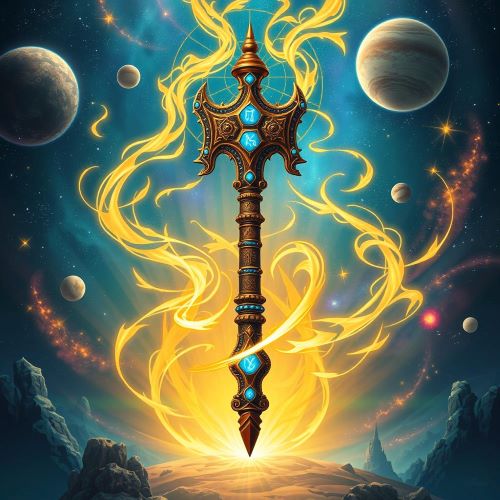
The pilgrimage succeeds largely because each member of the group represents a different human quality and contributes a unique strength to the journey. Sun Wukong, the Monkey King, is the central hero of the trials. Born from a mystical stone egg on Flower-Fruit Mountain, he possesses immense supernatural abilities. These include 72 transformations, cloud-leaping travel across vast distances, and mastery of the magical Ruyi Jingu Bang, a staff that can change size at will. After causing chaos in Heaven, Wukong was imprisoned by the Buddha for five centuries before being released to serve Tang Sanzang. During the pilgrimage, his fiery eyes—gained after surviving the Eight Trigrams Furnace—allow him to detect demons disguised as humans.
Tang Sanzang, also known as Tripitaka, is the spiritual leader of the group. Unlike his disciples, he has no combat ability. Instead, he embodies compassion, devotion, and moral purity. His kindness sometimes becomes a weakness, as he frequently trusts deceptive spirits disguised as harmless beings.
Zhu Bajie, once the Heavenly Marshal of the Canopy, was banished from Heaven after drunken misconduct. Reborn with pig-like features, he represents human appetites—especially greed, laziness, and lust. Despite his flaws, Bajie remains fiercely loyal and often assists Sun Wukong in combat.
Sha Wujing, formerly a celestial general, was exiled to the mortal realm and became a river demon before joining the pilgrimage. Quiet and patient, he symbolizes endurance and humility. He often acts as the stabilizing presence in the group.
The White Dragon Horse, originally a dragon prince punished by the Jade Emperor, transforms into Tang Sanzang’s mount. Though silent for most of the story, he represents obedience and service. Together, these characters form a symbolic balance of mind, desire, discipline, and spiritual aspiration.
Source Texts
The narrative of the 81 Trials of Sun Wukong comes primarily from the Ming Dynasty novel Journey to the West, first published in its widely recognized form in 1592. While the book is traditionally credited to Wu Cheng’en, the story draws heavily from earlier folklore, theatre scripts, and oral storytelling traditions that circulated during the Tang, Song, and Yuan periods.
At the historical core of the novel lies the real pilgrimage of the Buddhist monk Xuanzang (602–664 CE). Xuanzang travelled across Central Asia to India to collect sacred Buddhist texts and later documented his journey in the work Great Tang Records on the Western Regions.
Over centuries, storytellers transformed this historical expedition into an epic filled with supernatural adventures. Elements from Buddhist teachings, Daoist mythology, and Chinese folk religion merged into a single narrative structure. The symbolic use of 81 trials reflects this philosophical blend, as the number nine is considered sacred in Chinese numerology, and its square represents ultimate completion.
As a result, Journey to the West became not only a religious allegory but also one of the Four Great Classical Novels of Chinese literature, standing alongside Dream of the Red Chamber, Romance of the Three Kingdoms, and Water Margin.
Objective
The outward goal of the pilgrimage is simple: retrieve sacred Buddhist scriptures from India and bring them back to China. According to the story, the Buddha instructs the Bodhisattva Guanyin to find a worthy monk who can undertake this mission and spread Buddhist wisdom throughout the Tang Empire.
Tang Sanzang is chosen for this sacred duty, but because he cannot defend himself, Guanyin recruits three supernatural disciples to protect him. Sun Wukong becomes the primary guardian, though he is controlled by a magical golden circlet placed on his head. Whenever Tang Sanzang recites the tightening mantra, the circlet causes intense pain, forcing Wukong to remain disciplined and obedient.
Beyond the physical quest for scriptures, the pilgrimage is a spiritual journey of transformation. Each companion carries karmic burdens from past misdeeds. By helping the monk complete the mission, they seek redemption and the chance to attain enlightenment. The trials they face therefore serve as necessary obstacles designed to purify their minds and reveal their true character.
Challenges
The 81 trials encountered along the pilgrimage range from fierce battles to psychological and moral tests. Many demons attempt to capture Tang Sanzang because legends claim that eating his flesh grants immortality. This makes the monk a constant target for monsters and spirits across the journey.
Sun Wukong repeatedly defeats powerful enemies using a combination of strength, intelligence, and magical transformations. Among the notable adversaries are the White Bone Spirit, who repeatedly disguises herself as innocent humans, the Yellow Wind Demon, whose magical storms nearly destroy the pilgrims, and the Gold and Silver Horn Kings, who wield enchanted treasures capable of trapping even immortals.
Other challenges involve dangerous environments. The travelers cross raging rivers, climb treacherous mountains, and pass through kingdoms filled with strange customs. One famous episode involves the Flaming Mountains, which can only be extinguished using the magical fan possessed by Princess Iron Fan.
Not every difficulty is external. The group also struggles with mistrust, pride, and temptation. Tang Sanzang sometimes misjudges situations and punishes Sun Wukong unfairly, while Bajie’s greed often leads the group into trouble. Through these varied ordeals, each character gradually learns discipline, cooperation, and humility.
Outcome
After surviving all 81 trials, the pilgrims finally reach the sacred Buddhist temple at Vulture Peak (Ling Shan) in India, where they receive the long-sought scriptures. However, their journey does not end without one final lesson. During the return journey, a giant turtle that once helped them cross a river demands repayment of a forgotten promise. When the pilgrims fail to remember their obligation, the turtle throws them into the water, causing some of the scriptures to become wet and partially damaged. This moment symbolizes the idea that human understanding of enlightenment can never be completely perfect.
Despite this imperfection, the pilgrims return to China and receive divine recognition. Tang Sanzang achieves Buddhahood, while Sun Wukong is granted the title “Victorious Fighting Buddha.” Sha Wujing becomes a Golden-Bodied Arhat, and Zhu Bajie is appointed Cleaner of the Altars, responsible for consuming leftover offerings. The White Dragon Horse is elevated to the rank of a celestial dragon. Their transformation marks the successful completion of the pilgrimage.
Symbolism
The 81 trials of Sun Wukong are deeply symbolic and function as a spiritual allegory rooted in Buddhist philosophy. Each trial represents the purification of negative mental states. In some interpretations, the number corresponds to 81 spiritual afflictions that must be overcome before enlightenment can be achieved. These include greed, anger, ignorance, attachment, and pride.
The characters themselves also embody aspects of human nature. Sun Wukong symbolizes the restless and powerful human mind, capable of both chaos and brilliance. Tang Sanzang represents the spiritual heart, guided by compassion but vulnerable to deception. Zhu Bajie reflects desire and indulgence, while Sha Wujing symbolizes discipline and perseverance.
Together, the four characters illustrate the internal struggle that every seeker must face when pursuing wisdom. The narrative also blends Buddhist, Daoist, and Confucian philosophies, showing how harmony arises when strength, morality, and discipline work together.
Modern Influence
The legend of the 81 Trials of Sun Wukong continues to influence global culture centuries after its creation. In China, the story has inspired countless stage performances, television dramas, films, and illustrated adaptations. The 1986 Chinese television series Journey to the West remains one of the most beloved interpretations of the novel.
Internationally, the Monkey King has become an iconic figure in modern storytelling. The character Son Goku in the Japanese anime Dragon Ball was directly inspired by Sun Wukong’s staff, cloud travel, and mischievous personality. More recently, the video game Black Myth: Wukong (2024) has brought renewed global attention to the character and the mythic world of Journey to the West. From literature and animation to gaming and film, the trials of Sun Wukong continue to symbolize perseverance, transformation, and the timeless pursuit of enlightenment.

Sources
Wu Cheng’en. (n.d.). Journey to the West. Wikipedia. https://en.wikipedia.org/wiki/Journey_to_the_West
Sun Wukong. (n.d.). Wikipedia. https://en.wikipedia.org/wiki/Sun_Wukong
Journey to the West Research. (2018, September 19). Sun Wukong’s hellish punishment. https://journeytothewestresearch.com/2018/09/19/sun-wukongs-hellish-punishment/
Journey to the West Research. (2025, May 9). 81 tribulations. https://journeytothewestresearch.com/tag/81-tribulations/
Jenner, W. J. F. (Trans.). (1984). Journey to the West (4 vols.). Foreign Languages Press.
Yu, A. C. (2012). The journey to the West (Revised ed.). University of Chicago Press.
laks, A. H. (1987). Four Masterworks of the Ming Novel. Princeton: Princeton University Press.
Bin, L., & Lang, B. (2025). From Myth of the Other to Self-Reflection: A Semiotic Journey of Sun Wukong’s Imagery in Global Reinterpretation and Chinese Evolution. Critical Arts, 39(2), 145–162. https://doi.org/10.1080/02560046.2025.2484450
Frequently Asked Questions
What are the 81 trials of Sun Wukong?
The 81 trials are the hardships faced by Tang Sanzang and his disciples in Journey to the West while traveling to India to retrieve Buddhist scriptures. Each trial represents a spiritual or moral test.
Why are there exactly 81 trials in Journey to the West?
The number 81 comes from Chinese numerology, where 9 represents completeness. Since 81 is 9 × 9, it symbolizes ultimate spiritual perfection.
Who defeated most of the demons in the 81 trials?
Sun Wukong defeated the majority of demons during the pilgrimage using his magical staff, transformations, and clever strategies.
Did the 81 trials really happen in history?
No. The trials are fictional elements added to the novel Journey to the West, though the pilgrimage itself was inspired by the historical monk Xuanzang.
What title did Sun Wukong receive after the trials?
Scholars debate its inspiration, suggesting mills, world pillars, or ritual symbols rather than a single physical artifact.
