


Black Myth – Wukong : The Game Beyond Journey to the West
| Description | |
|---|---|
| Inspiration | Chinese Mythology |
| Developer | Game Science |
| Type | Video Game |
| Release Year | 2024 (PS5/PC), 2025 (Xbox) |
| Storyline | The Destined One seeks relics tied to Sun Wukong’s senses, battling mythological foes. |
Mythlok Perspective
In Mythlok’s Perspective, Black Myth: Wukong represents a modern interpretation of the Monkey King rather than a direct retelling of Journey to the West. The Destined One echoes Sun Wukong’s rebellious nature, supernatural abilities and struggle with destiny, while his journey introduces a darker interpretation of the legendary hero. A similar pattern appears in other mythic traditions, where familiar heroes are repeatedly reinvented to reflect new audiences and changing values. From Greek Heracles to the Mesopotamian Gilgamesh, ancient heroes survive because every generation finds new meaning in their stories.
Black Myth: Wukong
Introduction
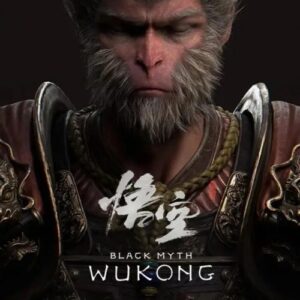
Black Myth: Wukong is an action role-playing game developed and published by the Chinese studio Game Science. Released for PC and PlayStation 5 on August 20, 2024, it brought one of China’s most recognizable legendary figures, Sun Wukong, into a modern interactive world. The Xbox Series X|S version followed on August 20, 2025. Game Science describes the game as a Chinese mythology-inspired action RPG based on the classic novel Journey to the West.
The game is not a straightforward retelling of Journey to the West. Instead, it explores the legacy of Sun Wukong through the Destined One, a mysterious monkey warrior whose journey is connected to the Monkey King’s fate. This distinction is important because much of the game’s story takes place after the events associated with the famous pilgrimage.
Its commercial reception was extraordinary. Game Science announced more than 10 million copies sold across platforms within three days of launch, while Guinness World Records records 20 million copies sold during the first month. The result was a game that introduced millions of players to a distinctly Chinese literary and mythological tradition through a contemporary global medium.
Game Overview
Black Myth: Wukong combines action RPG systems with challenging combat, exploration, character progression and cinematic storytelling. The player controls the Destined One, a monkey warrior who fights with a staff and can use spells, transformations, spirits and magical vessels.
The game is divided into six chapters, but it is not a conventional open-world RPG. Each chapter presents a large interconnected environment containing main routes, hidden locations, optional bosses, secret areas and characters whose stories expand the mythology beyond the central quest.
Combat is the heart of the experience. The Destined One can employ different staff techniques, spells and transformations, allowing players to adapt their approach to individual enemies. Game Science emphasizes the ability to combine spells, abilities, weapons and equipment, while Xbox describes the game as drawing from Soulslike, RPG and boss-rush traditions.
Boss encounters are particularly important because many of them are more than combat challenges. Their histories, relationships and motivations are embedded within the world, meaning that exploring optional areas can reveal additional context about the characters and the mythology surrounding them.
The game therefore works on two levels. On the surface, it is a demanding action RPG built around combat and exploration. Beneath that structure is an adaptation of Chinese literary and religious imagery, with familiar characters and stories transformed into an interactive experience.
Mythological Inspirations
The central source for Black Myth: Wukong is Journey to the West, the sixteenth-century Chinese novel traditionally attributed to Wu Cheng’en. The novel tells the story of the monk Xuanzang and his pilgrimage to India to obtain Buddhist scriptures, accompanied by supernatural figures including Sun Wukong.
Sun Wukong is one of the most recognizable figures in Chinese literature and folklore. He is a shape-shifting monkey warrior associated with extraordinary strength, magical abilities, cloud travel and the Ruyi Jingu Bang, the famous staff that can change its size. His character combines rebellion, mischief, martial ability and spiritual transformation.
Black Myth: Wukong uses this established mythology as a foundation rather than reproducing the novel scene by scene. The player instead follows the Destined One through a world shaped by the consequences of Wukong’s legend. Characters such as Erlang Shen, Zhu Bajie and the Bull Demon King appear within this expanded interpretation of the Journey to the West tradition.
The game also draws from broader Chinese religious and folkloric traditions. Buddhist and Daoist imagery appears alongside supernatural creatures, sacred landscapes, temples, demons and legendary beings. These traditions should not be treated as a single unified pantheon. Chinese religious culture developed through overlapping traditions, local practices and literary storytelling, and the game reflects that mixture.
One of its most interesting adaptations is the six relics associated with Wukong’s senses. The idea draws upon the Buddhist concept of six sensory faculties, while also connecting to the literary tradition of Journey to the West. In the game, the relics are named Craving Eyes, Fuming Ears, Hubris Nose, Envious Tongue, Grieved Body and the final mind-related relic. The first five are obtained through the main chapters, while the sixth is connected to additional endgame progression.
Characters
The Destined One is the central playable character in Black Myth: Wukong. He is deliberately less immediately defined than the Monkey King of Journey to the West. His identity and relationship to Sun Wukong become increasingly important as the story progresses.
Sun Wukong himself remains the narrative shadow hanging over the entire game. The player encounters a world shaped by his previous actions, his reputation and the conflicts surrounding his fate. This allows the game to explore the Monkey King without simply making the player repeat his original literary journey.
Erlang Shen is another major figure whose presence connects the game to Chinese mythology and the wider Journey to the West tradition. The Bull Demon King and Princess Iron Fan similarly draw on familiar characters while receiving expanded roles within the game’s interpretation.
The game’s bosses are particularly significant because they are often presented as individuals rather than anonymous monsters. Their histories can involve family, ambition, resentment, loyalty, desire and loss. Game Science itself highlights the stories and motivations behind its characters, emphasizing that players can discover more about them beyond the battles themselves.
This treatment gives the game’s supernatural world a degree of moral complexity. A creature encountered as an enemy may have a history that changes how the player understands the confrontation. Mythological characters become participants in a larger network of relationships rather than simply obstacles placed between the player and the next chapter.
Symbolism & Gameplay Mechanics
One of the defining strengths of Black Myth: Wukong is the way it converts recognizable elements of Sun Wukong’s legend into gameplay. The staff is the clearest example. The Destined One’s weapon recalls the Ruyi Jingu Bang associated with Sun Wukong. In the original literary tradition, the weapon is an extraordinary magical object; in the game, the staff becomes the foundation of a detailed combat system involving different stances and techniques.
Transformation is equally important. Sun Wukong is famous for his ability to change shape, and the game turns transformation into a practical combat mechanic. Instead of merely describing Wukong’s supernatural abilities, the player experiences the advantages and limitations of changing form. The relic system provides another layer of symbolism. The first five relics are connected to sensory faculties, while the sixth is associated with the mind. Their names—such as Craving Eyes and Envious Tongue—turn perception into a metaphor for attachment, desire and human weakness.
The game’s repeated boss encounters can also be read symbolically as a process of learning. Defeat requires the player to observe patterns, change tactics and develop greater control. This is an interpretation of the gameplay rather than an explicit developer statement, but it fits naturally with a story concerned with destiny, discipline and transformation.
Cultural Impact
The cultural impact of Black Myth: Wukong extends beyond its sales figures. Its success demonstrated that a major contemporary action RPG could place Chinese literary and mythological traditions at the center of its identity while reaching a worldwide audience.
The commercial scale was immediately significant. Game Science reported more than 10 million copies sold within three days, and Guinness World Records subsequently recorded 20 million copies sold within the first month. By early 2025, industry estimates placed worldwide sales at around 25 million copies.
The game also became an example of how digital entertainment can function as a vehicle for cultural exchange. Its landscapes, architecture, creatures and characters introduced international players to elements of Chinese visual and literary culture that may have been unfamiliar to them.
Academic research has subsequently examined how players and online communities use the game to engage with Chinese audiovisual culture, including older adaptations of Journey to the West. This is significant because cultural transmission is no longer limited to books, television or film. Games allow audiences to explore cultural material interactively.
At the same time, Black Myth: Wukong represents one interpretation of a much larger tradition. Its version of Chinese mythology is shaped by Game Science’s artistic choices, modern game design and the requirements of an action RPG. It should therefore be viewed as an entry point into Chinese mythology rather than a complete guide to it.
Creative Liberties
The biggest creative liberty in Black Myth: Wukong is its decision not to reproduce the original Journey to the West narrative. The novel follows Xuanzang’s pilgrimage and the companions who accompany him. The game instead focuses on the legacy of Sun Wukong and follows the Destined One through a new story built around the Monkey King’s fate. This changes the tone considerably. Journey to the West combines adventure, comedy, religious ideas, satire and supernatural encounters. Black Myth: Wukong places much greater emphasis on combat, tragedy, mystery and darker interpretations of familiar characters.
The six-relic structure is another major reinterpretation. Rather than treating Wukong’s abilities simply as legendary powers, the game transforms his senses into objects that structure the player’s journey. The first five relics are associated with the first five chapters, while the sixth requires additional endgame progression rather than simply appearing as a conventional Chapter 6 reward.
These changes are better understood as adaptation than as attempts to reproduce the novel exactly. Game Science takes established characters, symbols and stories and restructures them around interactive storytelling. That distinction is ultimately what makes Black Myth: Wukong culturally interesting. It does not preserve Chinese mythology by leaving it untouched. Instead, it demonstrates how an old story can be reinterpreted through a new medium while retaining recognizable characters, symbols and themes.
For players encountering Sun Wukong for the first time, the game can serve as a gateway into Journey to the West. For those already familiar with the Monkey King, it offers another interpretation of a character whose story has been retold for centuries. Black Myth: Wukong is therefore more than a game about a legendary monkey warrior. It is a modern experiment in mythmaking, taking one of China’s most enduring literary traditions and asking what happens when an ancient legend becomes an interactive world.


Sources
Game Science. (2024). Black Myth: Wukong [Video game]. Game Science.
S. Rajaratnam School of International Studies. (2025, February 3). Black Myth: Wukong and China’s soft power expansion (RSIS Commentary No. 020-25). Nanyang Technological University. https://hdl.handle.net/10356/182857
Tang, M. K. (2025). Black myth: Wukong and China’s soft power expansion. RSIS Commentary, 020-25. https://dr.ntu.edu.sg/bitstream/10356/182857/2/CO25020.pdf
University of Chicago Press. (2012). The Journey to the West, revised edition, Volume 4 (A. C. Yu, Trans. & Ed.). https://press.uchicago.edu/ucp/books/book/chicago/J/bo12893528.html
Wu, C. (2012). The Journey to the West (A. C. Yu, Trans. & Ed., Rev. ed., Vols. 1–4). University of Chicago Press. (Original work published in the sixteenth century)
Game Science. (2024, August 20). Black Myth: Wukong. Official PlayStation Store.
https://store.playstation.com/en-us/product/HP6545-PPSA23226_00-GAME000000000000
From Journey to the West to Black Myth: Wukong. (2024). Ateneo de Manila University.
https://archium.ateneo.edu/cgi/viewcontent.cgi?article=2248&context=kk
Valve Corporation. (2024). Black Myth: Wukong. Steam. https://store.steampowered.com/app/2358720/Black_Myth_Wukong/
Frequently Asked Questions
What mythology is Black Myth: Wukong based on?
Black Myth: Wukong is primarily based on Journey to the West, the sixteenth-century Chinese novel traditionally attributed to Wu Cheng’en. It also incorporates wider Chinese religious, folkloric and legendary traditions.
Is Black Myth: Wukong about Sun Wukong?
The game is closely connected to Sun Wukong, but the player primarily controls the Destined One, a monkey whose story is connected to Wukong’s legacy. The game is therefore an interpretation of the Monkey King tradition rather than a direct retelling of his original journey.
What are the six relics in Black Myth: Wukong?
The relic system represents six sensory faculties associated with Sun Wukong. The first five are Craving Eyes, Fuming Ears, Hubris Nose, Envious Tongue and Grieved Body. The sixth is associated with the mind and requires additional endgame progression.
Is Black Myth: Wukong a retelling of Journey to the West?
Not exactly. The game uses Journey to the West as its principal literary foundation but creates a substantially different story focused on the aftermath and legacy of Sun Wukong.
When was Black Myth: Wukong released?
Black Myth: Wukong launched for PC and PlayStation 5 on August 20, 2024. The Xbox Series X|S version was released on August 20, 2025.


