Figures Associated With Fate in Ancient Civilizations and Sacred Traditions
Fate is one of mythology’s most persistent forces, and cultures around the world imagined supernatural figures who could determine, measure, reveal, or influence the course of a person’s life. These figures appear as goddesses who spin the thread of existence, mysterious beings who know what has already been destined, deities who govern fortune and misfortune, and prophetic powers whose knowledge extends beyond ordinary human understanding.
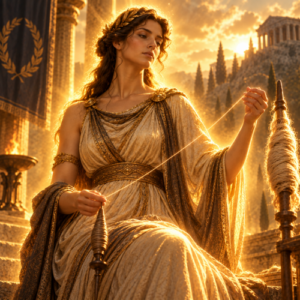
The most famous figures associated with fate are the Moirai of Greek mythology. Clotho, Lachesis, and Atropos collectively determine the course of mortal life. Clotho spins the thread of life, Lachesis measures its portion, and Atropos cuts it. Their imagery established one of mythology’s most enduring metaphors for destiny: human existence as a thread whose beginning, length, and ending are controlled by powers beyond the individual.
Roman mythology developed a closely related tradition through the Parcae, particularly Nona, Decima, and Morta. Their names and functions echo the Greek Moirai, demonstrating how the idea of supernatural beings controlling the thread of human existence continued across the ancient Mediterranean.
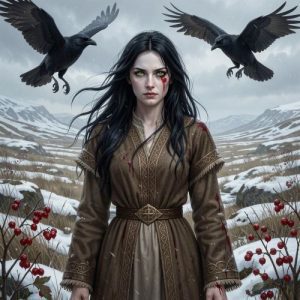
In Norse mythology, destiny is represented by the Norns, particularly Urðr, Verðandi, and Skuld. Associated with the roots of Yggdrasil, the World Tree, the Norns shape or determine the destinies of gods and humans. Their presence connects fate not merely with individual lives but with the structure of the cosmos itself.
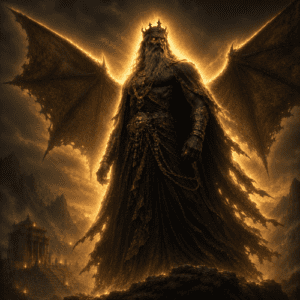
Greek mythology also contains Ananke, a primordial personification of necessity and inevitability. Unlike a figure who simply distributes individual fortunes, Ananke represents an unavoidable cosmic principle. Her presence illustrates an important distinction within mythology: fate can be imagined either as something administered by supernatural beings or as an underlying force that even gods cannot escape.
Destiny also overlaps with fortune. Tyche, the Greek goddess of fortune, represents the unpredictable distribution of prosperity, success, and chance. Her Roman counterpart, Fortuna, became one of the most influential personifications of fortune in the ancient world. Unlike the fixed destiny represented by the Moirai, Tyche and Fortuna emphasize the uncertainty of circumstance and the sudden reversals that can transform human lives.
These traditions reveal that fate was rarely understood as a single idea. Destiny could be predetermined, measured, written, woven, inherited, revealed, or unexpectedly changed by fortune. The beings associated with it therefore occupy different positions between inevitability and chance.
From the three Moirai measuring the thread of life to the Norns beneath the World Tree, fate figures embody humanity’s enduring fascination with a question that mythology repeatedly asks: how much of a life is chosen, and how much has already been decided?