

Rod : The Primordial Ancestor of Slavic Tradition
At a glance
| Description | |
|---|---|
| Origin | Slavic Mythology |
| Classification | Gods |
| Family Members | N/A |
| Region | Russia, Ukraine, and Belarus |
| Associated With | Creation, Birth, Ancestry, Kinship, Fate |
The Mythlok Perspective
In Mythlok’s Perspective, Rod is less a traditional god and more a representation of the invisible forces that connect generations. His significance lies not in heroic adventures or divine battles but in his embodiment of ancestry, continuity, and the origins of existence itself. This makes him one of the most philosophically fascinating figures in Slavic tradition. Rod shares similarities with creator figures such as Brahma from Indian tradition and Buri from Norse tradition. Yet unlike many creator gods who actively shape the world through dramatic acts, Rod represents the enduring thread that links the cosmos, the family, and the individual. His legacy reminds us that identity is not merely personal but part of a much larger chain stretching across generations.
Rod
Introduction
Rod is one of the most intriguing and debated figures in Slavic tradition. His name is closely linked to concepts of birth, kinship, ancestry, and origin, making him a powerful symbol of both creation and family continuity. In modern interpretations of Slavic religion, Rod is often portrayed as a primordial creator deity who existed before the cosmos and gave rise to both the divine and human worlds. He is frequently described as the spiritual ancestor of all existence and the force that binds generations together.
Despite his importance in contemporary reconstructions of Slavic belief, the historical evidence surrounding Rod remains limited. Most references to him come from medieval Christian writings that criticized older pagan practices, along with later folklore and linguistic studies. Because of this, scholars continue to debate whether Rod was originally worshipped as a supreme god, a spirit of ancestry, or a broader personification of kinship itself. Regardless of the uncertainty, Rod remains one of the most influential figures in modern understandings of Slavic spirituality and cultural identity.
Physical Traits
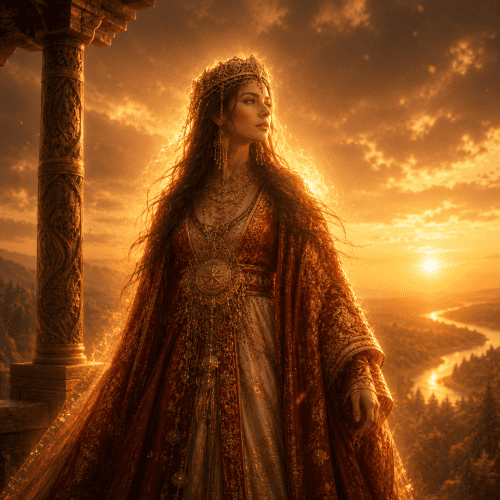
Unlike many mythological gods who possess detailed descriptions and recognizable iconography, Rod is largely an abstract figure. No surviving pre-Christian source provides a definitive account of his appearance. This absence suggests that early Slavic communities may have viewed him less as a physical deity and more as a cosmic principle connected to birth, lineage, and fate.
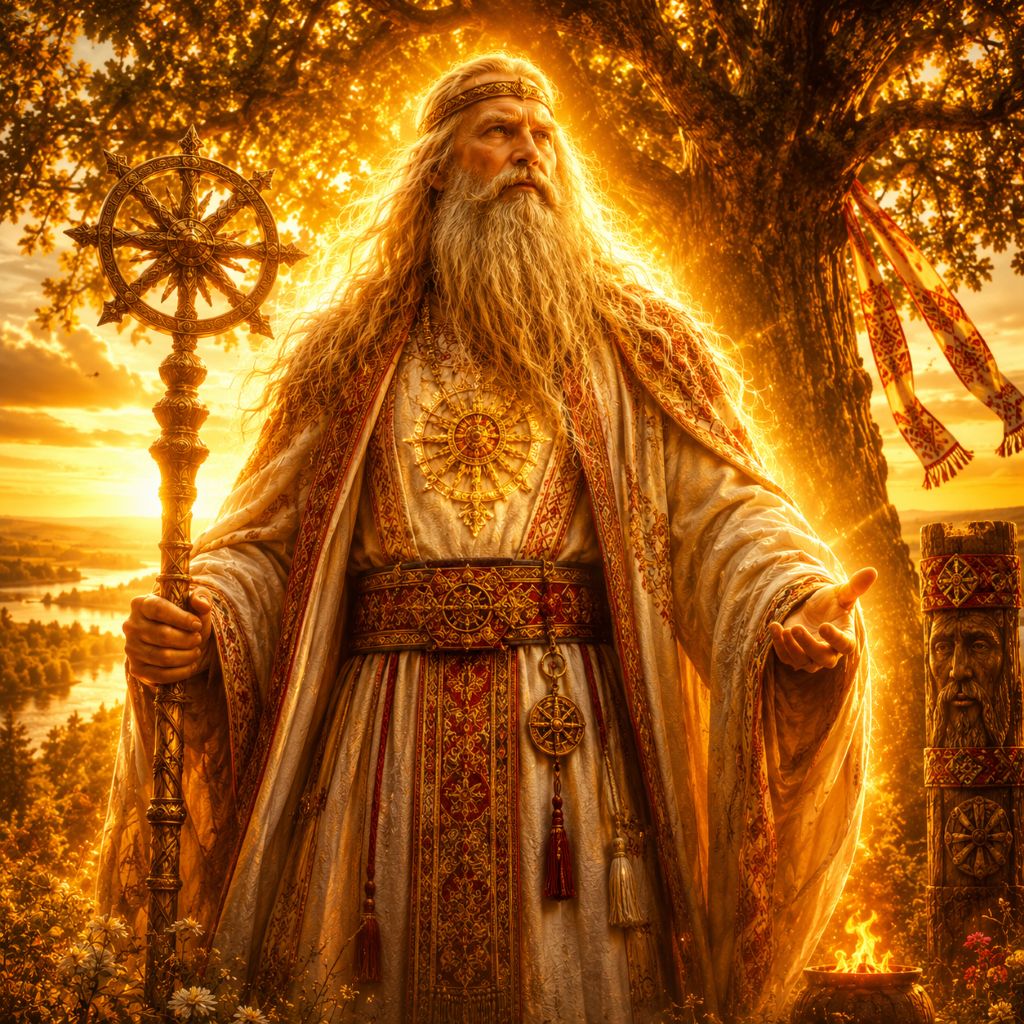
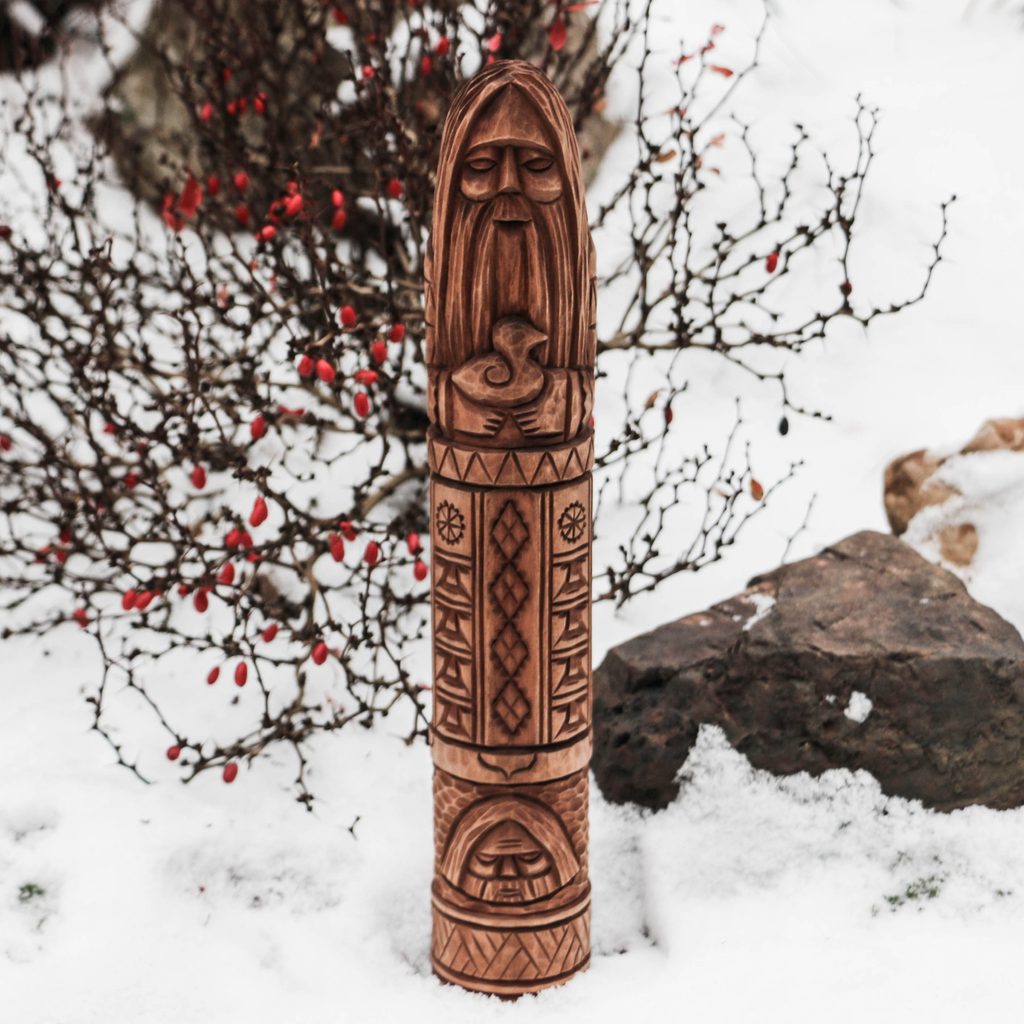
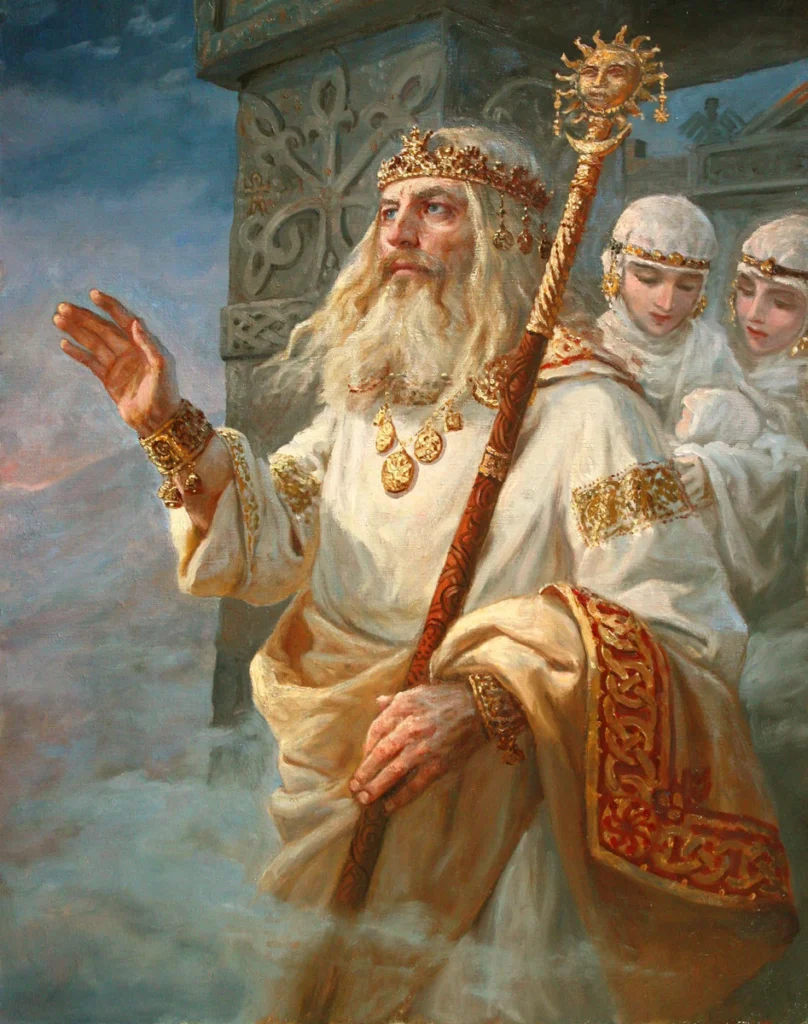
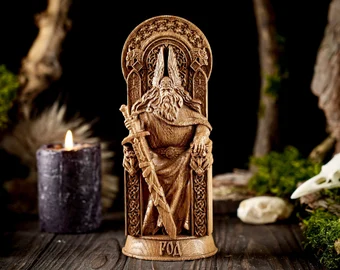
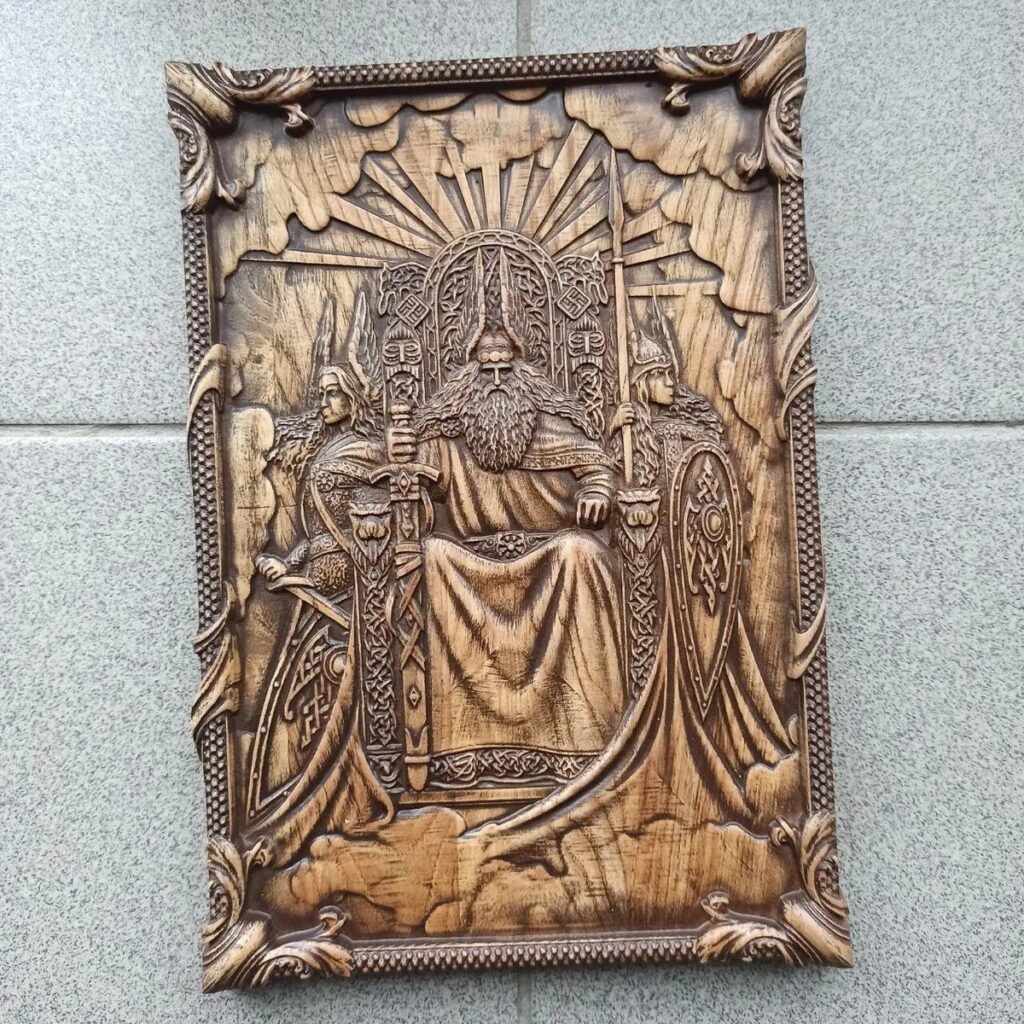
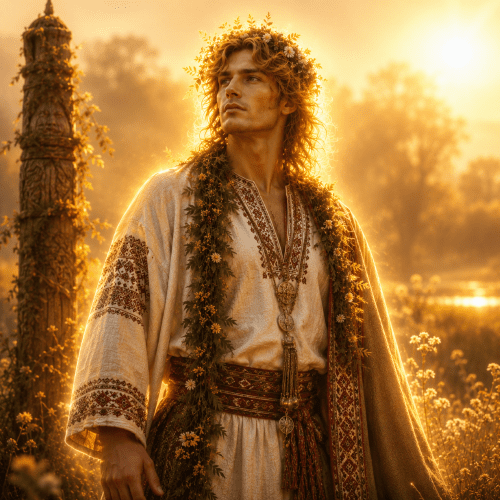
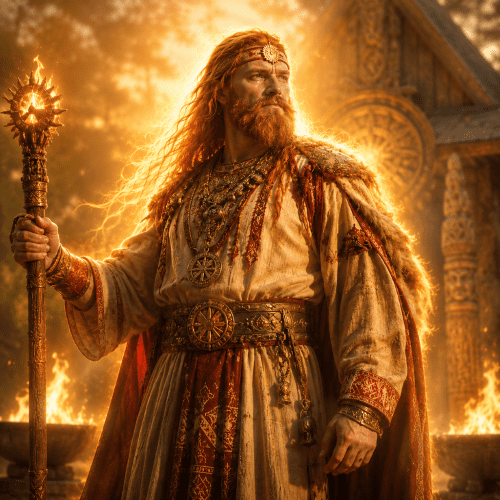
Modern artistic representations often portray Rod as an elderly man with a long beard, strong features, and an imposing presence. Such depictions emphasize wisdom, authority, and his role as the ancestor of both gods and humans. Artists frequently surround him with symbols of nature, fertility, and cosmic order, reinforcing his association with the creation of life.
Some contemporary interpretations connect Rod with imagery of the World Tree, a symbol found throughout Indo-European traditions. Others depict him holding a solar wheel, standing above flowing waters, or surrounded by the four elements. While these images are popular today, they should be understood as modern reconstructions rather than historically verified representations from ancient Slavic religion.
Family
Rod occupies a unique place within reconstructed Slavic cosmology because he is often viewed as the source from which other divine beings emerged. In many modern narratives, he is described as the progenitor of the Slavic pantheon, standing at the beginning of creation before the appearance of more familiar gods such as Svarog, Perun, and Veles.
One widespread reconstruction presents Rod as the father of Svarog, the celestial deity associated with fire and craftsmanship. Through Svarog, Rod becomes the grandfather of Perun, the famous god of thunder and storms. Although these family relationships are popular in modern retellings, direct historical evidence for such genealogies is limited.
Rod is also closely connected to the Rozhanitsy, mysterious female figures associated with childbirth and destiny. According to later folklore, these beings visited newborn children and influenced the course of their lives. Rod’s association with them reflects his role as a guardian of ancestry and family continuity. Rather than focusing solely on divine descendants, his importance extends to every human family, symbolizing the unbroken chain linking ancestors, the living, and future generations.
Other names
The name Rod originates from the Proto-Slavic root rodŭ, which relates to birth, family, clan, and origin. This linguistic connection provides one of the strongest pieces of evidence for understanding his original function. Even today, many Slavic languages preserve related words referring to kinship, ancestry, and family groups.
Some traditions associate Rod with the title Sud, meaning “Judge.” In this role, he is connected with destiny and the ordering of human lives. The association highlights a broader theme found throughout Slavic folklore: the belief that birth, fate, and family lineage are deeply interconnected.
Within modern Rodnovery, the contemporary revival of Slavic native faith, Rod is sometimes referred to using titles that emphasize his cosmic status rather than treating him solely as an individual deity. These titles portray him as the highest principle of existence, a source from which both nature and the divine world emerge. However, such interpretations reflect modern religious developments more than documented medieval traditions.
Powers and Abilities
Rod’s powers are fundamentally different from those of warrior gods or trickster figures found elsewhere in mythology. His influence operates on a cosmic and ancestral level rather than through dramatic battles or supernatural feats.
In many modern creation myths, Rod exists alone in primordial darkness before bringing order to the universe. Some versions describe him emerging from a cosmic egg, a motif found in numerous Indo-European and Eurasian creation stories. From this original state, he establishes the structure of the cosmos and sets the foundations for life itself.
Another major aspect of Rod’s power is his connection to fate. Through his association with the Rozhanitsy, he is believed to influence the destiny of individuals from the moment of birth. This role links him not only to creation but also to the unfolding journey of every human life.
Rod is also regarded as a protector of ancestry and lineage. He represents the spiritual bond between generations, ensuring that the wisdom, traditions, and memory of ancestors continue through their descendants. In agricultural communities, this connection naturally extended to fertility, prosperity, and the continuation of family lines.
Unlike deities associated with war, weather, or magic, Rod embodies continuity itself. His power lies in sustaining existence, preserving order, and maintaining the relationships that connect past, present, and future.
Modern Day Influence
Although worship of Rod largely disappeared following the Christianization of Slavic lands, his legacy has experienced a significant revival in recent decades. Modern Rodnover communities often place him at the center of their spiritual worldview, viewing him as a symbol of ancestral unity and cultural heritage.
The concept of Rod resonates strongly with people seeking a deeper connection to family history and traditional identity. As a result, his name frequently appears in contemporary discussions about Slavic spirituality, folklore, and indigenous religious revival movements.
Beyond religious circles, Rod has become a popular subject in books, documentaries, online educational content, and historical discussions. He is often presented as the Slavic equivalent of a primordial creator figure, allowing broader audiences to explore themes of ancestry, destiny, and cosmological origins.
Video games, fantasy literature, and worldbuilding projects inspired by Slavic folklore have also contributed to his modern popularity. While these portrayals are often imaginative rather than historically accurate, they help introduce Rod to new generations and ensure that his symbolic role as the ancestor of creation remains culturally relevant.
Today, Rod stands as both a mythological figure and a powerful cultural symbol. Whether viewed as a creator god, an ancestral spirit, or a personification of kinship itself, he continues to represent the enduring importance of family, heritage, and the interconnectedness of all life.
Related Images

Source
Basiuk, T. (2017). Rod (Slavic religion). In Wikipedia. Retrieved June 9, 2026, from https://static.hlt.bme.hu/semantics/external/pages/Rta/en.wikipedia.org/wiki/Rod_(Slavic_religion).html
Ivanov, V. V., & Toporov, V. N. (1993). Slavic paganism. In M. Eliade (Ed.), The encyclopedia of religion (Vol. 13, pp. 218–224). New York, NY: Macmillan.
Mazo, J. (n.d.). Rod – The Slavic god of cosmos and creator of the universe. Slavorum. Retrieved June 9, 2026, from https://www.slavorum.org/rod-the-slavic-god-of-cosmos-and-creator-of-the-universe/
Mythus Fandom. (n.d.). Rod. In Myth and Folklore Wiki. Retrieved June 9, 2026, from https://mythus.fandom.com/wiki/Rod
Rydel, M. (n.d.). Rod: Primal creator god of Slavic mythology. Slavic Myth. Retrieved June 9, 2026, from https://slavicmyth.com/rod-primal-creator-god-of-slavic-mythology/
Slavic-Mythology.com. (n.d.). Rod – Ancestral spirit. Retrieved June 9, 2026, from https://slavic-mythology.com/creatures/protective-spirits/rod/
Klejn, L. (2004). Slavic Paganism and Its Deities. Moscow: Nauka.
Zubov, M. (1997). Rod and Rozhanitsy in Slavic Tradition. St. Petersburg: Folklore Institute.
Procopius. (6th century). History of the Wars. Translated editions.
Frequently Asked Questions
Who is Rod in Slavic mythology?
Rod is a Slavic deity associated with birth, ancestry, kinship, fate, and the origins of existence.
Was Rod the supreme god of the Slavs?
Some modern reconstructions describe Rod as a supreme creator, but historical evidence for this role remains debated among scholars.
What does the name Rod mean?
The name derives from a Proto-Slavic root meaning birth, family, kinship, or origin.
What is Rod's connection to the Rozhanitsy?
Rod is often linked to the Rozhanitsy, female fate spirits associated with childbirth and determining a person’s destiny.
Is Rod still worshipped today?
Rod is honored by some practitioners of Rodnovery, the modern revival of Slavic native religious traditions.

ProReelz
Rod sounds like a pretty intriguing character. What kind of myths specifically highlight his role in creation?