Yggdrasil : The World Tree That Connects the Nine Realms
| Description | |
|---|---|
| Origin | Norse Mythology |
| Description | Cosmic ash tree connecting Nine Worlds |
| Associated Characters | Odin, Norns, Nidhogg, Eagle |
| Symbolism | Axis mundi, Fate, Life-death cycle |
| Source Texts | Poetic Edda, Prose Edda |
Mythlok Perspective
In Mythlok’s Perspective, Yggdrasil represents the ultimate symbol of cosmic interconnectedness rather than simply a mythical tree. The Norse vision of a living structure sustaining multiple realms reflects an understanding that existence functions as an interdependent system where every layer affects the others. Comparable world-tree concepts appear in many cultures. The Indian Ashvattha tree described in the Bhagavad Gita represents a cosmic tree linking heaven and earth, while the Mesoamerican World Tree connects the underworld, the earthly plane, and the heavens. These parallels suggest that civilizations across the world independently imagined the universe as a structured, living system centered around a sacred axis.
Yggdrasil
Introduction
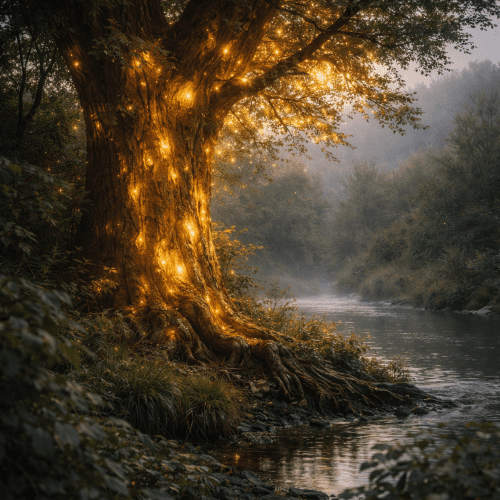
Yggdrasil is one of the most powerful and enduring symbols in Norse tradition. Often described as the World Tree, it stands at the center of the cosmos and connects every realm of existence. Ancient Norse texts portray it as an immense tree whose branches reach the heavens while its roots extend deep into mysterious worlds below. Through this vast structure, the universe itself is held together.
The importance of Yggdrasil appears clearly in medieval Icelandic sources such as the Poetic Edda and the Prose Edda. These texts describe the tree as a living structure that binds gods, humans, and other beings into a single cosmic system. Rather than being a simple mythological object, Yggdrasil represents the framework through which existence operates. The health of the tree reflects the stability of the universe itself.
In Norse cosmology, the realms of existence are not isolated places. They are linked through Yggdrasil’s roots, trunk, and branches. Gods travel between worlds, fate is decided near its roots, and the events of Ragnarök will ultimately shake the tree. Because of this, Yggdrasil is not just a symbol of nature but also a representation of cosmic order, destiny, and renewal.
Mythological Background
The earliest references to Yggdrasil appear in the Poetic Edda, particularly in the poem Grímnismál, where Odin describes the tree as the central pillar of existence. Later, the 13th-century scholar Snorri Sturluson expanded these descriptions in the Prose Edda, giving more detail about the tree’s structure and the beings associated with it.
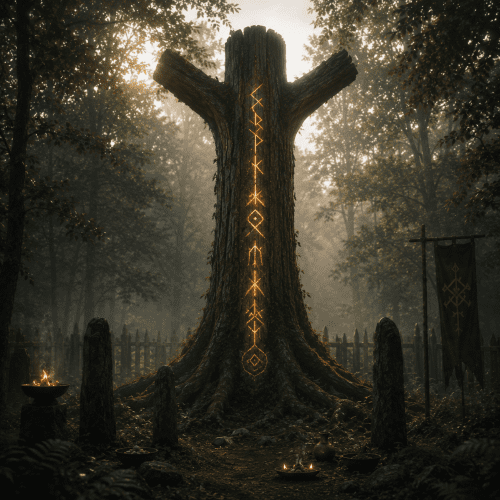
The name Yggdrasil is usually translated as “Odin’s Horse.” The word combines Yggr, one of Odin’s many names, with drasill, meaning horse or steed. The phrase is believed to reference Odin’s famous act of sacrifice when he hung from a tree for nine nights in order to discover the secrets of the runes. In this sense, the tree became the vehicle through which the god traveled between life, death, and knowledge.
Several creatures inhabit Yggdrasil and play symbolic roles within the cosmic structure. At the roots, the dragon Níðhöggr gnaws constantly, representing forces that threaten the stability of the universe. High among the branches sits a great eagle, a creature associated with watchfulness and perception. Between them runs the squirrel Ratatoskr, carrying messages and insults from one creature to another. This constant movement reflects the tension and communication that exist within the cosmos.
Four stags named Dáinn, Dvalinn, Duneyrr, and Duraþrór are also said to feed on the leaves of the tree. Their presence illustrates that even the World Tree is not immune to decay. Yggdrasil survives because it is continuously nourished and maintained by divine forces.
Mythological Functions
Within Norse cosmology, Yggdrasil acts as the structural framework that connects the Nine Realms. These realms include Asgard, Midgard, Vanaheim, Alfheim, Svartalfheim, Jotunheim, Nidavellir, Muspelheim, and Niflheim. Each realm houses different beings, including gods, giants, humans, dwarves, and elemental entities.
The realms exist in relation to the tree rather than in simple geographic positions. Asgard is often imagined among the higher branches, Midgard lies near the central trunk, and realms associated with death or primordial forces lie near the deeper roots. Through this structure, Yggdrasil creates a layered cosmos in which every realm remains connected.
Three major wells nourish the tree and reinforce its cosmic importance. The Well of Urðr, located near Asgard, is associated with fate and is tended by the Norns, powerful beings who determine destiny. The Well of Mímir, found in Jotunheim, holds profound wisdom. Odin sacrificed one of his eyes to drink from it. The third well, Hvergelmir, lies in Niflheim and is the source of many rivers. It is also where serpents and dragons, including Níðhöggr, dwell.
Despite the threats posed by creatures gnawing at its roots or feeding on its branches, Yggdrasil endures. The Norns regularly pour water and sacred clay from the Well of Urðr onto the tree, preserving it from decay. This constant care emphasizes the Norse idea that cosmic balance must be actively maintained.
Origins & Geographic Context
Unlike many mythological elements, Yggdrasil does not have a clear origin story. The surviving Norse texts do not describe when or how the World Tree first appeared. Instead, it is presented as a permanent feature of the cosmos, existing alongside the gods themselves.
Scholars believe that the concept of Yggdrasil may reflect older traditions from northern Eurasia. Many cultures across this region share myths about a cosmic tree or pillar connecting different levels of the universe. These structures often serve as pathways for spirits, shamans, or gods traveling between worlds.
Within the historical context of Scandinavia, Yggdrasil reflects the natural environment of the Viking Age. Forests dominated much of the landscape, and large trees often became sacred gathering points for rituals and assemblies. The idea of a giant tree sustaining the universe would have felt both familiar and powerful to Norse communities.
Medieval carvings and monuments also preserve echoes of the myth. Some scholars interpret elements of the Gosforth Cross in England as depicting scenes linked to Ragnarök and the World Tree. These images demonstrate how Norse cosmology continued to influence art even after Christianity began spreading through the region.
Symbolism and Archetypes
Yggdrasil represents the classic mythological concept known as the axis mundi, the central point that connects heaven, earth, and the underworld. This idea appears in many cultures, but in Norse cosmology it takes the form of a living tree that binds the universe together.
At a symbolic level, the tree illustrates the interconnectedness of all existence. Every realm, creature, and event ultimately relates to the structure of Yggdrasil. If one part of the cosmos is disturbed, the entire system feels the impact.
The tree also reflects the cycle of life and destruction that defines Norse cosmology. Creatures damage the tree, yet it continues to grow and endure. This balance mirrors the Norse worldview in which conflict and renewal are inseparable forces.
Odin’s sacrifice on the tree further reinforces its symbolic meaning. By hanging from the tree to gain wisdom, Odin demonstrates that knowledge often requires sacrifice. The World Tree therefore becomes not only a cosmic structure but also a symbol of transformation and enlightenment.
Cultural Significance
For the Norse people, Yggdrasil was more than a mythological concept. It represented a spiritual reality that shaped how they understood the world. The idea that all realms were connected through a single living structure encouraged a view of the universe as deeply interconnected.
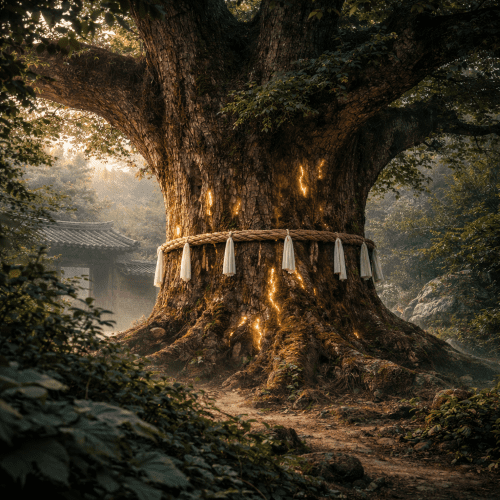
Sacred trees and groves were common in Viking Age religious practice. Offerings were sometimes placed near large trees, and assemblies could take place beneath them. These traditions may reflect a symbolic link to the greater World Tree described in myth.
The image of Yggdrasil also appears in medieval Scandinavian art and architecture. Rune stones, carvings, and decorative patterns sometimes include tree motifs that scholars associate with the World Tree. Even after the spread of Christianity in the region, echoes of the myth remained in folklore and artistic traditions. The continued use of tree symbolism suggests that Yggdrasil remained a powerful cultural idea long after the old belief systems changed.
Modern Influence
Yggdrasil continues to influence modern culture in many ways. Its imagery appears frequently in fantasy literature, television, and video games that draw inspiration from Norse themes. Modern audiences often recognize the World Tree as a symbol of interconnected realms or magical gateways.
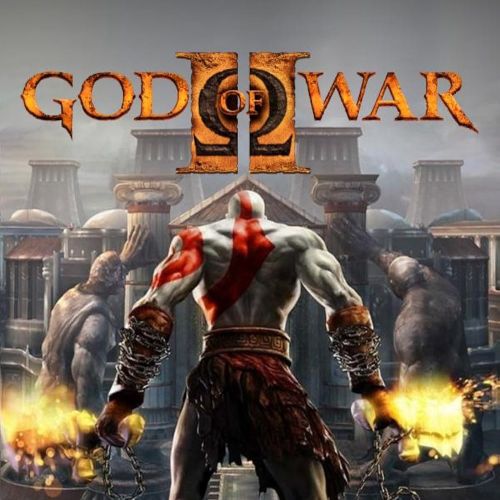
In popular media, Yggdrasil is sometimes depicted as the mechanism through which characters travel between worlds. Video games such as God of War (2018) use the concept to visually represent movement across different realms. Television series inspired by Viking history also reference the tree as a spiritual symbol of fate and destiny.
The concept has also become popular in modern art, jewelry, and tattoos. Many people view the World Tree as a representation of personal growth, resilience, and connection with nature. Environmental discussions sometimes invoke Yggdrasil as a metaphor for ecological balance. Just as the Norse cosmos depended on the health of the World Tree, modern ecosystems rely on the delicate balance of interconnected life.
Sources
Encyclopaedia Britannica. (n.d.). Yggdrasill: World tree, Nine Realms, Norse gods. In Britannica. Retrieved March 8, 2026, from https://www.britannica.com/topic/Yggdrasill
Andrén, A. (2014). Tracing Old Norse cosmology: The world tree, middle earth, and the sun in archaeological perspectives. Academia.edu. Retrieved March 8, 2026, from https://www.academia.edu/Tracing_Old_Norse_Cosmology
Klitgaard, J. A. H. (2019). In search of askr Yggdrasill: A phenomenological approach to the role of trees in Old Nordic religions. Academia.edu. Retrieved March 8, 2026, from https://www.academia.edu/In_Search_of_askr_Yggdrasill
Byock, J. L. (Trans.). (2005). The Prose Edda. Penguin Classics.
Larrington, C. (Trans.). (2014). The Poetic Edda (Rev. ed.). Oxford University Press.
Simek, R. (2007). Dictionary of Northern mythology (A. Hall, Trans.). D. S. Brewer.
The Viking Society for Northern Research. (n.d.). The Prose Edda and Norse cosmology resources. Retrieved March 8, 2026, from https://www.vsnr.org/publications/editions/
National Museum of Denmark. (n.d.). Norse mythology and cosmology. Retrieved March 8, 2026, from
https://en.natmus.dk/historical-knowledge/denmark/prehistoric-period-until-1050-ad/the-viking-age/religion/
Haynes, G. R. (2024). Old Norse Yggdrasill: An etymological re-evaluation. Mother Tongue, XXV(1), 95–118.
Frequently Asked Questions
What is Yggdrasil in Norse tradition?
Yggdrasil is the World Tree that connects the Nine Realms of Norse cosmology and serves as the central structure of the universe.
Which creatures live on Yggdrasil?
Several beings inhabit the tree, including the dragon Níðhöggr at its roots, an eagle in its upper branches, the squirrel Ratatoskr, and four stags that feed on its leaves.
What are the three wells beneath Yggdrasil?
The wells are Urðarbrunnr (associated with fate), Mímisbrunnr (associated with wisdom), and Hvergelmir (a primordial well that feeds many rivers).
Why is Yggdrasil called Odin’s Horse?
The name comes from Odin hanging from the tree for nine nights to gain the knowledge of the runes, symbolically riding the tree like a steed.
Does Yggdrasil survive Ragnarök?
Yes. According to Norse myths, the tree endures the destruction of Ragnarök and shelters two humans who will repopulate the world.