Figures Associated With Nature in Ancient Civilizations and Sacred Traditions
Nature occupies a central place in the mythologies of civilizations across the world. Forests, rivers, mountains, plants, animals, and the changing seasons were often understood as expressions of divine power rather than merely features of the physical environment. Through gods, spirits, and supernatural beings, communities explained the rhythms of the natural world and expressed their relationships with the land around them.
In Greek mythology, Gaia represents the primordial Earth and the source of life. She is more than a landscape or a fertility figure: Gaia embodies the planet as a living cosmic presence from which gods, giants, and countless other beings emerge. Her mythology reflects the ancient Greek understanding of the Earth as a foundational power within the universe.
In Celtic traditions, Cernunnos is frequently associated with animals, wild places, abundance, and the relationship between humans and the natural world. Often depicted with antlers and surrounded by animals, he appears in ancient iconography as a figure connected with the untamed landscape. His precise mythology remains uncertain, as surviving Celtic evidence is limited, but his imagery has become strongly associated with nature and the wilderness.
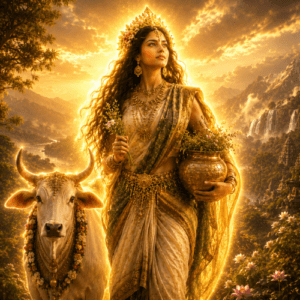
Indian traditions contain many divine figures connected with the natural environment. Prithvi, the Earth goddess, represents the ground that sustains living beings. In Vedic tradition, Prithvi is frequently paired with Dyaus, the sky, forming a cosmic relationship between Earth and heaven. Vayu, associated with wind, and Agni, associated with fire, represent natural forces that were also central to ritual and everyday life. These figures show how the natural world could be understood through both physical experience and sacred relationships.
In Norse mythology, Freyr is associated with fertility, prosperity, favourable weather, and agricultural abundance. His connection to peace and the productive powers of the land reflects the importance of successful harvests in societies shaped by seasonal change. Jörð, the personification of Earth and mother of Thor in the surviving Norse tradition, further illustrates how the landscape could be represented as a divine being.
Japanese traditions approach the natural world through the presence of kami, sacred presences associated with particular places, phenomena, and living things. Mountains, waterfalls, ancient trees, and other features of the environment may be treated as spiritually significant. This understanding is not limited to a single nature deity; it reflects a broader religious relationship between people and the places they inhabit. Konohanasakuya-hime, associated with Mount Fuji, blossoms, and the fragility of life, provides one example of a divine figure linked to the natural landscape.
Across these cultures, nature is rarely presented as a passive background to divine stories. It can be a creator, a source of nourishment, a force of destruction, or a sacred presence deserving respect. Floods, storms, droughts, seasonal renewal, and the growth of crops all shaped the ways communities imagined their world.
Nature-related mythology also reveals differences between cultures. Some traditions personify the Earth as a primordial mother, while others associate natural features with local spirits or divine guardians. Certain figures represent the fertility of cultivated land, whereas others are linked with wilderness and the unpredictability of animal life. These distinctions reflect the different environments, livelihoods, and religious ideas of the societies that developed them.
Exploring nature in world mythology therefore offers more than a catalogue of gods and spirits. It reveals how human communities understood their dependence on the environment and gave meaning to the forces that sustained or threatened their lives. From the primordial Earth to sacred mountains and the spirits of forests, these traditions preserve diverse ways of imagining the relationship between humanity and the living world.