


Cemí : The Spirits Between the Taíno and the Divine
| Description | |
|---|---|
| Origin | Taino Mythology |
| Nature | Variable |
| Notable Members | Yúcahu, Atabey, Boinayel, Marohu, Guabancex |
| Symbolism | Spiritual power, Ancestry, Fertility, Agriculture, Weather, Healing |
| Epics | N/A |
Mythlok Perspective
In Mythlok’s Perspective, the Cemí represents a distinctly Taíno understanding of spiritual power, where gods, ancestors, nature and sacred objects could exist within the same religious relationship. Unlike the kami of Japanese mythology, which can inhabit natural places and phenomena, Cemís were often given tangible form through carefully crafted objects. This makes them especially significant as living links between the spiritual world, ancestral memory and the everyday concerns of Taíno communities.
Cemí
Introduction
The Cemí, also written zemí or zemi, is one of the central spiritual concepts of Taíno mythology and religion. However, Cemí should not be understood as the name of one god, species or mythological individual. Instead, it describes a broad category of supernatural beings, sacred forces and the material objects through which those beings could be represented or embodied.
The Taíno peoples of the Greater Antilles understood the world as populated by powerful non-human beings associated with ancestors, natural forces, fertility, weather, agriculture and other aspects of existence. A Cemí could embody one of these powers or provide a tangible means through which humans interacted with it.
This made Cemís important well beyond religious ceremony. They were involved in relationships between individuals, families, communities and caciques, the political leaders of Taíno societies. A powerful Cemí could therefore possess religious significance while simultaneously contributing to the authority and legitimacy of a chief. Archaeological discoveries reinforce this understanding. Cemí representations survive as sculptures, stones, wooden figures, masks and other ritual objects, demonstrating that Taíno spirituality gave physical form to relationships with the supernatural.
Physical Description
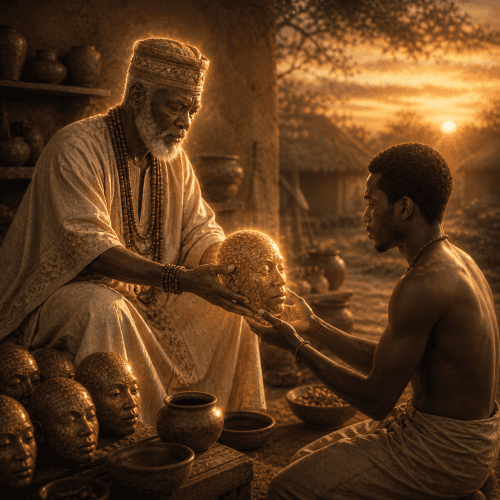
Cemís had no standardized appearance because the term encompassed many different supernatural beings and their representations. Their physical manifestations could range from small portable objects to large ceremonial sculptures. One of the most recognisable forms is the three-pointed stone Cemí, often known as a trigonolito. These stones frequently feature carved faces, geometric designs or combinations of human and animal characteristics. Archaeologists have discovered numerous examples throughout Puerto Rico and Hispaniola.
Other Cemí representations were distinctly anthropomorphic. Some show crouching or seated figures with enlarged eyes, prominent teeth or unusual facial expressions. Others incorporate characteristics associated with animals, reflecting the varied forms through which supernatural power could be expressed.
Materials also differed considerably. Stone, wood, cotton, shell and bone were all used, sometimes in combination. Particularly remarkable is the fifteenth-century cotton Cemí from Hispaniola now held by the University of Turin. The figure incorporates cotton and other plant fibres together with wood, shell, stone and human skeletal material. Some Cemí objects were also connected with cohoba, an important Taíno ritual involving psychoactive snuff. Certain ceremonial figures were designed with receptacles that could hold the substance used during these rites.
Mythological Context
The Taíno spiritual universe did not separate the natural and supernatural worlds as sharply as modern Western categories often do. Spirits and supernatural powers could influence rain, crops, fertility, illness, weather and human fortunes. Cemís provided a means of establishing relationships with these forces. Rather than functioning simply as representations of distant gods, sacred Cemí objects could be treated as powerful presences with which people interacted through ritual.
Their importance was particularly visible in the lives of caciques and behíques, or ritual specialists. Leaders and religious practitioners could communicate with supernatural beings through ceremonies, offerings and cohoba rituals.
Cemís could also embody ancestors. Objects incorporating human remains demonstrate how ancestral identity could become physically connected with a sacred object. In this context, the Cemí became part of an ongoing relationship between the dead and their descendants rather than merely a memorial representation. This combination of divine, ancestral and natural associations makes the Cemí concept unusually broad within Caribbean mythology.
Origins
The origins of Cemí traditions lie in the Indigenous cultures of the Caribbean before European colonisation. The Taíno were not a single culturally uniform population, and their religious practices varied across the Greater Antilles. Nevertheless, archaeological evidence demonstrates widespread traditions of sacred objects and supernatural representations.
Cemí practices were particularly prominent in Hispaniola and Puerto Rico, where archaeologists have recovered large numbers of ceremonial objects. Sites such as Caguana in Puerto Rico provide evidence that Cemí imagery was incorporated into ceremonial landscapes connected with Taíno political and religious life.
European observers encountered these traditions during the late fifteenth and early sixteenth centuries. Their accounts provide some of the earliest written descriptions of Cemís, although they must be treated cautiously because Spanish chroniclers interpreted Taíno beliefs through Christian and European cultural frameworks. Archaeology therefore plays a crucial role in reconstructing the original meaning of Cemís. Objects, ceremonial sites and iconography provide evidence that complements the colonial written sources.
Notable Members
Because Cemí is a category rather than a single species, its “members” are individual supernatural beings or sacred manifestations associated with the tradition. Yúcahu, also called Yukiyú in some traditions, was one of the most important Taíno supernatural beings. He was associated with cassava, agriculture and fertility and became particularly significant in interpretations of three-pointed Cemí stones.
Atabey was a major female supernatural power associated with fertility, water and childbirth. She occupied an important position within Taíno religious traditions and is frequently discussed alongside Yúcahu. Boinayel was associated with rain and agricultural fertility. His connection with rainfall illustrates the importance of weather-related supernatural powers to agricultural Taíno communities.
Marohu was associated with clear weather, providing a contrasting relationship to rain and storms. Guabancex was a powerful storm or hurricane-associated being. Her presence illustrates that Cemí traditions were not restricted to benevolent agricultural forces; supernatural beings could also embody destructive natural phenomena. Other named beings appear in historical and scholarly discussions of Taíno cosmology, but the surviving evidence is fragmentary. It is therefore preferable to distinguish between well-attested figures and later reconstructions of Taíno mythology.
Relationship with Other Beings
Cemís existed within a network of relationships involving gods, ancestors, humans, chiefs and ritual specialists. Their relationship with caciques was particularly important. Sacred objects could be inherited, exchanged or transferred between leaders, making Cemís part of political relationships as well as religious ones. Possession of an important Cemí could reinforce a chief’s status and demonstrate access to supernatural authority.
Behíques, the ritual specialists of Taíno communities, acted as important intermediaries. Through ceremonies such as cohoba rituals, they sought communication with supernatural powers and attempted to obtain guidance or assistance.
Cemís could also maintain relationships with ordinary community members. People might appeal to them for agricultural success, fertility, healing or protection. These relationships were understood as reciprocal: humans offered ritual attention and offerings, while supernatural powers were expected to provide assistance or influence events. The ancestral dimension was equally significant. Some sacred objects incorporated human remains, creating an intimate connection between Cemí traditions and the continuing presence of deceased ancestors.
Similar Beings
The Cemí concept can be compared with sacred spiritual beings from other Indigenous traditions, but no direct equivalent exists. One useful comparison is the mana concept found in several Oceanic cultures. Like Cemí power, mana can describe a supernatural potency associated with people, objects and actions. However, mana is a broader concept of spiritual potency rather than a specific class of beings.
Cemís can also be compared with ancestor objects found in numerous Indigenous societies, where physical objects serve as points of contact with deceased relatives or spiritual powers. The Taíno system is distinctive because sacred objects could simultaneously relate to ancestors, supernatural beings, environmental forces and political authority. The comparison should therefore be understood as an analogy rather than evidence that these traditions share a common origin.
Symbolism and Interpretations
Cemís symbolise the Taíno understanding that spiritual power could exist within relationships between people, objects, ancestors and the natural world. The three-pointed form is particularly associated with agriculture and fertility. Its exact meaning may have varied between objects, and modern interpretations should not assume that every three-pointed stone carried an identical symbolic message.
Cemís also represent ancestry. When human remains were incorporated into a sacred object, the boundary between ancestor and artifact became deliberately intimate. Their association with rain, hurricanes, clear weather and crops further demonstrates the importance of environmental forces. For agricultural communities, supernatural relationships with weather and fertility were directly connected with survival.
Finally, Cemís symbolised political authority. Their possession and ritual management helped establish relationships between caciques and supernatural powers, making religious objects part of the broader structure of Taíno society.
Modern Influence
Cemís remain powerful symbols of Taíno cultural heritage and Indigenous Caribbean identity. Archaeological collections across Puerto Rico, the Dominican Republic, Europe and North America preserve surviving examples, while museums increasingly interpret them within the wider context of Taíno society rather than presenting them simply as prehistoric sculptures.
The Museo El Cemí in Jayuya, Puerto Rico, is particularly notable because its architecture itself was inspired by the three-pointed Cemí form. The museum connects archaeological heritage with education about Taíno culture. Modern scholarship has also transformed understanding of these objects. Scientific analysis of the famous cotton Cemí in Turin, for example, has revealed details about its construction and materials that cannot be established from historical descriptions alone.
For contemporary Taíno cultural movements, Cemí imagery can serve as a symbol of ancestral continuity, Indigenous identity and cultural resilience. At the same time, the history of Cemí objects in overseas museums raises important questions about colonial collecting, sacred heritage and Indigenous control over cultural materials. The Cemí therefore survives in two interconnected ways: as archaeological evidence of an ancient Caribbean spiritual system and as a continuing symbol within contemporary discussions of Taíno identity and heritage.
Sources
Oliver, J. R. (2009). Caciques and cemí idols: The web spun by Taíno rulers between Hispaniola and Puerto Rico. University of Alabama Press.
Pané, R. (1998). An account of the antiquities of the Indians (J. J. Arrom, Ed. & Trans.). Duke University Press.
Stevens-Arroyo, C. (1988). The Taíno cult of the cemis. In F. E. Mosquera (Ed.), Proceedings of the Tenth International Congress for the Study of Pre-Columbian Cultures of the Lesser Antilles (pp. 296-305). Université de Montréal.
The Metropolitan Museum of Art. (n.d.). Necklace with pendant figure [Taíno stone pendant]. https://www.metmuseum.org/art/collection/search/314313
Tiboko Foundation. (2023). Classic Taíno spiritual beliefs and practices. https://tiboko.com/wp-content/uploads/2023/07/Classic-Taino-Spiritual-Beliefs.pdf
Wikipedia. (n.d.). Zemí. https://en.wikipedia.org/wiki/Zemi
Wikipedia. (n.d.). Taíno mythology. https://en.wikipedia.org/wiki/Ta%C3%ADno_mythology
Wikipedia. (n.d.). Museo el Cemí. https://en.wikipedia.org/wiki/Museo_el_Cem%C3%AD
Frequently Asked Questions
What is a Cemí in Taíno mythology?
A Cemí is a Taíno sacred spiritual being or ancestral presence and the object through which that supernatural power could be represented or embodied in ritual.
What did Taíno Cemís look like?
Cemís had many forms, including three-pointed stones, human-like figures, animal forms, masks and ceremonial objects made from stone, wood, cotton, shell and bone.
What powers did Cemís have?
Cemís were associated with supernatural powers involving fertility, agriculture, weather, healing, protection, divination and communication with spiritual beings.
Were Cemís gods in Taíno mythology?
Not exactly. Cemí is a broader category that could refer to deities, ancestors, spirits and sacred objects embodying or representing supernatural power.
Where are Taíno Cemís found today?
Surviving Cemís are preserved in museums and collections across the Caribbean, Europe and North America, including major collections in Puerto Rico, the Dominican Republic, Italy and the United States.


