

Langun-Gobingob Caves : The Hidden Underground World of Samar
At a glance
| Description | |
|---|---|
| Mythology | Philippine Mythology |
| Country | Philippines |
| Closest airport | Daniel Z. Romualdez Airport (TAC), Tacloban Calbayog Airport (CYP), Samar |
| Type | Natural Formation |
| Accessibility | 9/10 |
Mythlok Perspective
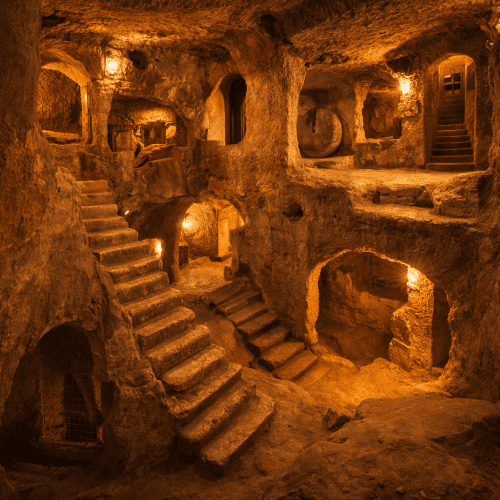
In Mythlok’s Perspective, the Langun-Gobingob Caves represent the enduring human fascination with the mysterious worlds hidden beneath the earth. Across cultures, caves have often been viewed as gateways to spiritual realms or the underworld. Just as these vast chambers in Samar evoke awe and mystery, ancient cave systems like those at Cappadocia in Turkey or the sacred caves of Elephanta in India also reveal how underground spaces became powerful symbols of transformation, refuge, and spiritual exploration.
Langun-Gobingob Caves
Introduction
The Langun-Gobingob Cave System, or Calbiga Cave, stands as the largest cave system in the Philippines and one of Southeast Asia’s most expansive. Located in the town of Calbiga, Samar, it spans approximately 2,968 hectares, offering explorers a labyrinth of 12 main caves with stunning formations, underground rivers, and immense chambers. Beyond its natural beauty, Langun-Gobingob holds deep mythological and cultural significance, drawing in those intrigued by Philippine folklore. This remarkable underground world blends ecological marvels with tales of local legends, creating a unique experience where adventure meets spirituality and cultural heritage.
Connection with Mythology
The Langun-Gobingob Cave System is not only a remarkable natural wonder but also a site rich in mythology and local folklore. According to tradition, the caves are believed to be the home of various “anitos,” or ancestral spirits, who guard the caves and their treasures, permitting only the worthy to enter. The system’s name derives from two deities, Langun and Gobingob, thought to protect the area, further embedding the caves in local mythological beliefs. These tales speak of enchanted beings like “kapres” (tree giants) and “tikbalangs” (half-human, half-horse creatures) inhabiting the caves, adding to its mystique.
The caves are viewed as sacred spaces where ancient deities are believed to dwell, emphasizing a common cultural theme where nature is seen as spiritually alive. This sacred connection is reinforced through the cave’s name, Langun, which is tied to a mythological figure, symbolizing the intertwining of folklore with the region’s identity. The caves’ role as protectors of the land reflects the local belief that the natural world holds divine power, safeguarding both the environment and its people.
The legend of Mabuting Bathala, a supreme deity in the local folklore, further highlights the caves’ spiritual importance. Bathala’s emergence during key events suggests that the caves serve as portals to the divine, bridging the physical and spiritual realms. This belief underscores the caves as places of blessing, intervention, and spiritual guidance, especially during critical moments in the community’s life.
The caves also continue to be sites for spiritual rituals, often used by shamans, reflecting the ongoing cultural and spiritual practices of the local people. The mystical atmosphere of the caves, with their echoing chambers, fosters a sense of reverence, making them an ideal setting for worship and reflection.
For many visitors, the Langun-Gobingob Cave System is more than just a place for adventure. It is a spiritual journey that connects them to their cultural heritage. The tales surrounding the caves enhance the experience, allowing explorers to connect not only with the natural beauty of the site but also with the rich mythology and traditions that shape the local identity. This profound sense of connection is especially felt by those with Filipino roots, deepening their appreciation for the Philippines’ cultural heritage.
Ways to Get There
Reaching the Langun-Gobingob Cave System requires a bit of travel, but the journey itself is part of the adventure. The nearest major gateway is Tacloban City, which has an airport connected to major Philippine cities such as Manila and Cebu. From Tacloban, visitors can travel by bus, van, or private vehicle to the town of Calbiga, a journey that typically takes two to three hours. Travelers arriving from nearby islands can also take ferry services to Tacloban or Ormoc and continue by road. Renting a private vehicle is often the most convenient option, especially for those planning to explore the region at their own pace.
Once in Calbiga, visitors must register at the local tourism office and hire a certified guide, which is required for both safety and conservation reasons. From there, travelers usually ride a habal-habal, or motorbike taxi, toward the trailhead before beginning the trek to the cave entrance. The hike takes about an hour and passes through dense tropical vegetation and rugged terrain, offering glimpses of the area’s rich biodiversity. As the path approaches the cave system, the landscape becomes increasingly dramatic, setting the stage for the vast chambers and limestone formations hidden within the mountains of Samar.
What to Look For
The Langun-Gobingob Cave System is famous for its remarkable geological formations, created over thousands of years through the slow movement of water and mineral deposits. One of the most striking features is a large flowstone formation known as “The Stage.” When illuminated by headlamps, its wide and smooth surface reflects light in a way that resembles a natural stage, creating a dramatic visual effect deep within the cave. Nearby chambers contain formations often described as chandeliers, where mineral deposits hang from the ceiling in intricate shapes. In some areas, natural openings in the rock allow rays of sunlight to filter inside, casting an almost mystical glow across the cavern walls.
The cave system itself is made up of several major chambers, with Gobingob and Langun being the most prominent. Gobingob is known for its immense open spaces, making it one of the largest cave chambers in the Philippines and a favorite location for spelunkers exploring the system. Langun Cave, on the other hand, offers deeper and more challenging passages that appeal to experienced cave explorers seeking a more adventurous journey. Together, these chambers reveal the immense scale and complexity of the underground network.
Beyond its geological beauty, the Langun-Gobingob Cave System also contains underground rivers and clear pools that wind through the cavern passages. These hidden waterways add another layer of wonder to the exploration experience, reflecting light off the cave walls and creating an otherworldly atmosphere. Some chambers are so vast that they feel like enormous underground halls, with the Gobingob Chamber large enough to fit multiple football fields within its space.
The caves also support a unique ecosystem adapted to life in darkness. Large colonies of bats and swiftlets inhabit the upper chambers, while smaller organisms such as cave fish and specialized insects survive in the underground waters. Many of the rock formations resemble familiar shapes, from animals to faces and abstract sculptures, formed naturally over centuries by dripping water and mineral deposits. These features combine to make the Langun-Gobingob Cave System one of the most fascinating underground landscapes in Southeast Asia.
Importance in cultural history
The Langun-Gobingob Cave System is an important cultural and historical site, not only for the local Waray-Waray people but for the Philippines as a whole. It has yielded valuable archaeological findings, including ancient pottery and tools that shed light on the early lives of the region’s inhabitants. For the local community, the caves are sacred, and traditional rituals are still practiced to honor the spirits believed to reside within. As a major eco-tourism destination in Samar, the caves attract visitors from around the world, and there are ongoing efforts to protect their natural beauty and delicate ecosystems for future generations.
The caves’ significance extends beyond their visual allure to encompass their ecological and cultural value. The stunning rock formations, biodiversity, and unique ecosystems make the site a key attraction for nature lovers and tourists, while its connection to the local community’s spiritual practices ties it to the rich cultural heritage of the region. Legal protections under Philippine law, including their status within the Samar Island Natural Park, ensure that both the natural environment and the cultural narratives associated with the caves are preserved. These measures underscore the importance of safeguarding both the environment and the traditions that have evolved around it.
The caves also play a key role in supporting sustainable local tourism. The establishment of guided tours offers a way for the local community to benefit from eco-tourism, while simultaneously ensuring the preservation of the site. By hiring local guides and promoting responsible tourism practices, the community helps protect the cave’s cultural and natural significance while sharing their history with visitors. This sustainable approach fosters greater respect for both the cultural heritage and the environment, allowing the caves to continue serving as a meaningful site for future generations to explore and appreciate.
Best time to travel
The ideal time to visit the Langun-Gobingob Cave System is between November and May, when the dry season prevails in the Philippines. This time of year offers more manageable trekking conditions, with drier paths that make cave exploration safer and more enjoyable. The predictability of the weather during these months also reduces the risks of flooding or slippery trails that can occur during the rainy season.
Visiting during the dry season allows travelers to focus entirely on the cave’s wonders without the concern of unpredictable weather. For those seeking a deeper cultural experience, February is a great month to explore the region. During this time, local festivals celebrate Samarnon culture, featuring traditional music, dance, and crafts. Engaging in these festivities adds another layer to the trip, offering a richer understanding of the area’s cultural heritage alongside its natural beauty.



Source
Department of Tourism Philippines. (n.d.). Langun-Gobingob Cave System. https://beta.tourism.gov.ph/explore/langun-gobingob-cave-system
Encyclopaedia Britannica. (n.d.). Samar Island. https://www.britannica.com/place/Samar-island-Philippines
Atlas Obscura. (n.d.). Langun-Gobingob Cave System. https://www.atlasobscura.com/places/langun-gobingob-cave-system
Philippine Information Agency. (n.d.). Langun-Gobingob caves of Samar. https://pia.gov.ph/features/articles/1015939
Gillieson, D. (1996). Caves: Processes, development, and management. Blackwell Publishers.
Ford, D., & Williams, P. (2007). Karst hydrogeology and geomorphology. Wiley.
White, W. B. (2012). Encyclopedia of caves (2nd ed.). Academic Press.
Mylroie, J. E., & Carew, J. L. (2000). Speleogenesis in tropical island karst systems. Journal of Cave and Karst Studies, 62(1), 35–42. https://www.caves.org/pub/journal
Frequently Asked Questions
Where are the Langun-Gobingob Caves located?
The Langun-Gobingob Caves are located in Calbiga on Samar Island in the Philippines.
Why are the Langun-Gobingob Caves famous?
They are one of the largest cave systems in the Philippines and among the largest in Asia, known for their enormous chambers and underground rivers.
How big is the Langun-Gobingob Cave system?
The cave system stretches over several kilometers and contains massive chambers, including one of the largest known cave chambers in the Philippines.
Can tourists visit the Langun-Gobingob Caves?
Yes, guided cave expeditions are available, though the caves are best suited for experienced explorers due to their challenging terrain.
What makes the caves unique?
The caves feature huge limestone formations, subterranean rivers, and vast chambers that showcase the geological complexity of tropical karst landscapes.