

Jenny Greenteeth : The Drowning Spirit of England’s Rivers
| Description | |
|---|---|
| Origin | England |
| Classification | Humanoid |
| Demeanour | Evil |
| Habitat | Lake |
| Status | Not Proved |
Mythlok Perspective
In Mythlok’s Perspective, Jenny Greenteeth embodies environmental warning encoded as story. She is not merely a monster but a protective narrative device. By giving danger a face, communities made abstract risk tangible for children. Cross-culturally, Jenny Greenteeth parallels the Slavic rusalka, a water spirit that lures victims into rivers, and the Japanese kappa, which inhabits ponds and drags swimmers underwater. Yet Jenny is distinctly British in tone — less divine, more domestic. She is not tied to cosmic order or ritual appeasement. She is a grandmother’s warning whispered near a canal bank.
Jenny Greenteeth
Introduction
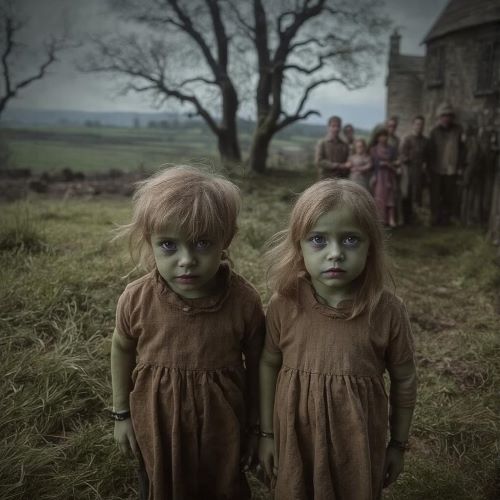
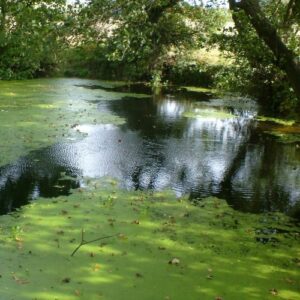
Jenny Greenteeth is a wicked river hag from English folklore, known for lurking in lakes, streams, and rivers to drag unsuspecting victims—especially children and the elderly—into the depths. Her name is also used for pondweed or duckweed, which can create a deceptive, solid-looking surface over water, adding to the myth’s eerie realism. Common in tales from Liverpool and southwest Lancashire, she serves as a chilling warning against wandering too close to treacherous waters. Similar to figures like the Slavic Rusalka or Japan’s Kappa, Jenny may have originated as a way to scare children into staying safe, with some folklorists even linking her story to ancient sacrificial rites..
Physical Attributes
Descriptions of Nessie vary, but most accounts depict her as a large, serpentine creature with a long neck and one or more humps protruding from the water. Some reports describe her as having a small head and flippers, which resemble those of a prehistoric plesiosaur. This blend of reptilian and aquatic features adds to her enigmatic and otherworldly allure.
First Sighting/Reporting
The origins of Jenny Greenteeth remain murky, but the legend is thought to have begun in northwestern England, particularly in Liverpool and Lancashire. Likely created to warn children about the dangers of deep or deceptive waters, her tale gradually spread to regions like North Staffordshire and Shropshire. Since she exists primarily in oral tradition, pinpointing the earliest reference is difficult, though mentions of her have appeared in literature and local folklore for centuries.
In modern times, Jenny Greenteeth occasionally resurfaces in eerie sightings. In 2018, an Australian tourist took a photograph in Liverpool’s St James’ Cemetery, which some locals believed showed her ghostly presence. While her folklore origins remain rooted in English legend, she has also appeared in contemporary fiction, such as Summer Knight, where she is reimagined as a Faerie of the Winter Court in service to Maeve.
Other Names
Jenny Greenteeth goes by many names depending on the region. In Lancashire and North Staffordshire, she is often called Jinny Greenteeth, while in Cheshire and Shropshire, she takes on names like Wicked Jenny or Jeannie Greenteeth. Other versions of her name include Screeching Ginny, Jenny wi’ the Airn Teeth, Ginny Burntarse, and Nelly Longarms. These variations reflect how the legend has evolved across different communities, each adding its own local twist to the menacing water hag.
Modus Operandi
Jenny Greenteeth is a sinister presence in still, murky waters, lurking beneath duckweed and algae-covered ponds, rivers, and canals. She preys on the unsuspecting, particularly children who wander too close. Parents once warned their little ones not to play near the water’s edge, fearing Jenny’s long, skeletal fingers would reach out, drag them under, and drown them before making a meal of them.
She is most often associated with stagnant pools where thick green growth hides the true depth of the water. Some say she can manipulate the surface, creating ripples to lure the curious closer. Though she is primarily a creature of the depths, legends also claim she sometimes perches in tall trees, silently watching for her next victim. A strange, whistling sound in the wind is said to signal her presence, a chilling warning to stay away.
Pop Culture References
Jenny Greenteeth’s eerie legend has seeped into popular culture, inspiring a range of characters in literature, film, and gaming. She served as the basis for the grotesque lake monster Meg Mucklebones in Ridley Scott’s 1985 fantasy film Legend, bringing her menacing presence to the big screen.
In literature, she appears in Terry Pratchett’s The Wee Free Men, where she threatens the protagonist, and is referenced in John Heath-Stubbs’ poem The Green Man’s Last Will and Testament. Jim Butcher includes her in The Dresden Files, while she also influences the character Granny Green Teeth in the young adult novel Hubris, The Chronicles of a Tooth Fairy.
The world of gaming has also embraced her legend. Dungeons & Dragons (5th Edition) features her in adventure modules, and the sci-fi video game Remember Me includes a sinister mutated character named Johnny Greenteeth. These varied portrayals highlight her lasting impact, proving that this water hag still lurks in the imagination of modern storytellers.
Current Status
Though belief in Jenny Greenteeth has faded over time, her legend remains an enduring part of English folklore. In Lancashire and the North West, older generations still recall childhood warnings about staying away from water covered in duckweed, a sure sign of Jenny’s lurking presence.
Today, she lives on as a cautionary figure, reminding people—especially children—of the hidden dangers of still waters. While her story may no longer inspire true fear, it continues to be shared, both as a chilling piece of folklore and a tool for teaching water safety. Whether as a bedtime tale or a reference in modern storytelling, Jenny Greenteeth’s eerie legend refuses to be forgotten.


Source
Briggs, K. M. (1976). An encyclopedia of fairies: Hobgoblins, brownies, bogies, and other supernatural creatures (pp. 242). Pantheon Books.
Vickery, R. (1983). Lemna minor and Jenny Greenteeth. Folklore, 94(2), 247–250. https://doi.org/10.1080/0015587X.1983.9716287
Simpson, J., & Roud, S. (2000). Jenny Greenteeth. In A dictionary of English folklore. Oxford University Press.
O’Neill, M. (2025). Greenteeth. Orbit.
Young, S. (2019). Jenny Greenteeth. Sussex Centre for Folklore, Fairy Tales and Fantasy. https://sussexfolktalecentre.org/wp-content/uploads/Jenny-Greenteeth.pdf
Original Shrewsbury. (n.d.). Jenny Greenteeth: Don’t get too close to the water. https://originalshrewsbury.co.uk/myths-legends-and-folktales-of-shropshire/jenny-greenteeth-dont-get-too-close-to-the-water
British Fairies. (n.d.). Jenny Greenteeth. https://britishfairies.wordpress.com/tag/jenny-greenteeth/
Frequently Asked Questions
Who is Jenny Greenteeth?
Jenny Greenteeth is a water hag from English folklore said to live in ponds and rivers, pulling children underwater.
Where does the Jenny Greenteeth legend originate?
The legend is particularly associated with Lancashire and Cheshire in England.
Is Jenny Greenteeth based on a real creature?
No, she is a folkloric figure used to warn children about the dangers of deep or stagnant water.
What does Jenny Greenteeth look like?
She is usually described as a green-skinned hag with long, algae-stained teeth and hair resembling river weeds.
What is the purpose of the Jenny Greenteeth story?
The story served as a safety warning, discouraging children from playing too close to dangerous water sources.