


Loch Ness Monster : Scotland’s Most Enduring Urban Legend
| Description | |
|---|---|
| Origin | Scotland |
| Classification | Cryptid |
| Demeanour | Neutral |
| Habitat | Lake |
| Status | Not Proved |
Mythlok Perspective
In Mythlok’s perspective, the Loch Ness Monster is less a creature to be proven and more a mirror held up to modern myth-making. Nessie survives because uncertainty feeds imagination better than facts ever could. Each failed expedition strengthens the legend rather than weakens it, turning absence into fuel. Similar patterns appear in Celtic kelpies and East Asian lake dragons, where deep waters demand guardians. Across cultures, humanity repeatedly transforms unseen depths into living presences, not out of fear alone, but out of reverence for what refuses to be fully known.
Loch Ness Monster
Introduction
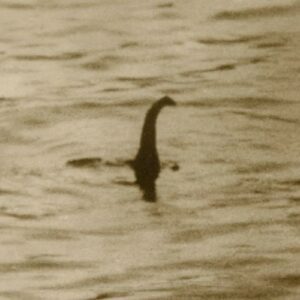
The Loch Ness Monster, popularly known as Nessie, is one of the world’s most recognisable legendary creatures. Associated with Loch Ness in the Scottish Highlands, this mysterious aquatic being has inspired generations of eyewitness accounts, scientific investigations and stories about an animal concealed beneath the dark waters of a vast freshwater lake. Its image, usually depicted as a creature with a long neck and several humps rising above the surface, has become an enduring symbol of the unexplained.
The modern legend gained international attention during the twentieth century, particularly following a series of reported sightings in 1933. However, stories of mysterious water beasts in the region reach much further into the past. One frequently cited account appears in the medieval biography of Saint Columba, an Irish missionary associated with the Christianisation of Scotland. Although the historical accounts differ considerably from modern descriptions of Nessie, they demonstrate the longstanding cultural association between the River Ness and stories of dangerous aquatic creatures.
Despite decades of searches using sonar, underwater cameras and environmental DNA analysis, no conclusive evidence has established the existence of an unknown large animal in Loch Ness. The creature nevertheless occupies a distinctive place in Scottish folklore and popular culture, existing at the intersection of local tradition, eyewitness testimony, scientific curiosity and humanity’s enduring fascination with hidden worlds.
Physical Attributes
Descriptions of the Loch Ness Monster vary considerably, reflecting the different circumstances and interpretations associated with reported sightings. The most familiar depiction presents Nessie as a large aquatic creature with a long, slender neck, a relatively small head and one or more humps emerging from the water. Some witnesses have described flippers, an elongated body or movements resembling those of a large marine animal.
The resemblance to a plesiosaur, an extinct group of marine reptiles that lived during the Mesozoic Era, became particularly influential in shaping the creature’s modern appearance. Popular illustrations frequently portray Nessie with a long neck and rounded body, creating an image that resembles these prehistoric reptiles. However, this resemblance is a feature of the legend rather than an established biological identification.
Other reported sightings describe little more than an unusual disturbance, a dark shape beneath the surface or a series of humps moving through the water. Such differences make it difficult to construct a consistent physical description. Reflections, waves, floating debris and misidentified animals have all been considered possible explanations for at least some observations.
The loch’s considerable depth and often dark, peat-stained waters contribute to the difficulty of observing objects beneath its surface. These environmental conditions have helped sustain the mystery surrounding Nessie, although they do not establish that an unidentified creature inhabits the lake.
First Sighting/Reporting
One of the earliest written accounts associated with a mysterious aquatic creature in the region appears in The Life of Saint Columba, a biography written by Adomnán, an abbot of Iona, around the late seventh century. The narrative describes an incident traditionally dated to 565 CE, when Columba encounters a water beast in the River Ness.
According to the account, the creature had attacked a swimmer, prompting Columba to intervene when another man entered the water. The saint commands the beast to retreat, and the creature withdraws after he invokes divine authority. The episode reflects the religious themes of the biography, presenting Columba’s spiritual authority as powerful enough to overcome a dangerous creature.
The account is frequently connected to the modern Loch Ness Monster legend. However, the encounter takes place in the River Ness rather than explicitly in Loch Ness, and the narrative should be understood within its medieval religious context. It is an important early literary reference to a water beast in the region, not verified evidence of the modern creature. The modern Nessie phenomenon emerged much later. On 2 May 1933, the Inverness Courier published a report describing an encounter by Aldie Mackay and her husband, John, who reportedly observed an unusual animal in Loch Ness. The account attracted public attention and helped establish the monster as a subject of widespread interest.
Further reports followed during 1933, turning the loch into a destination for curious visitors and investigators. The famous 1934 photograph commonly called the Surgeon’s Photograph subsequently became one of the most influential images associated with Nessie. It appeared to show a long neck rising from the water, reinforcing the popular resemblance to a plesiosaur. The image was later exposed as a hoax, illustrating how fabricated evidence helped shape the creature’s modern reputation.
Other Names
The Loch Ness Monster is most commonly known as Nessie, an affectionate nickname that has become inseparable from the legend. The name gives the mysterious creature a familiar identity, helping transform an uncertain collection of sightings into a recognisable character in international popular culture.
The formal name, Loch Ness Monster, connects the creature directly to its supposed habitat. The word monster reflects the dramatic interpretations traditionally attached to mysterious aquatic animals, while Nessie presents a more approachable image that has proved particularly effective in tourism, children’s literature and entertainment.
The creature is also associated with broader traditions of lake monsters and mysterious water beings found in different parts of the world. Although these traditions vary in their origins and cultural significance, they share a fascination with creatures believed to inhabit environments that remain difficult to observe or explore.
Modus Operandi
Within the legend, Nessie is portrayed as an elusive aquatic creature that spends most of its time beneath the surface of Loch Ness and appears only occasionally. Reported encounters typically involve brief observations of an unusual shape, a disturbance in the water or an object that appears to move independently of the surrounding waves.
The creature’s supposed ability to disappear quickly has become central to its reputation. Witnesses have variously described dark shapes moving across the loch, humps breaking the surface and long-necked forms that seem to rise momentarily before vanishing. These accounts differ in detail and have not established a consistent pattern of behaviour.
Several explanations have been proposed for such observations. Waves and unusual water movements can create the appearance of objects moving through the loch, while floating logs, birds and other animals may be misidentified under poor viewing conditions. The loch’s size, changing weather and variable visibility can make distant observations particularly difficult to interpret.
Eels have also attracted attention in discussions about Nessie because they inhabit Loch Ness and possess elongated bodies. However, environmental DNA research has not established the presence of a giant eel corresponding to the popular monster descriptions. Consequently, Nessie’s supposed behaviour remains part of the legend rather than a documented account of an identifiable animal.
Pop Culture References
The Loch Ness Monster has become an international cultural icon, appearing in films, television programmes, books, games and tourism campaigns. Its combination of mystery and recognisable physical features makes it particularly adaptable to stories involving adventure, discovery and the possibility of extraordinary creatures living alongside the familiar world.
The 2007 fantasy film The Water Horse: Legend of the Deep offers one of the best-known fictional interpretations of the legend. The story imagines a young boy discovering an unusual aquatic creature that grows into the animal associated with Nessie. Rather than presenting the monster as a threat, the film portrays it as a sympathetic creature whose existence must remain concealed. The legend has also appeared in television and animation, where Nessie is frequently used to evoke mystery or provide humour. Such portrayals have helped introduce the creature to audiences who may know little about its Scottish origins.
One of the most recognisable attractions inspired by the legend is the Loch Ness Monster roller coaster at Busch Gardens Williamsburg in Virginia, United States. Opened in 1978, the attraction uses the monster’s identity to create an experience built around the thrill of encountering a legendary creature. Beyond entertainment, Nessie has become a prominent symbol of Scottish tourism. Souvenirs, illustrations, visitor attractions and local storytelling continue to draw on the legend, demonstrating how a regional mystery can develop into a globally recognised cultural phenomenon.
Current Status
The Loch Ness Monster remains the subject of periodic searches and scientific investigations. Modern expeditions have employed sonar equipment, underwater cameras, thermal imaging and other technologies in attempts to identify unusual objects or unexplained movements in the water. These investigations have generated interest and occasional reports of possible sightings, but none has produced conclusive evidence of an unknown large animal inhabiting the loch.
A significant scientific investigation took place in 2018 and 2019, when researchers led by the University of Otago conducted an environmental DNA survey of Loch Ness. By analysing genetic material present in water samples, the team investigated which organisms lived in the loch and assessed several proposed explanations for Nessie.
The findings, published in 2019, revealed abundant eel DNA but no evidence supporting the presence of a plesiosaur or another large reptile of the kind commonly depicted in the legend. The researchers suggested that eels might account for some observations, although their study did not establish the existence of unusually large specimens capable of explaining all reported encounters.
Searches have continued, including a large-scale public expedition organised in August 2023 by the Loch Ness Centre and Loch Ness Exploration. Participants used observation teams, underwater listening equipment and thermal-imaging technology to investigate possible signs of activity. The expedition did not establish the creature’s existence.
Today, Nessie remains a major attraction for visitors to the Scottish Highlands and an enduring subject of public fascination. Its story demonstrates how historical narratives, ambiguous observations, popular imagery and scientific investigation can combine to sustain a legend across generations. Although the existence of the Loch Ness Monster remains unproven, the creature’s cultural legacy is unmistakable, ensuring that the mystery of Loch Ness continues to capture the imagination of people around the world.

Source
Shine, Adrian. The Loch Ness Monster: The Evidence. London: Penguin Books, 2006.
Binns, Ronald. The Loch Ness Mystery Solved. Open Road Media, 2017.
Campbell, Gareth, and Steuart Campbell. The Encyclopedia of the Loch Ness Monster. Blake Publishing, 2004.
Inverness Courier. “First Modern Sighting of Nessie.” 1933.
VisitScotland. “The Legend of Nessie.” https://www.visitscotland.com/about/history-heritage/legends/loch-ness-monster/?form=MG0AV3
Scottish History Society. Saint Columba’s Encounter with the Loch Ness Monster. 7th Century Manuscript.
Frequently Asked Questions
Is the Loch Ness Monster real?
The Loch Ness Monster has never been scientifically proven to exist. Despite numerous sightings and investigations, no conclusive evidence has established the presence of an unknown large creature in Loch Ness.
What does the Loch Ness Monster look like?
The Loch Ness Monster is commonly described as a large aquatic creature with a long neck, a small head and one or more humps. Some sightings resemble a prehistoric plesiosaur.
When was the Loch Ness Monster first sighted?
An early account of a water beast appears in a seventh-century biography of Saint Columba, describing an encounter in the River Ness around 565 CE. The modern legend gained attention in 1933.
What is the Loch Ness Monster's real name?
The Loch Ness Monster is popularly known as Nessie. The affectionate nickname has become internationally recognised through Scottish folklore, tourism, films and other forms of popular culture.
What did scientists discover about the Loch Ness Monster?
A 2019 environmental DNA study found no evidence of a plesiosaur or large reptile in Loch Ness. Researchers detected abundant eel DNA but did not establish the existence of giant eels.


