
Nauruan Creation Story : Areop-Enap and the Birth of the World
| Description | |
|---|---|
| Origin | Nauruan Mythology |
| Country | Nauru |
| Deities Involved | Areop-Enap, Snails, Rigi, Eijebong |
| Symbolism | Ocean womb, Cosmic web, Sacrifice |
| Process | Earth & sky from clam, Sun & moon from snails, Sea from sweat, Milky Way from Rigi |
Mythlok Perspective
In Mythlok’s Perspective, the Nauruan Creation Story is a reminder that creation does not always begin with powerful gods or epic battles. Like Anansi in West African folklore, Areop-Enap uses intelligence and resourcefulness to shape the world. The myth also shares similarities with creation stories such as the Cosmic Egg of Hindu mythology and the body-born worlds of Ymir and Pangu. Yet its oceanic setting makes it uniquely Nauruan, with marine creatures playing central roles in the birth of the cosmos. At its heart, the story teaches that even the smallest beings can shape the universe. Through Areop-Enap’s wisdom and Rigi’s sacrifice, the myth celebrates cooperation, perseverance, and the idea that great things often emerge from unexpected sources.
Nauruan Creation Story
Introduction
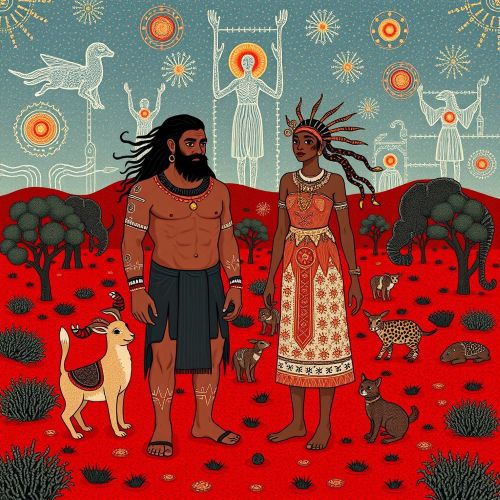
The Nauruan Creation Story is one of the most fascinating origin myths in Oceania. Passed down through generations of the people of Nauru, this tale explains how the earth, sky, sea, celestial bodies, and humanity emerged from a world that was once nothing but darkness and water.
Unlike many creation myths that feature powerful sky gods or cosmic battles, the Nauruan narrative centers on an unlikely creator: a spider deity named Areop-Enap. Through intelligence, patience, and the help of humble sea creatures, Areop-Enap transforms a confined and lifeless existence into a thriving universe.
Rooted in the island culture of Nauru, the story reflects the importance of the ocean, marine life, and cooperation in shaping both the physical world and human existence. It remains one of the most distinctive creation myths in Pacific mythology.
Cosmic Origins
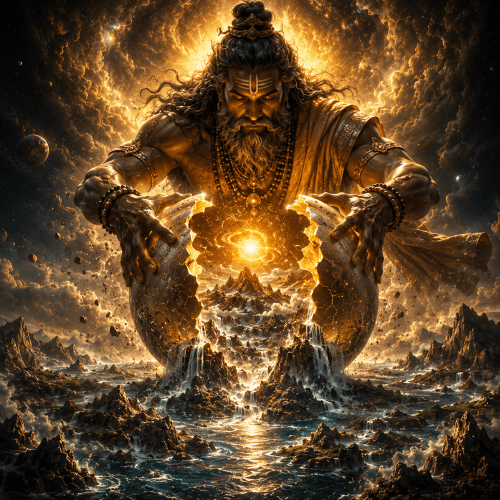
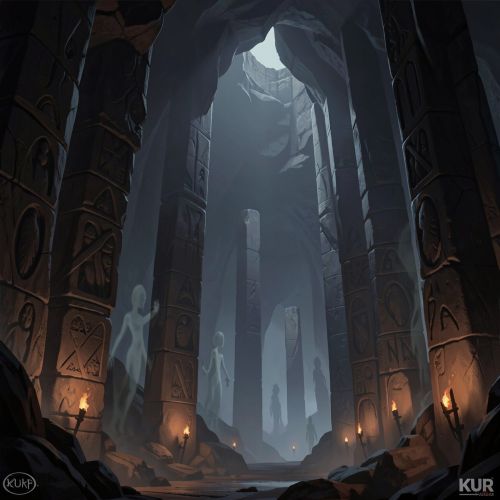
According to Nauruan tradition, the universe began in complete darkness. There was no land, no sky, and no visible horizon. Only endless water existed, along with the creator spirit Areop-Enap. Many versions of the myth describe Areop-Enap living inside a gigantic clam or mussel shell. This shell contained the entire potential of creation within it. It was both a shelter and a prison, enclosing the deity and a handful of small marine creatures in a cramped and dark environment.
Inside this shell, Areop-Enap discovered several companions, including two snails and a white worm named Rigi. Although these creatures appeared insignificant, they would become essential participants in the formation of the cosmos. The giant shell symbolized an unformed universe waiting to be opened. Before the world could exist, the boundaries of this enclosed space had to be broken apart, allowing creation to expand outward.
Deities and Forces Involved
The central figure of the Nauruan Creation Story is Areop-Enap, often translated as “Old Spider.” Unlike creator gods who rule through force, Areop-Enap achieves his goals through wisdom, planning, and ingenuity. He carefully observes his surroundings and identifies the unique abilities of the creatures around him.
The two snails found within the shell play an important role in establishing cosmic order. Though small and seemingly ordinary, they eventually become the moon and the sun. Their transformation reflects a recurring theme in Pacific mythology: even the humblest beings can possess immense spiritual significance.
Another key figure is Rigi, the white worm. While Areop-Enap provides the vision for creation, Rigi supplies the physical effort necessary to bring that vision to life. His determination and sacrifice allow the universe to emerge from its confined beginnings. Together, these three forces represent intellect, natural order, and labor—qualities that work together to create a functioning world.
Process
Creation begins when Areop-Enap searches through the darkness of the giant shell. He discovers a small snail and keeps it close, transferring some of his sacred power into it. He later repeats the process with a larger snail.
The smaller snail is then instructed to move through the shell. As it crawls, it leaves behind a luminous trail that illuminates the darkness for the first time. This newfound light enables Areop-Enap to discover Rigi, the white worm. Recognizing Rigi’s strength, Areop-Enap commands him to push against the shell and force it open. The task is enormous. Rigi strains continuously, exerting all his energy to separate the upper and lower halves of the clam.
As he struggles, sweat pours from his body. The accumulated sweat forms vast pools of water that eventually become the sea. After a tremendous effort, the shell finally opens, creating space for the world to take shape. Once the shell is split, Areop-Enap transforms the lower half into the earth and the upper half into the sky. The flesh of the clam becomes islands scattered across the ocean.
The smaller snail is placed in the heavens as the moon, while the larger snail becomes the sun. Their movement across the sky establishes the rhythms of day and night. The myth continues with the death of Rigi, who is overcome by the waters created from his own labor. To honor him, Areop-Enap wraps the worm in spider silk and places him across the heavens as the Milky Way. Finally, humans are created from stones and given the responsibility of helping maintain the balance of the world.
Symbolism
The Nauruan Creation Story is rich with symbolic meaning. At its heart is the image of the clam shell, which serves as a cosmic womb. It represents unrealized potential and the hidden possibilities that exist before creation begins. Areop-Enap embodies the power of intelligence and creativity. Rather than relying on brute strength, he succeeds through careful planning and cooperation. This highlights the value of wisdom over force.
The transformation of snails into the sun and moon demonstrates how ordinary beings can become extraordinary. Their steady movement across the sky mirrors the predictable cycles of nature that govern life. Rigi’s role is perhaps the most powerful symbol in the myth. His labor creates the sea, and his death gives rise to the Milky Way. Through his sacrifice, the story suggests that creation often requires effort, endurance, and transformation.
The spider’s web also carries symbolic importance. By clothing the islands in vegetation using silk, Areop-Enap becomes a divine weaver who connects all parts of existence into a single living system.
Comparative Analysis
The Nauruan Creation Story shares several themes with creation myths from around the world while retaining its own unique identity. The idea of the universe emerging from an enclosed object resembles the Cosmic Egg traditions found in Hindu, Chinese, and other Asian mythologies. In each case, creation begins within a contained space before expanding into a structured cosmos.
The transformation of a primordial being or object into the world itself can also be compared to the Norse giant Ymir and the Chinese giant Pangu. In these myths, parts of a body become elements of the universe, just as the clam shell becomes earth and sky in Nauruan tradition.
However, the Nauruan myth stands apart because of its deeply marine character. Rather than mountains, giants, or celestial beings, the central actors are creatures commonly found in the ocean. This reflects the environmental realities of island life and highlights the intimate connection between Nauruan culture and the sea. Another distinctive feature is Areop-Enap’s role as a strategist rather than a warrior. Unlike many creator gods who impose order through dominance, he creates through observation, collaboration, and ingenuity.
Legacy
For generations, the Nauruan Creation Story helped explain the origins of the island’s environment and the place of humanity within it. The myth connected everyday experiences—such as the surrounding ocean, the night sky, and the movement of celestial bodies—to a sacred narrative. It reinforced the idea that humans are participants in creation rather than separate from it.
As Christianity spread through Nauru during the colonial period, traditional religious practices changed significantly. Nevertheless, stories of Areop-Enap continued to survive through oral traditions and cultural memory. Today, the myth remains an important source of insight into pre-colonial Nauruan beliefs and the worldview of one of the Pacific’s most distinctive cultures.
Modern Influence
In recent years, interest in indigenous Pacific traditions has grown among scholars, educators, and cultural preservationists. The Nauruan Creation Story has become an important example of the richness and diversity of Oceanian mythology.
Modern readers are often drawn to its environmental themes. The story emphasizes that land, sea, sky, and living creatures are interconnected and that the world itself emerged through cooperation among different forms of life.
The myth also resonates with contemporary discussions about sustainability and ecological responsibility. For island communities especially, the relationship between humanity and the ocean remains central to cultural identity and survival. As efforts continue to preserve indigenous knowledge, the story of Areop-Enap serves as a reminder that even the smallest nations possess profound and sophisticated understandings of the universe.
Sources
Dixon, R. B. (1916). Oceanic mythology. Boston, MA: Marshall Jones.
Leeming, D. A. (2005). The Oxford companion to world mythology. New York, NY: Oxford University Press.
“Areop‑Enap.” (n.d.). In Wikipedia. Retrieved June 19, 2026, from https://en.wikipedia.org/wiki/Areop-Enap
Nauruan indigenous religion. (n.d.). In Wikipedia. Retrieved June 19, 2026, from https://en.wikipedia.org/wiki/Nauruan_indigenous_religion
OMNIKA. (n.d.). Areop‑Enap, Two Snails, and the Worm – Myth (Nauruan). Retrieved June 19, 2026, from https://omnika.org/myths/areop-enap-two-snails-and-the-worm
Godchecker. (n.d.). Areop‑Enap – Nauru god of creation. Retrieved June 19, 2026, from https://www.godchecker.com/micronesian-mythology/AREOP-ENAP/
Lebarty. (n.d.). Nauruan mythology. Retrieved June 19, 2026, from https://lebarty.com/nauruan-mythology/
Frequently Asked Questions
Who is Areop-Enap in the Nauruan Creation Story?
Areop-Enap is the spider creator deity of Nauruan mythology who transforms a giant clam shell into the earth, sky, and celestial bodies.
What does the giant clam symbolize in the Nauruan Creation Story?
The clam represents the cosmic womb of creation, containing the potential universe before the world takes shape.
Who is Rigi in Nauruan mythology?
Rigi is a white worm whose effort opens the giant shell. His sweat becomes the sea, and after his death, he is transformed into the Milky Way.
How were the sun and moon created in the Nauruan Creation Story?
Two snails discovered by Areop-Enap were empowered and transformed into the moon and the sun, establishing the cycles of time.
Why is the Nauruan Creation Story important?
The myth explains the origins of the world while reflecting Nauruan cultural values, environmental awareness, and the deep connection between island life and the ocean.