
Eijebong : The Goddess of Femininity in Nauruan Beliefs
At a glance
| Description | |
|---|---|
| Origin | Nauru Mythology |
| Classification | Gods |
| Family Members | N/A |
| Region | Nauru |
| Associated With | Femininity, Womanhood, Life-cycle rituals |
The Mythlok Perspective
In Mythlok’s Perspective, Eijebong stands alongside goddesses such as Hestia and Frigg, whose influence comes not from epic battles but from sustaining the foundations of society. What makes Eijebong unique is that her mythology survives only in fragments, forcing us to appreciate her through cultural memory rather than elaborate legends. She reminds us that many of the world’s most important deities were guardians of everyday life, preserving identity, tradition, and community. Sometimes the quietest gods reveal the deepest truths about the people who worshipped them.
Eijebong
Introduction
Eijebong is one of the best-known female divine figures in traditional Nauruan mythology, representing femininity, womanhood, and the rituals associated with different stages of life. Although Nauru’s indigenous religion has largely disappeared following the spread of Christianity, Eijebong continues to be remembered as an important figure within the island’s ancient spiritual traditions.
Unlike the richly documented mythologies of Greece or Japan, Nauruan mythology survives primarily through oral traditions that were later recorded by missionaries and ethnographers. As a result, many stories are incomplete and sometimes contradictory. Even so, Eijebong consistently appears as a respected goddess connected with feminine identity and ceremonial life rather than dramatic heroic adventures or cosmic battles.
Today, Eijebong offers a rare glimpse into the beliefs of one of the world’s smallest island nations, reminding us that every culture developed its own understanding of divinity, community, and the human experience.
Physical Traits
Historical sources provide very little information about Eijebong’s physical appearance. Rather than describing her clothing, facial features, or symbolic objects, traditional accounts define her through her sacred role within Nauruan society.
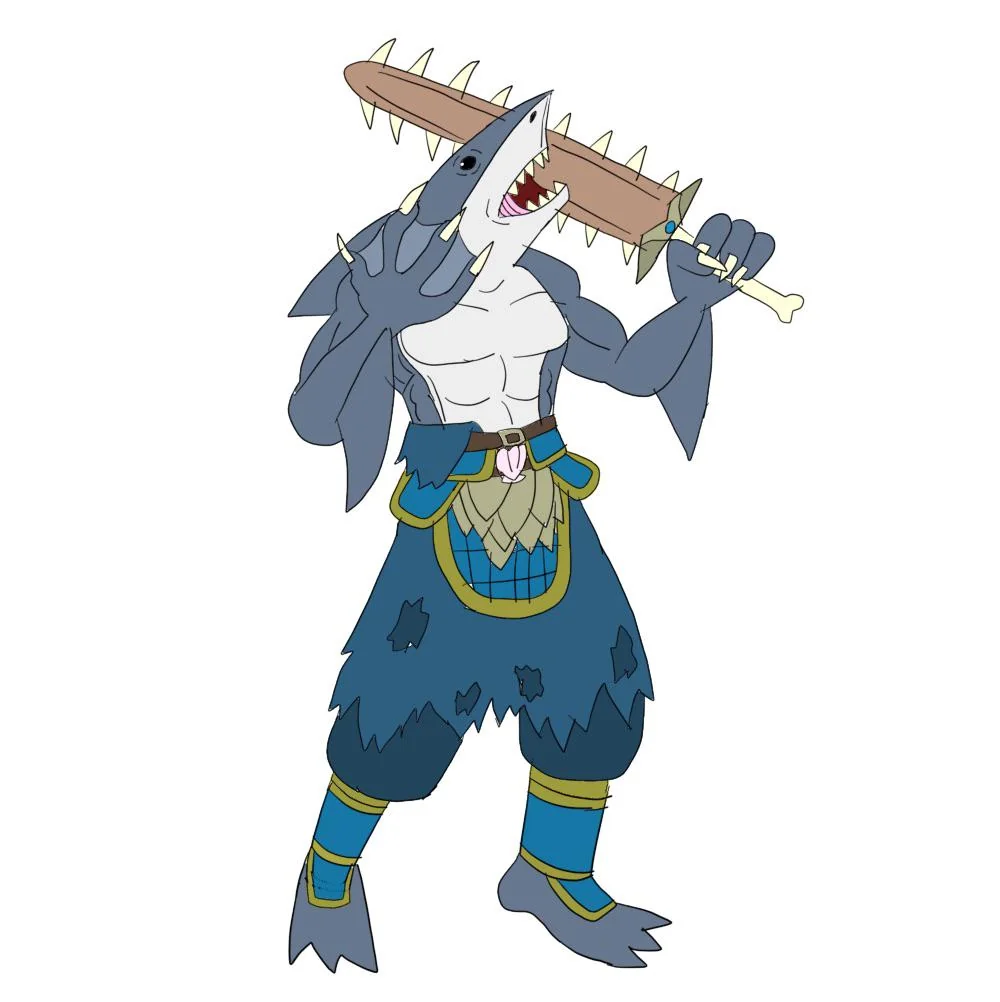
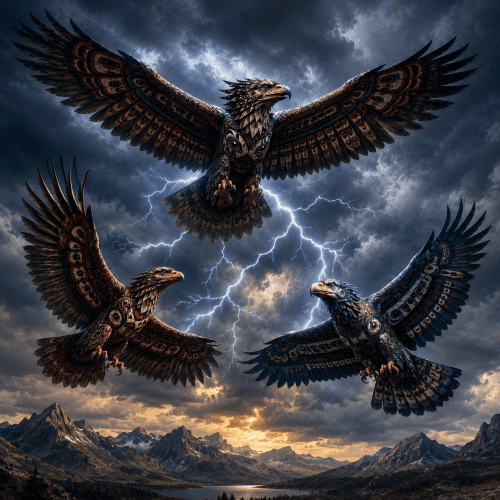
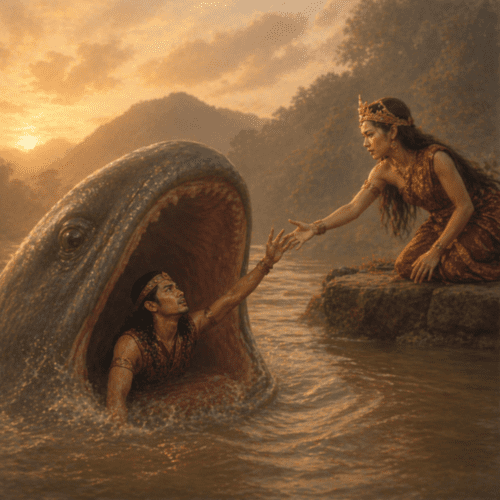
This absence of detailed iconography is common in many Pacific oral traditions, where the importance of a deity often rested on their function instead of a standardized visual image. Modern illustrations frequently portray Eijebong as a graceful island woman or celestial maiden, but these artistic interpretations are contemporary creations rather than descriptions preserved in traditional mythology.
Because no authoritative physical description survives, Eijebong is best understood as a symbolic divine presence whose identity was expressed through ritual and cultural significance instead of appearance.
Family
The surviving records of Nauruan mythology do not identify a clearly established divine family for Eijebong. Unlike many mythological traditions that carefully document the parents, spouses, and descendants of their gods, Nauruan mythology preserves only fragments of its original cosmology.
Eijebong is often mentioned alongside major mythological beings such as Areop-Enap, the creator associated with the spider, and the spiritual realm of Buitani. However, reliable historical sources do not consistently describe familial relationships between these figures.
Some modern retellings portray Eijebong as the mother of other deities, but these genealogies are not universally supported by the available ethnographic evidence. Consequently, Eijebong is generally regarded as an independent goddess whose importance comes from her sacred role rather than her place within a divine family tree.
Other names
Because Nauruan mythology was transmitted orally for generations, Eijebong’s name appears in several different spellings depending on the recorder and the transliteration system being used. Variants such as Eijebon, Eijebongg, and similar forms occasionally appear in secondary sources.
Despite these spelling differences, the name refers to the same female deity associated with femininity and women’s ceremonial life. Unlike many gods from larger mythological traditions, Eijebong does not possess an extensive list of titles or honorific names preserved in surviving literature. The variation reflects the challenges of documenting an oral language rather than the existence of separate deities.
Powers and Abilities
Eijebong’s power lies primarily in her spiritual and cultural significance instead of spectacular supernatural feats. Traditional accounts portray her as the divine guardian of femininity and the rituals surrounding womanhood, making her an important figure within Nauruan religious life.
Offerings were historically made to Eijebong as part of indigenous religious practices, indicating that she was regarded as a deity capable of influencing human wellbeing within her sphere of responsibility. Rather than controlling storms, shaping landscapes, or engaging in legendary battles, she represented the sacred qualities associated with women, fertility, and community continuity.
This emphasis reflects an important feature of Nauruan mythology. Many of its surviving traditions focus less on miraculous displays of power and more on maintaining harmony between people, ancestors, and the spiritual world.
Although later retellings occasionally attribute broader creative or cosmic powers to Eijebong, these claims are not consistently supported by early ethnographic records. Her best-documented role remains that of a revered goddess connected with feminine identity and ceremonial traditions.
Modern Day Influence
Today, Nauru is overwhelmingly Christian, and the island’s traditional religion is no longer widely practiced. Nevertheless, Eijebong survives as part of the nation’s cultural heritage and remains an important subject in studies of Pacific mythology.
Modern references to Eijebong appear primarily in folklore collections, academic research, comparative mythology, and educational resources that preserve Nauru’s pre-Christian beliefs. Although active worship has disappeared, her story continues to help scholars understand the values and social structure of early Nauruan communities.
Eijebong also highlights the importance of preserving smaller mythological traditions that might otherwise be forgotten. While global audiences are familiar with figures such as Athena or Amaterasu, deities like Eijebong demonstrate that every culture developed its own sacred understanding of femininity, spirituality, and community.
As interest in Indigenous Pacific cultures continues to grow, Eijebong has become a valuable symbol of Nauru’s unique mythological identity and an enduring reminder of the island’s ancestral beliefs.
Related Images



Source
Connell, J. (n.d.). Nauruan indigenous religion. In Wikipedia. Retrieved from https://en.wikipedia.org/wiki/Nauruan_indigenous_religion.
Government of the Republic of Nauru. (2011). The story of Eigigu. Retrieved from https://www.nauru.gov.nr/about-nauru/nauruans’-stories/the-story-of-eigigu.aspx.
France-Minéraux. (n.d.). Mythologie de Nauru — Légendes et croyances traditionnelles. Retrieved from https://www.france-mineraux.fr/mythologies/mythologie-nauruane/.
Omnika. (n.d.). Nauruan — Belief system. Retrieved from https://omnika.org/religions/nauruan.
Hambruch, P. (1914–1915). Nauru: Ergebnisse der Südsee-Expedition. Hamburg: Friederichsen.
Kayser, A. (1914). Missionary accounts on Nauruan religion. German Missionary Records.
Petit-Skinner, S. (1981). The Nauruans. MacDuff Press.
Dobbin, J., & Hezel, F. X. (2011). Summoning the Powers Beyond: Traditional Religions in Micronesia. University of Hawai‘i Press.
Frequently Asked Questions
Who is Eijebong in Nauruan mythology?
Eijebong is a female deity in traditional Nauruan mythology associated with femininity, womanhood, and important life-cycle rituals within the island’s indigenous religion.
What is Eijebong the goddess of?
Eijebong is primarily regarded as the goddess of femininity and the sacred customs connected to women’s roles in traditional Nauruan society.
Did Eijebong create the world?
No surviving early ethnographic sources identify Eijebong as the creator of the world. The creation role in Nauruan mythology is more commonly associated with Areop-Enap.
Is Eijebong still worshipped today?
Traditional worship of Eijebong has largely disappeared following the adoption of Christianity in Nauru. She is now remembered mainly through folklore, historical records, and cultural studies.
Why is Eijebong important in Nauruan mythology?
Eijebong represents the importance of femininity and ceremonial traditions within ancient Nauruan society. Her story preserves an important part of one of the Pacific’s smallest surviving mythological traditions.

