

Biag ni Lam-ang : The Life and Legend of an Ilocano Hero
At a glance
| Attribute | Description |
|---|---|
| Mythology | Philippine Mythology |
| Language Written | Ilocano |
| Age | Circa 1640 CE |
| Author | Pedro Bucaneg (oral tradition, later documented by Fr. Blanco & Isabelo de los Reyes) |
| Main Characters | Lam-ang, Don Juan, Namongan, Ines Cannoyan, Rooster, Dog, Berkakan |
Mythlok Perspective
In Mythlok’s View, Biag ni Lam-ang represents a hero who is born complete rather than forged through struggle, reflecting a worldview where destiny precedes experience. The epic treats life, death, and rebirth as continuous states rather than separate events. This aligns with cyclical belief systems found across many cultures. Unlike The Odyssey, where the hero evolves through hardship, Lam-ang begins as a finished force of nature. He shares closer parallels with Maui, a demigod who bends reality from birth. Both figures embody cultures that see the extraordinary as inherent rather than earned.
Biag ni Lam-ang
Introduction
Biag ni Lam-ang remains one of the most important literary treasures of the Philippines, rooted in the traditions of the Ilocano people from northern Luzon. The title translates to “The Life of Lam-ang,” and the epic narrates the journey of a hero whose life unfolds with supernatural intensity from the moment he is born. Unlike many indigenous epics that survived only through oral storytelling, Biag ni Lam-ang was eventually written down, allowing it to endure across centuries and reach modern audiences.
What makes this epic particularly compelling is how it bridges two worlds. It preserves pre-colonial beliefs such as animism, hero worship, and ritual practices, while also reflecting the influence of Spanish colonization, especially through Christian elements like baptism and resurrection. The story is not simply about adventure. It is about identity, community values, and the way cultures adapt without losing their core essence.
Today, Biag ni Lam-ang is widely studied in Philippine literature and continues to shape how Filipino heritage is understood, especially in discussions around indigenous storytelling and cultural continuity.
Historical Background
The origins of Biag ni Lam-ang trace back to pre-colonial Ilocano society, where stories were passed orally from one generation to the next. These narratives were performed by storytellers and poets who preserved collective memory through rhythm, repetition, and dramatic delivery. Over time, the epic evolved, absorbing new influences while retaining its indigenous core.
The written form of the epic is often associated with Pedro Bucaneg, a blind poet regarded as a foundational figure in Ilocano literature. However, historical evidence suggests that the documentation of the epic was likely a collaborative process that continued well after his lifetime. Later figures such as Isabelo de los Reyes played a key role in publishing and preserving the text during the late 19th century.
This layered history makes Biag ni Lam-ang unique. It is both an ancient oral tradition and a colonial-era literary work. It reflects how indigenous narratives were reshaped during Spanish rule, incorporating elements like Christian marriage rites while still maintaining older beliefs about spirits, fate, and the natural world. As one of the earliest recorded epics from a Christianized lowland Filipino group, it stands apart from other epics that remained purely oral or were preserved among highland communities.
Synopsis & Themes
The story begins even before Lam-ang is born. While still in the womb, he speaks, demonstrating an extraordinary awareness that sets the tone for the rest of the narrative. After his birth, he immediately names himself and begins to take control of his destiny.
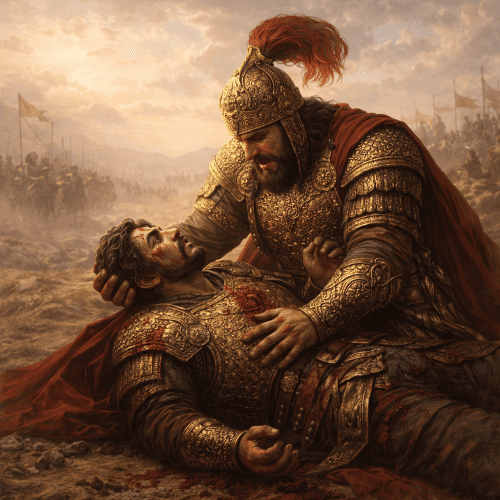
His first major quest is driven by loss. His father, Don Juan, disappears during a conflict, and Lam-ang sets out at a very young age to find him. When he discovers that his father has been killed, he takes revenge, establishing his role as a hero defined by justice and loyalty.
As he grows older, the focus shifts to love and ambition. Lam-ang travels to court Ines Kannoyan, overcoming rivals and obstacles with the help of his magical companions. His journey is not just about romance but also about proving his worth through strength, wealth, and supernatural ability.
The narrative takes a dramatic turn when Lam-ang is swallowed by a giant river creature while diving for shellfish. What follows is one of the most striking moments in the epic. His bones are recovered, and through ritual and magical intervention, he is brought back to life.
The themes woven throughout Biag ni Lam-ang reflect a deeply layered worldview. Heroism is central, but it is always tied to family duty and social responsibility. Love is portrayed as both emotional and ceremonial, bound by tradition and status. The idea of death is not final but part of a cycle, emphasizing resilience and renewal. These themes make the epic more than just a story. It becomes a reflection of how life, loss, and honor were understood in early Ilocano society.
Key Characters
Lam-ang stands at the center of the epic as a larger-than-life figure. He is not a typical hero who grows into his strength. Instead, he is born powerful, already aware of his purpose. His abilities, including communication with animals and extraordinary combat skills, place him somewhere between human and divine.
Namongan, his mother, represents endurance and strength. She raises Lam-ang alone and supports him through his journey, reflecting the importance of family in Ilocano culture. Don Juan, though absent for most of the story, serves as the catalyst for Lam-ang’s quest and embodies the warrior tradition. Ines Kannoyan plays a significant role as both a romantic partner and a symbol of social prestige. Her presence introduces themes of courtship, wealth, and alliance-building.
The magical rooster and dog are among the most memorable elements of the epic. They are not merely companions but active participants in the story, guiding Lam-ang, aiding in battle, and ultimately helping bring him back to life.
Antagonists such as Sumarang and the river monster Berkakan provide tension and challenge. They represent both human and supernatural obstacles, reinforcing the idea that the hero’s journey exists across multiple realms of existence.
Cultural & Religious Significance
Biag ni Lam-ang offers a detailed glimpse into Ilocano life before and during the early colonial period. It reflects social practices such as arranged marriages, dowry exchanges, and communal celebrations. These elements are not presented as background details but as integral parts of the narrative.
The epic also reveals a belief system rooted in animism, where animals, natural forces, and unseen entities play active roles in human life. The presence of magical creatures and prophetic animals highlights the deep connection between people and the natural world.
At the same time, Christian influences are clearly visible. Lam-ang’s baptism and formal wedding ceremony reflect the impact of Spanish colonization. His resurrection mirrors Christian narratives, showing how indigenous and foreign beliefs merged over time.
This blending of traditions is what gives Biag ni Lam-ang its lasting significance. It is not purely pre-colonial or colonial but a hybrid that captures a moment of cultural transformation. It continues to serve as a symbol of Filipino resilience, demonstrating how traditions can adapt while still preserving identity.
Modern Adaptations
The story of Biag ni Lam-ang continues to evolve in modern times, finding new life in different forms of media. It has been adapted into stage plays, illustrated books, and educational materials, ensuring that younger generations remain connected to the epic.
Theatrical productions have reimagined the story with contemporary music and performance styles, making it accessible to modern audiences. Visual interpretations, including comics and digital art, have also expanded its reach, often highlighting its mythological elements in new and creative ways.
Television and film adaptations, though less frequent, have attempted to bring the epic to life on screen. These versions often reinterpret the narrative, blending traditional elements with modern storytelling techniques.
Beyond entertainment, Biag ni Lam-ang continues to be studied academically. It is a central part of Philippine literature curricula and is frequently discussed in conversations about identity, heritage, and storytelling. Its continued relevance shows that the epic is not frozen in the past. Instead, it remains a living narrative, constantly being reshaped by each generation that engages with it.


Source
Bucaneg, P. (1914). Biag ni Lam-ang (E. de Favis, Ed.). Manila: Ilocano Press.
Eugenio, D. L. (Ed.). (1993). Philippine folk literature: The epics. University of the Philippines Press.
Galdon, J. A. (1985). Philippine literature through the years. Goodwill Trading Co.
National Commission for Culture and the Arts. (n.d.). Biag ni Lam-ang. https://philippineculturaleducation.com.ph/biag-ni-lam-ang/
Poet Rae. (2024, August 8). How ‘Biag ni Lam-ang’ and Pedro Bucaneg shaped Ilocano culture. https://poetraie.substack.com/p/biag-ni-lam-ang-how-biag-ni-lam-ang
Reyes, A. B. (2009). Invocations: Poems. Giraffe Books.
Wikipedia contributors. (2026). Biag ni Lam-ang. Wikipedia. https://en.wikipedia.org/wiki/Biag_ni_Lam-ang
Yabes, L. (1959). Literature of the Philippines. University of Santo Tomas Publishing House.
Frequently Asked Questions
What is Biag ni Lam-ang about?
It tells the story of Lam-ang, a supernatural Ilocano hero, his adventures, love story, death, and eventual resurrection.
Who wrote Biag ni Lam-ang?
It is traditionally linked to Pedro Bucaneg, though later documentation involved multiple contributors and historians.
Why is Biag ni Lam-ang important?
It preserves Ilocano culture, blending pre-colonial beliefs with colonial influences, making it a key Filipino literary work.
Is Biag ni Lam-ang a true story?
No, it is a folk epic rooted in mythology and oral tradition rather than historical fact.
What are the main themes of Biag ni Lam-ang?
The epic explores heroism, family loyalty, love, supernatural power, and the idea of death and rebirth.