


Boon of Destiny Selection : How Ajala’s Heads Shape Life Before Birth
At a glance
| Description | |
|---|---|
| Mythology | Yoruba Mythology |
| Bestowed Upon | Human souls before birth |
| Granted By | Ajala |
| Primary Effect | Destiny through Orí |
| Conditions Attached | Must offer sacrifice via Orunmila to secure favorable Orí |
Mythlok Perspective
In Mythlok’s View, Ajala’s Heads present a rare balance between fate and choice, where destiny is selected but not fully controlled. This idea echoes the Greek Moirai, who assign fate, and the Norse Norns, who weave it, yet Yoruba thought stands apart by allowing negotiation through character and ritual. Unlike rigid determinism, Ajala’s world suggests that even a flawed destiny can be lived with dignity, effort, and transformation.
Ajala’s Heads Blessing
Introduction
In Yoruba thought, destiny is not something that simply happens, it is something encountered, chosen, and then lived. At the center of this idea is Ajala’s Heads, a powerful concept that explains how every person arrives in the world already carrying a blueprint for their life. Ajala, often called the celestial potter, shapes the Orí, the inner head that governs destiny, personality, and spiritual direction.
Before birth, each soul journeys into the spiritual realm to select an Orí, a decision that defines the possibilities of their life on earth. This belief creates a striking balance between fate and personal responsibility. Life is not random, but it is also not entirely fixed. Ajala’s Heads represent this tension where destiny is shaped before birth, yet must still be fulfilled through action, character, and awareness.
Mythological Background
Within Yoruba cosmology, creation is a layered process guided by divine forces. Olodumare stands as the ultimate source of life, while Obatala forms the physical body. After this, the soul must visit Ajala Mopin, the mysterious shaper of heads, who completes the process by providing the Orí or the seat of destiny.
Ajala resides in Òrun, the spiritual realm, where countless molded heads exist. These are not physical objects but metaphysical vessels carrying a person’s life path. Some are carefully formed, while others are flawed. Yoruba stories often describe Ajala as imperfect or careless, a detail that explains why human lives vary so dramatically in fortune and struggle.
This imperfection is not accidental. It reflects a worldview where existence itself contains imbalance, unpredictability, and challenge. Destiny, therefore, is not about perfection but about navigating what one has been given.
Granting of the Boon/Blessing
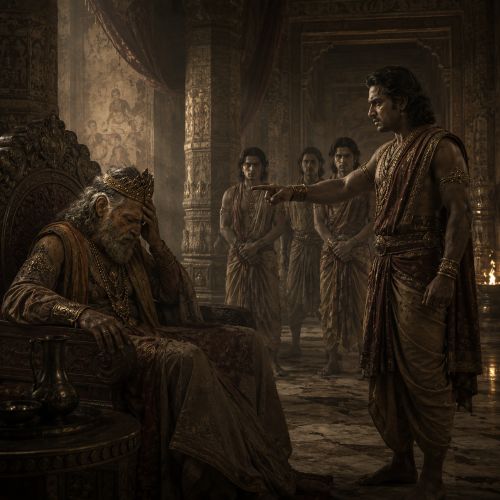
The moment of choosing Ajala’s Heads is one of the most important events in a soul’s journey. Before entering the physical world, each soul kneels in Ajala’s domain to select an Orí. This act is known as Àkúnlèyàn, “that which is chosen while kneeling” and Àkúnlègbà, “that which is received while kneeling.”
The process is not entirely unguided. Orunmila, the witness of destiny and master of Ifá divination, plays a crucial role. Through ritual and sacrifice, known as ebo, the soul seeks clarity and alignment before making its choice.
Once selected, the Orí is sealed by divine authority, and the soul passes into the world of humans. However, memory of this choice is erased, ensuring that life becomes a process of rediscovery rather than recollection.
Nature of the Boon/Blessing
Ajala’s Heads are not merely symbolic, they are the structure of destiny itself. Each Orí carries potential outcomes: success or struggle, clarity or confusion, abundance or hardship.
A well-formed Orí, often called Orí rere, supports a life of balance, prosperity, and fulfillment. A flawed Orí, known as Orí burúkú, may lead to repeated obstacles or instability. Yet Yoruba philosophy does not reduce life to rigid determinism.
The Orí sets the framework, but it does not complete the story. Human character ìwà plays a decisive role in shaping how that destiny unfolds. Even a challenging Orí can be improved through discipline, wisdom, and spiritual alignment. In this way, Ajala’s Heads represent possibility rather than certainty. They define direction, not outcome.
Recipients and Key Figures
Every human being is a recipient of Ajala’s Heads. No one enters the world without selecting an Orí. This universality makes the concept deeply personal yet collectively shared. Several key figures influence this process. Ajala himself remains central as the maker of the heads, embodying both creativity and imperfection. Orunmila acts as the guide who ensures the soul understands the weight of its choice. Olodumare ultimately authorizes the destiny, while Obatala provides the physical form that carries it.
Stories within the Ifá corpus illustrate these ideas through characters like Afuwape, who prospers by following divine guidance, and others such as Oriseeku and Orileemere, who suffer because they ignore ritual preparation. These narratives reinforce a consistent message: destiny is chosen, but wisdom determines how it unfolds.
Effects and Consequences
The consequences of Ajala’s Heads are visible throughout a person’s life. A strong Orí often leads to stability, success, and longevity, while a flawed one may bring repeated hardship or confusion. However, Yoruba belief introduces an important nuance. Destiny is not entirely fixed. Through rituals, sacrifices, and alignment with one’s Orí, aspects of life can be improved. This reflects a “soft determinism,” where fate provides the outline but human effort fills in the details.
There are limits, though. Àyànmò or the fixed portion of destiny cannot be changed. What can change is how a person responds to it. This distinction preserves both cosmic order and human responsibility.
Symbolism and Spiritual Meaning
Ajala’s Heads carry deep symbolic meaning. Ajala’s imperfection represents the unpredictable nature of existence. Life is not designed to be flawless, and struggle is not a failure but a condition of being human. The Orí itself is considered a person’s inner divinity, the closest connection between the individual and the spiritual realm. It is often treated as more important than external deities, emphasizing self-awareness and inner alignment. Sacrifice and ritual symbolize negotiation with destiny. They are not attempts to escape fate but efforts to harmonize with it. In this sense, Ajala’s Heads teach that destiny is both inherited and actively lived.
Cultural Impact and Legacy
The idea of Ajala’s Heads continues to shape Yoruba culture and its global diaspora. In traditions such as Santería and Candomblé, the concept of Orí remains central, even when Ajala himself is less directly referenced.
Rituals focused on the head, such as bori (feeding the head), highlight the ongoing relationship between a person and their destiny. These practices reinforce the idea that life is a continuous dialogue between choice, action, and spiritual alignment.
In modern contexts, Ajala’s Heads also resonate as a philosophical framework. They offer an explanation for inequality, struggle, and success without removing personal accountability. This balance between destiny and effort remains one of the most enduring aspects of Yoruba thought.


Source
Balogun, O. A. (2007). The concepts of Ori and human destiny in traditional Yoruba thought: A soft-deterministic interpretation. Nordic Journal of African Studies, 16(2), 116-130. https://www.njas.fi/njas/article/download/55/49/101
Idowu, E. B. (1962). Olódùmarè: God in Yoruba belief. Longmans.
Abimbola, W. (1971). The Yoruba concept of human personality. Ile-Ife: University of Ife Inaugural Lecture.
Kongomagic. (n.d.). Ajala: The divine potter of destiny in Yoruba cosmology. https://kongomagic.com/ajala
Ogundiran, A. (2020). The Yoruba: A new history. Indiana University Press.
Ogunnaike, A. (2026). Yoruba mythology. Black Dog & Leventhal. https://www.hachettebookgroup.com/titles/ayodeji-ogunnaike-ph-d/yoruba-mythology/9780762485475/
Gbadegesin, S. (1988). The Yoruba philosophy of law. In S. O. Okafor (Ed.), Philosophy and the African predicament (pp. 179-196). Peter Lang.
Frequently Asked Questions
What are Ajala’s Heads?
Ajala’s Heads refer to the Yoruba belief that souls choose their destiny (Orí) before birth from a divine potter named Ajala.
Who is Ajala in Yoruba belief?
Ajala Mopin is the celestial craftsman who molds the Orí, shaping the destiny each person carries into lif
Can destiny chosen through Ajala’s Heads be changed?
Parts of destiny can be improved through rituals and character, but the fixed portion, called Àyànmò, remains unchanged.
What is Orí in Yoruba philosophy?
Orí is the inner head or personal divinity that governs destiny, personality, and life direction.
Why are some destinies better than others?
Yoruba belief says Ajala’s imperfect crafting leads to varied Orí, explaining differences in life experiences.


