
Fionn Mac Cumhaill : Ireland’s Legendary Warrior and Sage
Listen
At a glance
| Description | |
|---|---|
| Origin | Irish Mythology |
| Classification | Mortals |
| Family Members | Cumhal (Father), Muirne (Mother), Oisín (Son), Bran and Sceólang (Hounds/relatives) |
| Region | Ireland |
| Associated With | Wisdom, Leadership, Hunting, Prophecy |
The Mythlok Perspective
From the Mythlok Perspective, Fionn Mac Cumhaill feels less like a conqueror and more like a test case for leadership itself. His power is never about overwhelming the world, but about understanding when to act and when to hold back. Even as later folklore inflates him into a giant, the core of his authority remains mental clarity rather than brute dominance. Compared with Cú Chulainn’s destructive intensity or Heracles’ trial-by-force legacy, Fionn sits closer to Odin, a figure whose strength lies in knowing the cost of action. That restraint may be why Fionn still resonates, not as a symbol of victory, but of judgment.
Fionn Mac Cumhaill
Introduction
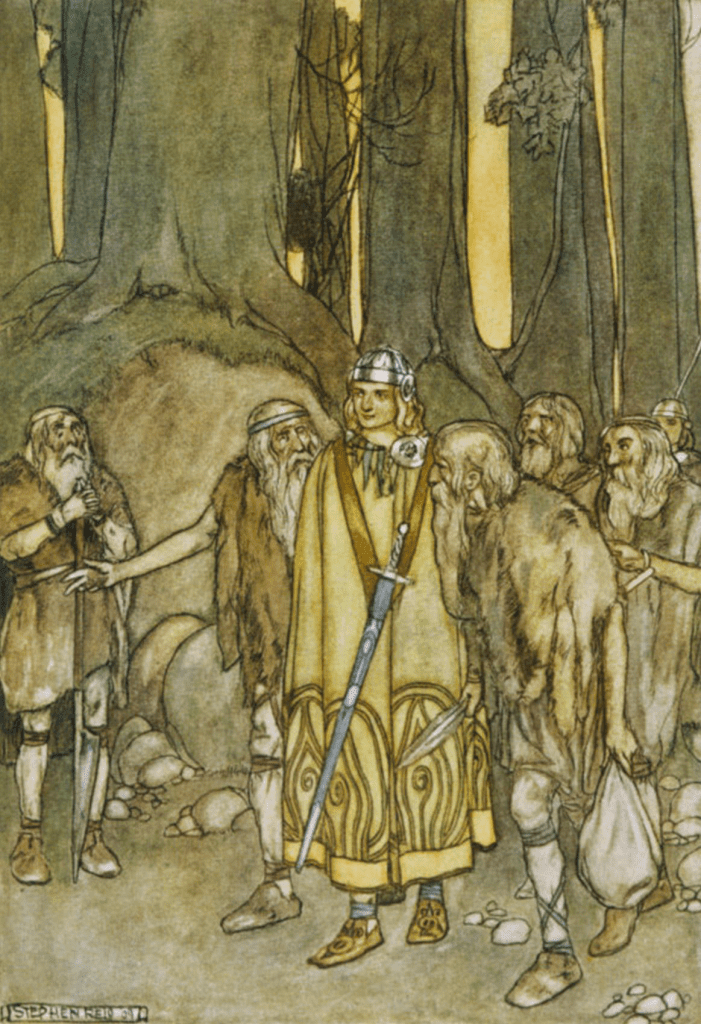
Fionn Mac Cumhaill stands at the heart of the Fenian Cycle, one of the great narrative traditions of early Ireland. Warrior, hunter, poet, and seer, Fionn embodies an idealised heroic code where intelligence and restraint matter as much as physical strength. His stories, largely preserved through oral tradition and later medieval manuscripts, follow his journey from a threatened child raised in hiding to the undisputed leader of the Fianna, Ireland’s elite warrior band.
Born under the shadow of blood-feud, Fionn’s early life is shaped by loss and secrecy. His father Cumhal, leader of the Fianna, was killed in the Battle of Cnucha, forcing Fionn’s mother Muirne to flee and conceal her child. Originally named Deimne, he earned the name Fionn, meaning “fair” or “bright,” after his hair turned prematurely white, a physical marker that later tradition linked with wisdom rather than age.
Fionn’s rise is marked by his defeat of the fire-breathing otherworld being Áillen at Tara, an act that restored honour to his lineage and secured his leadership of the Fianna. From this point onward, his tales expand beyond warfare to explore loyalty, poetry, tragic love, and the tension between fate and choice. Over centuries, the heroic warrior gradually transforms in folklore into a giant whose actions shape the Irish landscape itself, showing how myth adapts to popular memory.
Physical Traits
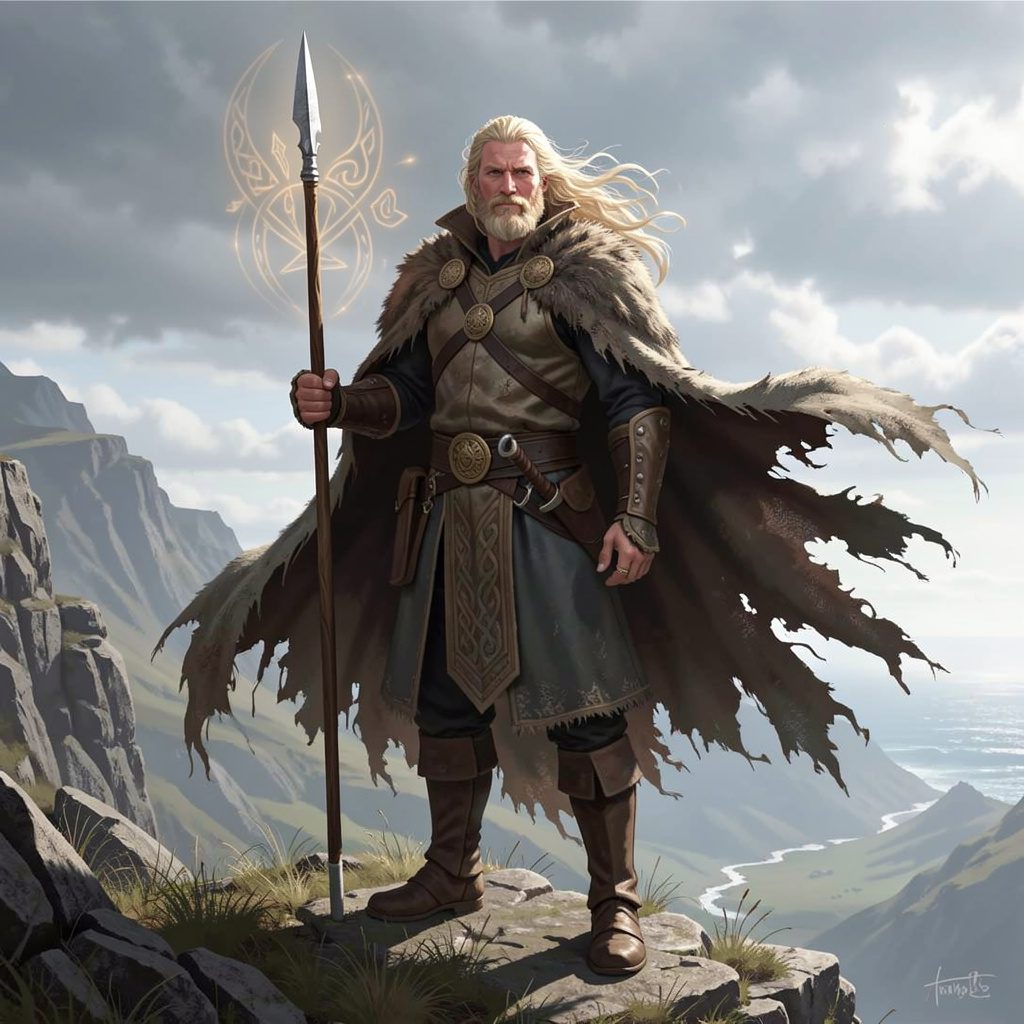
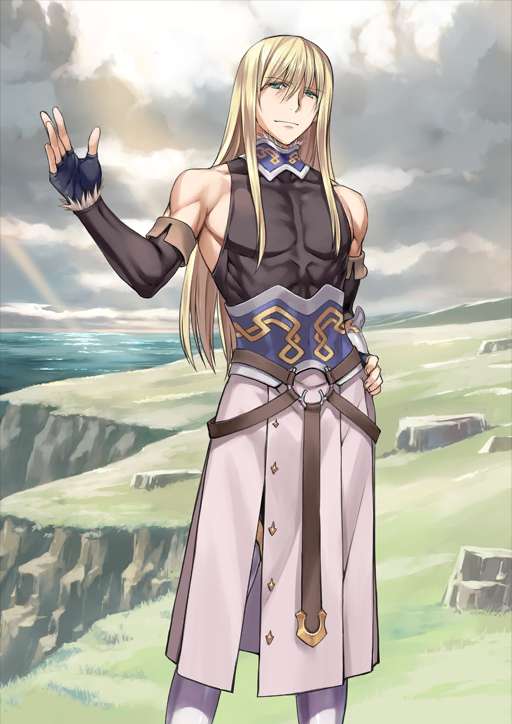
Early literary sources describe Fionn as tall, broad-shouldered, fair-haired, and striking in appearance, a figure whose physical presence matches his authority. The Old Irish term “fionn” conveys brightness and clarity as much as complexion, suggesting that his appearance symbolised insight as well as strength. He is consistently portrayed as a tireless hunter, comfortable in forests, hills, and wild places, reflecting the Fianna’s close bond with the natural world.
Later folk traditions amplify these traits into exaggeration. Fionn becomes capable of hurling massive stones, carving valleys, and reshaping coastlines. This gradual enlargement of scale does not replace the earlier heroic image but layers it, allowing him to exist simultaneously as a human warrior-leader and a landscape-shaping giant within Irish cultural memory.
Family
Fionn’s lineage anchors him firmly within Ireland’s mythic past. He is the son of Cumhal mac Trénmhoir, fallen leader of the Fianna, and Muirne Muincháem, daughter of the druid Tadg mac Nuadat. Tadg’s refusal to sanction the marriage, driven by prophecy and fear of loss, directly leads to Cumhal’s death and Muirne’s exile.
Fionn survives because he is fostered in secrecy by Bodhmall the druidess and Liath Luachra the warrior woman, who train him in survival, combat, and knowledge of the wild. This upbringing away from society shapes his independence and adaptability. As an adult, Fionn fathers Oisín, the poet-warrior whose voice frames many Fenian tales. His extended family includes Bran and Sceólang, his loyal hounds, born of a transformed relative and symbolising the blurred line between human, animal, and enchanted realms that defines Fenian storytelling.
Other names
Across regions and centuries, Fionn’s name shifts with language and folklore. Anglicised forms such as Finn McCool or Finn MacCool dominate later Irish and Scottish tradition, especially in giant legends. Earlier texts preserve spellings such as Finn mac Cumaill, while his childhood name Deimne appears in formative stories. In Scotland, literary adaptations transform him into Fingal, demonstrating how his identity adapts while retaining its core heroic essence.
Powers and Abilities
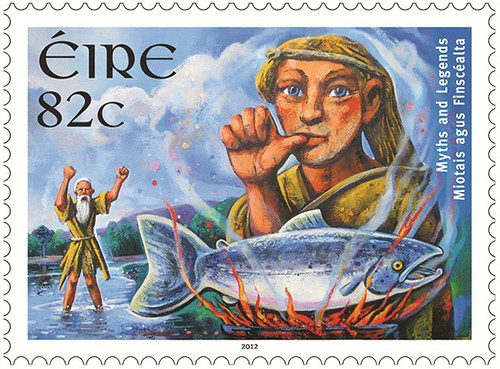
Fionn’s defining power is wisdom rather than brute force. His encounter with the Salmon of Knowledge grants him access to hidden understanding when he bites or sucks his thumb, a ritualised act that turns insight into a physical response. This ability allows him to foresee danger, solve riddles, and guide the Fianna through threats that strength alone cannot overcome.
Alongside this wisdom stands formidable martial skill. Fionn is an unmatched hunter, a master of spear and sword, and a commander capable of uniting rival factions. His victory over Áillen at Tara reflects both attributes, combining preparation, insight, and courage. In later tradition, his abilities expand into giant-like feats, but even then his intelligence remains central, reinforcing the idea that cleverness defines true leadership.
Modern Day Influence
Fionn Mac Cumhaill remains deeply embedded in Ireland’s cultural landscape. Sites such as the Giant’s Causeway are inseparable from his legend, while place-names across Ireland are linked to his deeds. His stories continue to appear in children’s books, academic studies, tourism narratives, and popular media, ensuring that his presence endures beyond scholarship.
Literary revivals, from medieval manuscripts to modern novels and reinterpretations, have kept the Fenian Cycle alive. Fionn’s image as a thoughtful warrior-leader resonates strongly in contemporary discussions of identity, heritage, and the balance between power and wisdom, making him one of Ireland’s most enduring cultural figures.
Related Images

Source
Dooley, A., & Roe, H. (1999). Tales of the elders of Ireland. Oxford University Press.
Lenihan, E., & Clarke, A. (2006). Fionn Mac Cumhail’s tales from Ireland. Mercier Press.
Llywelyn, M. (1994). Finn Mac Cool. William Morrow.
MacKillop, J. (1988). Fionn mac Cumhail: Celtic myth in English literature. Syracuse University Press.
Matthews, J. (2001). Fionn Mac Cumhail: Champion of Ireland. Running Press.
O’Sullivan, B. (2011). Fionn: Defence of Ráth Bládhma. Lulu.
Rolleston, T. W. (1910). The high deeds of Finn and other bardic romances of ancient Ireland. T. Y. Crowell.
Wikipedia. (2026). Fionn mac Cumhaill. https://en.wikipedia.org/wiki/Fionn_mac_Cumhaill
Frequently Asked Questions
Who was Fionn Mac Cumhaill?
Fionn Mac Cumhaill was a legendary Irish hero and leader of the Fianna, central to the Fenian Cycle of early Irish literature.
How did Fionn gain his wisdom?
He gained supernatural knowledge by tasting the Salmon of Knowledge, allowing him to access insight by biting his thumb.
Is Finn McCool the same as Fionn Mac Cumhaill?
Yes, Finn McCool is the anglicised form of Fionn Mac Cumhaill used in later Irish and Scottish folklore.
Did Fionn Mac Cumhaill build the Giant’s Causeway?
Folklore credits him with creating the Giant’s Causeway as stepping stones to Scotland, though this is symbolic rather than historical.
Was Fionn Mac Cumhaill a god?
No, he is generally portrayed as a mortal hero, though later traditions exaggerate his size and abilities to near-giant proportions.