

Achoura (2018) : Moroccan Folklore and the Shadow of Bougatate
| Description | |
|---|---|
| Country of Origin | Morocco |
| Language | French |
| Genre | Horror |
| Cast | Sanaa Akroud, Abdelilah Rachid, Mohamed Choubi, Ayoub Kachroudi |
| Directed by | Talal Selhami |
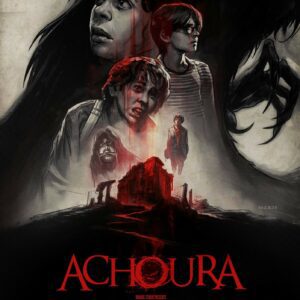
Achoura
Achoura (2018), directed by Talal Selhami, is a Moroccan supernatural horror film that draws heavily from North African folklore and childhood legends. Unlike many Western horror films that rely purely on fictional monsters, Achoura builds its story around traditional Moroccan beliefs, particularly the dark folklore surrounding the Achoura festival and the terrifying creature known as Bougatate. By grounding its horror in cultural mythology, the film attempts to revive a childhood legend familiar to many in Morocco and transform it into a cinematic narrative.
The story begins with a group of children celebrating the festival of Achoura, a day that carries multiple meanings across the Islamic world. In Morocco, the celebration often blends religious observance with folk traditions, games, and nighttime festivities. According to local legends, however, the night of Achoura is also associated with supernatural dangers. Parents sometimes warn children about a monstrous being that emerges during the festivities to punish those who wander too far from home. This creature, Bougatate, forms the mythological core of the film.
Bougatate belongs to a category of folklore creatures used in many cultures as cautionary figures in stories told to children. These beings often function as symbolic guardians of social order, reminding young listeners of the dangers that exist beyond the safety of family and community. In Moroccan folklore, Bougatate is said to abduct children or lure them into dark places. The creature’s name itself evokes fear in traditional storytelling, much like the bogeyman figures found in European and Middle Eastern folklore.
In the film, the childhood encounter with Bougatate leads to the mysterious disappearance of one of the boys in the group. The traumatic event shapes the lives of the surviving children, who grow into adults haunted by the memory of what happened during that night. Years later, when strange events begin occurring again around the time of Achoura, the group is forced to confront the possibility that the legend they once dismissed as a childhood story may be real.
From a mythological perspective, the narrative reflects a common theme found in folklore around the world: the return of a forgotten or ignored spirit. Many traditional myths describe supernatural beings that become dangerous when humans stop respecting the rituals or warnings associated with them. In this sense, Bougatate functions as a folkloric guardian of boundaries, reminding communities that certain nights, places, or actions carry spiritual consequences.
The film also explores the psychological role of folklore in shaping childhood fears. Legends like Bougatate are often passed down through generations as part of oral storytelling traditions. These stories serve both as entertainment and as a way of teaching caution. By bringing this childhood myth into adulthood, Achoura examines how cultural legends can linger in the collective memory of a community.
Visually, the film attempts to capture the dark atmosphere associated with Moroccan supernatural storytelling. The desert landscapes, abandoned buildings, and shadowy streets reflect the liminal spaces often associated with encounters with spirits or monsters in folklore. These settings reinforce the idea that Bougatate is not merely a creature but a presence tied to the land and cultural memory of the region.
One of the most interesting mythological aspects of Achoura is its connection to the blending of religious and folk traditions. The Achoura festival itself is primarily a religious observance commemorating important historical events within Islam. However, in many parts of North Africa, local customs have merged with the religious celebration, producing a unique cultural atmosphere where sacred rituals coexist with folk beliefs, music, and storytelling. The film uses this mixture of tradition to create a setting where myth and reality feel closely intertwined.
While Achoura is ultimately a horror film, its deeper significance lies in how it draws upon Moroccan folklore to create its central threat. Rather than inventing a new monster, the film revives a legend that already exists within the cultural imagination. This approach gives the story a sense of authenticity, as the fear it portrays comes from a tradition that many viewers may already recognize.
From a mythological perspective, Achoura serves as an example of how folklore continues to inspire modern storytelling. The legend of Bougatate represents the enduring power of oral traditions that have shaped cultural identity for generations. Even in a contemporary cinematic setting, the film demonstrates that ancient fears and legends can still resonate strongly with modern audiences when they are rooted in genuine cultural mythology.