

Akharin Dastan (2018) : A Dark Animated Journey Through Persian Legends
| Description | |
|---|---|
| Country of Origin | Iran |
| Language | Farsi/Persian |
| Genre | Animated |
| Cast | Parviz Parastoui, Leila Hatami, Hamed Behdad, Baran Kosari, Ashkan Khatibi |
| Directed by | Ashkan Rahgozar |
Akharin Dastan
When most people think of animated fantasy films, their minds usually drift toward Hollywood epics or Japanese anime classics. Yet Akharin Dastan, the 2018 Iranian animated feature directed by Ashkan Rahgozar, stands apart as something far more culturally rooted and mythologically ambitious. Inspired heavily by the ancient Persian epic Shahnameh by Ferdowsi, the film transforms one of the oldest literary traditions in the world into a visually dark and emotionally intense fantasy experience. Rather than treating mythology as background decoration, Akharin Dastan places Persian legend at the very center of its identity, creating a film that feels both ancient and modern at the same time.
The story follows Afar, a young warrior caught in political chaos, demonic forces, and royal conspiracies within the kingdom of Jamkard. While the narrative introduces original elements, the film draws deeply from Persian mythological traditions, especially the legendary tales associated with Zahhak, Jamshid, and the eternal struggle between light and corruption. For viewers unfamiliar with Iranian mythology, Akharin Dastan acts almost like an entry gate into a world that cinema has rarely explored on a global scale.
One of the most fascinating aspects of Akharin Dastan is how it adapts Shahnameh’s mythological atmosphere rather than directly retelling a single story from the text. Ferdowsi’s Shahnameh is not merely a collection of heroic adventures. It is a massive cultural memory containing kings, demons, prophecies, divine justice, and cosmic cycles of rise and downfall. The film captures this spirit exceptionally well. Its kingdoms feel ancient and burdened by destiny, while its heroes are constantly trapped between personal morality and unavoidable fate. This gives the film a tragic tone that resembles older mythological epics far more than modern fantasy blockbusters.
The shadow of Zahhak looms strongly throughout the movie’s themes. In Persian mythology, Zahhak is one of the most terrifying tyrants in Shahnameh. Corrupted by dark forces, he becomes a monstrous ruler associated with serpents growing from his shoulders, symbols of greed, evil, and unnatural hunger. Akharin Dastan channels this mythology through its portrayal of power as a corrupting supernatural force. Even when the film is not explicitly recreating the Zahhak legend scene for scene, the influence is unmistakable. Evil in the movie is not simply political. It is mythic corruption that spreads into the land itself.
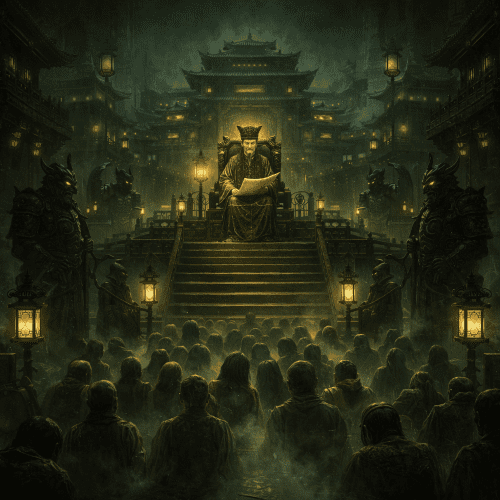
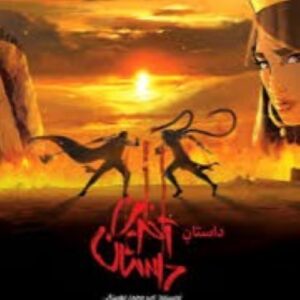
Visually, the movie embraces this darkness with remarkable confidence. The animation style combines influences from anime, Western fantasy art, and Persian miniature aesthetics. The landscapes are filled with towering palaces, deserts drenched in crimson light, ancient temples, and ominous fortresses that seem carved from forgotten myths. There is a haunting atmosphere across the film that mirrors the fatalism often found in old Persian epics. Unlike the bright heroism of many fantasy animations, Akharin Dastan feels melancholic and spiritually heavy.
The mythological creatures and supernatural imagery are another major strength. Persian mythology has always contained terrifying demons known as divs, supernatural beasts, magical kings, and cosmic entities tied to Zoroastrian concepts of order and chaos. The film taps into these traditions without overexplaining them, which actually enhances the worldbuilding. Viewers are thrown into a civilization where magic, curses, prophecy, and ancient evil are accepted realities. This approach makes the mythology feel lived-in rather than artificially inserted for spectacle.
Another compelling aspect is how the film reflects ancient Iranian ideas about kingship. In Persian mythology, a ruler is not judged solely by military strength. A king must possess divine glory, often referred to as farr or khvarenah, a sacred legitimacy granted by higher cosmic order. Once rulers become arrogant or morally corrupted, they lose this divine favor and inevitably fall. Akharin Dastan repeatedly explores this theme through its political conflicts and power struggles. Leadership in the film is never stable because mythological morality constantly hovers over the throne.
The movie’s darker tone may surprise viewers expecting a family-friendly animated adventure. Akharin Dastan contains violence, psychological trauma, betrayal, and existential dread more commonly associated with mature fantasy storytelling. In many ways, it resembles the grim atmosphere of films like Heavy Metal or darker fantasy anime rather than mainstream Western animation. This mature treatment actually benefits the mythological material because Persian epics themselves were never simplistic children’s tales. They were stories about mortality, corruption, war, revenge, and the fragile nature of civilization.
One of the film’s greatest achievements is cultural authenticity. Even though the animation style incorporates global influences, the soul of the film remains unmistakably Persian. The architecture, clothing, music, and symbolic imagery all reflect Iranian artistic traditions. This authenticity matters because global fantasy cinema often borrows heavily from European mythology while overlooking equally rich traditions from West Asia, Central Asia, or South Asia. Akharin Dastan feels important precisely because it refuses to imitate medieval European fantasy formulas entirely.
The soundtrack also reinforces the mythological depth of the film. Traditional musical influences blend with cinematic orchestration to create an atmosphere that feels ancient yet emotionally immediate. Many scenes gain power not through dialogue alone but through sound design that evokes ritual, prophecy, and spiritual tension. The music helps the audience feel as if they are witnessing legends being remembered rather than simply watching fictional events unfold.
Despite its strengths, the film is not perfect. Some viewers may find the pacing uneven, especially during exposition-heavy sections involving political intrigue and mythological lore. Certain character arcs could have benefited from deeper emotional development, particularly for supporting characters whose motivations sometimes feel rushed. However, these flaws rarely overshadow the ambition of the project itself. Akharin Dastan deserves recognition simply for attempting something so culturally specific and mythologically layered within the world of animated cinema.
What makes Akharin Dastan especially valuable today is its role in preserving and modernizing Persian mythology for contemporary audiences. Around the world, mythology-based media has exploded in popularity through franchises inspired by Greek, Norse, and Japanese legends. Persian mythology, despite being one of humanity’s richest storytelling traditions, remains comparatively underrepresented in international entertainment. This film helps bridge that gap by presenting Iranian mythological concepts in a cinematic form accessible to modern viewers without stripping away their cultural identity.
In Mythlok’s Perspective, Akharin Dastan succeeds because it treats mythology as a living cultural force rather than nostalgic fantasy decoration. The film understands that myths are not merely stories from the past. They are reflections of fear, power, morality, and collective memory that continue to shape civilizations. Much like how Japanese anime reinterprets Shinto spirits or how Norse mythology has been revived through modern fantasy cinema, Akharin Dastan demonstrates that Persian legends still possess enormous narrative power. Its darker atmosphere also creates an interesting parallel with Slavic and Celtic mythological storytelling, where fate, corruption, and tragic heroism often dominate the narrative. The result is a film that feels ancient in spirit yet strikingly modern in execution.
Akharin Dastan may not yet have the global recognition of larger animated fantasy productions, but it deserves attention from anyone interested in mythology, world cinema, or mature animation. It is a rare example of Persian mythology being brought to life with ambition, style, and emotional seriousness. More importantly, it proves that ancient legends outside the usual Western canon still hold extraordinary cinematic potential.