American Gods : A Modern War of Belief and Gods
| Description | |
|---|---|
| Origin | World Mythology |
| Language | English |
| Type | Adaptation |
| Seasons | 3 (2017, 2019, 2021) |
| Cast | Ricky Whittle, Ian McShane, Emily Browning, Yetide Badaki, Bruce Langley |
| OTT Platform / TV Channel | Starz, Amazon Prime Video, Apple TV, Google Play Movies, and Tubi TV |
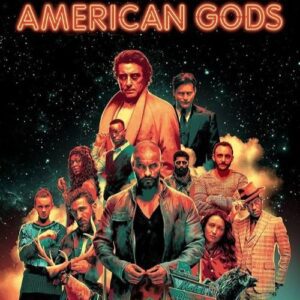
American Gods
Introduction
American Gods is a television adaptation of American Gods, developed by Bryan Fuller and Michael Green, which premiered on April 30, 2017. Across three seasons, the series presents a striking and original idea: gods exist only as long as people believe in them. When belief fades, so does their power. This concept transforms mythology into something deeply human, tying together faith, identity, and cultural memory within a modern American landscape.
Set across the United States, the series reimagines ancient deities as immigrants who arrived alongside the people who worshipped them. These Old Gods—drawn from Norse, Egyptian, Slavic, African, and Celtic traditions—struggle to survive in a world increasingly dominated by new forms of belief. Opposing them are the New Gods, embodiments of modern obsessions such as technology, media, and globalization. The result is a layered narrative that blends fantasy, philosophy, and social commentary.
Visually bold and thematically ambitious, American Gods received critical acclaim for its first season, particularly for its storytelling and performances by Ian McShane and Ricky Whittle. Although later seasons received mixed reactions due to production changes, the series remains one of the most distinctive explorations of myth in modern television.
Plot
The story follows Shadow Moon, a quiet and reserved man whose life changes after he is released early from prison following the death of his wife, Laura. While trying to rebuild his life, he encounters the mysterious Mr. Wednesday, who offers him a job as a bodyguard. What begins as a simple arrangement quickly draws Shadow into a hidden world where gods walk among humans.
As Shadow travels across America with Wednesday, he discovers that the country is home to a silent war between two opposing forces. The Old Gods, brought to America through centuries of migration, are fading as their worship declines. In contrast, the New Gods—figures like Media and Technical Boy—derive power from modern attention and digital dependence.
The narrative unfolds as a road journey, with each destination revealing another layer of this hidden reality. Shadow encounters a wide range of deities, from ancient tricksters to forgotten guardians, each struggling to adapt to a world that has moved on without them. Alongside this, Laura Moon returns from death in an unusual form, adding emotional tension and complexity to Shadow’s journey.
As the story progresses, alliances are formed and broken. Mr. Wednesday seeks to unite the Old Gods for a coming conflict, while the New Gods attempt to maintain their dominance. Shadow, caught between these forces, begins to uncover the truth about his own identity and his connection to the divine. His journey becomes less about survival and more about understanding belief itself.
Mythological Basis
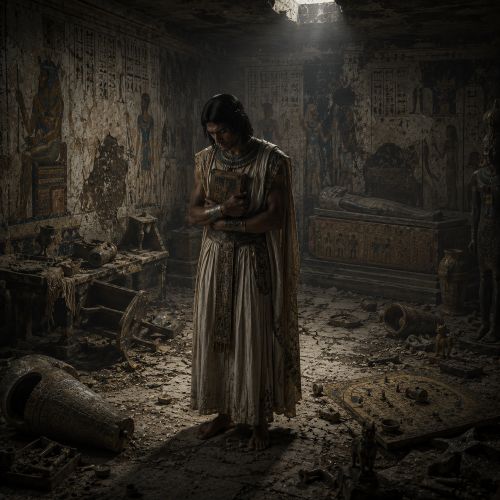
American Gods is rooted in authentic global mythological traditions, but it reshapes them through a modern lens. Mr. Wednesday is a direct representation of Odin, the Norse All-Father, portrayed not as a distant deity but as a cunning and manipulative wanderer. Egyptian gods appear in the form of Mr. Ibis and Mr. Jacquel, preserving ancient funerary traditions within a contemporary setting.
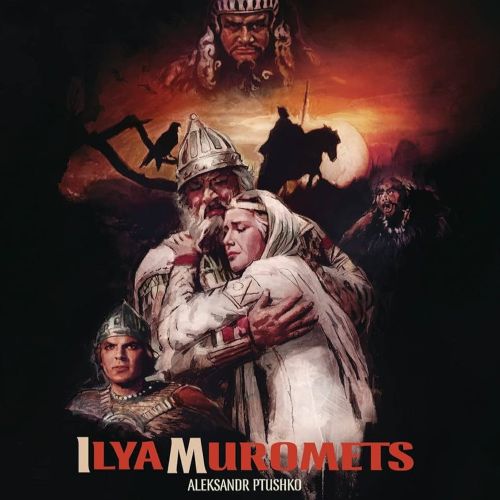
Slavic mythology is represented through characters like Czernobog and the Zorya sisters, while African folklore finds a voice through Anansi, the trickster storyteller. Celtic traditions emerge through Mad Sweeney, whose origins connect to Irish myth. These figures retain their cultural roots while adapting to the realities of modern America.
What sets the series apart is its interpretation of divine power. Gods are not eternal beings with fixed authority; instead, they are sustained entirely by human belief. This idea reflects a broader truth found in many mythological systems, where rituals, stories, and devotion keep deities alive in cultural memory. As belief evolves, so do the gods.
The introduction of New Gods reinforces this concept. Figures like Media and Technical Boy represent modern forms of worship—screens, data, and attention. They are not ancient, but they are powerful, illustrating how contemporary society creates its own mythologies. In this way, American Gods becomes not just a story about old myths, but about how myths continue to form in the present.
Characters & Archetypes
The characters in American Gods are deeply rooted in universal archetypes, giving the story a timeless quality. Shadow Moon represents the classic hero figure—an ordinary man drawn into extraordinary circumstances. His journey reflects a search for meaning, identity, and truth, echoing mythic patterns found across cultures.
Mr. Wednesday embodies both the mentor and the trickster. He guides Shadow while manipulating events to serve his own goals, reflecting the complex nature of many mythological gods. His charisma and unpredictability make him both compelling and dangerous.
Laura Moon stands apart as a reimagined archetype. Rather than remaining a passive figure, she becomes an active force within the story. Her return from death transforms her into an anti-hero, driven by unresolved emotions and a desire for purpose. She represents transformation and defiance, key themes in mythic storytelling.
The New Gods introduce modern archetypes shaped by contemporary culture. Media functions as a shapeshifter, appearing in familiar forms to influence perception, while Technical Boy represents the volatile power of technology and the fragility of digital identity. These characters reflect the anxieties and obsessions of the modern world.
Supporting figures like Anansi, Czernobog, and the Zorya sisters reinforce the presence of timeless archetypes such as the trickster, the warrior, and the cosmic guardian. By placing these roles in a modern setting, the series bridges ancient storytelling traditions with present-day concerns.
Creative Liberties
While American Gods draws heavily from mythology and its source material, it takes deliberate creative liberties to adapt the story for television. One of the most significant changes is the interaction between gods from different cultural traditions. In original myths, these pantheons exist separately, but the series brings them together within a shared narrative shaped by immigration and cultural exchange.
The modern setting is another major reinterpretation. By placing ancient deities in contemporary America, the series creates a contrast between timeless myth and present-day life. Gods are shown navigating cities, highways, and small towns, making them both relatable and otherworldly.
Character reinterpretation also plays a key role. Many figures are given expanded backstories or altered motivations to deepen their emotional impact. For example, Bilquis is portrayed with a strong sense of vulnerability and power, while Mad Sweeney’s journey is enriched with personal history that adds depth to his character.
The series also embraces visual experimentation, using surreal imagery to represent belief, memory, and divine presence. These sequences prioritize atmosphere and symbolism, enhancing the mythic tone of the story.
Despite these liberties, the series remains faithful to the core idea that mythology evolves with culture. By blending ancient traditions with modern storytelling, American Gods demonstrates how old beliefs continue to shape new narratives, ensuring that myths never truly disappear.