

The Theft of Stories : Anansi and the Origin of Storytelling
| Description | |
|---|---|
| Origin | Akan Mythology |
| Epics/Texts | Oral traditions, Rattray’s Ashanti |
| Key Characters | Anansi, Nyame, Onini, Osebo, Mmoatia |
| Type of Event | Theft |
| Symbolism | Triumph of wit over strength, origin of storytelling |
Mythlok Perspective
In Mythlok’s View, the Theft of Stories is less about rebellion and more about redistribution. Anansi does not destroy divine authority; he reshapes it. By transferring stories from Nyame to humanity, he transforms knowledge into a living force rather than a guarded treasure. This aligns closely with Prometheus in Greek tradition, who brings fire, and Coyote in Native American lore, who spreads wisdom. Yet unlike them, Anansi claims ownership of narrative itself, making him not just a trickster but the architect of cultural memory.
Theft of Stories
Introduction
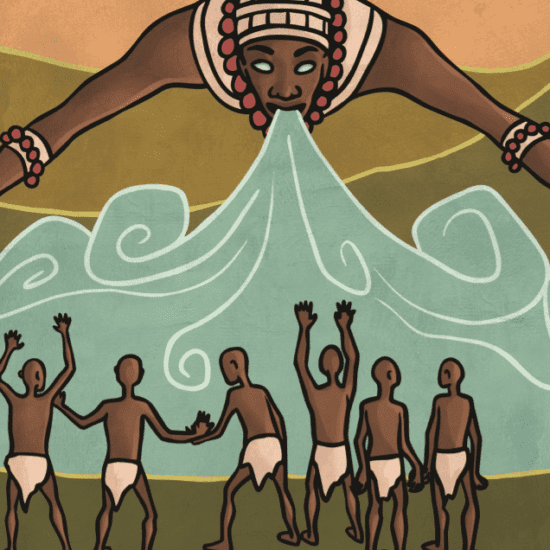
The myth of the Theft of Stories stands as one of the most important narratives in Akan tradition, explaining not just the origin of storytelling but its ownership. In this tale, Anansi, the cunning spider trickster, challenges the authority of Nyame, the Sky God, who keeps all stories locked away from humanity. What follows is not a simple act of theft, but a calculated negotiation that reshapes the cultural landscape forever.
Anansi’s journey is not driven purely by selfish ambition. Instead, it reflects a deeper truth within Akan society: that stories are meant to be shared, lived, and passed on. By bringing stories down from the divine realm to the human world, Anansi transforms storytelling into a communal act. From that moment forward, these tales become known as Anansesem, or “spider stories,” embedding his legacy into every narrative that follows.
Source Texts
The origins of the Theft of Stories lie in the oral traditions of the Akan people of present-day Ghana, particularly among the Ashanti. These stories were preserved through generations of spoken performance before being recorded in the early twentieth century. One of the most significant documentations comes from Robert Sutherland Rattray’s Akan-Ashanti Folk-Tales (1930), which captured these narratives directly from local storytellers in both Twi and English.
Rattray’s work remains invaluable because it preserves the tone, rhythm, and structure of oral storytelling without heavy external reinterpretation. Later adaptations, such as Gail E. Haley’s A Story, a Story (1970), brought the tale to global audiences while retaining its cultural essence. Caribbean collections by folklorists like Martha Warren Beckwith further demonstrate how the story evolved as it traveled through the African diaspora.
Across these sources, the core narrative remains consistent, even as details shift. This consistency highlights the story’s cultural importance and its role as a foundational myth explaining the accessibility of knowledge.
Key Characters
At the heart of the story is Anansi, a figure who exists between worlds. He is neither fully human nor entirely animal, often depicted as a spider or a man with spider-like qualities. His defining trait is not strength but intelligence. He survives and succeeds through strategy, deception, and adaptability.
Nyame, the Sky God, represents divine authority and control. As the keeper of all stories, he embodies the idea that knowledge is sacred and not easily given away. His challenge to Anansi is designed to be impossible, reinforcing the gap between gods and mortals.
Supporting characters add depth to the narrative. Aso, Anansi’s wife, is often portrayed as wise and instrumental in helping him devise plans. The creatures Anansi must capture—Onini the python, Mmoboro the hornets, Osebo the leopard, and Mmoatia the fairy—are not random obstacles. Each represents a different form of danger or power within the natural and supernatural world. Together, these characters create a dynamic tension between intellect and authority, cunning and control.
Narrative Summary
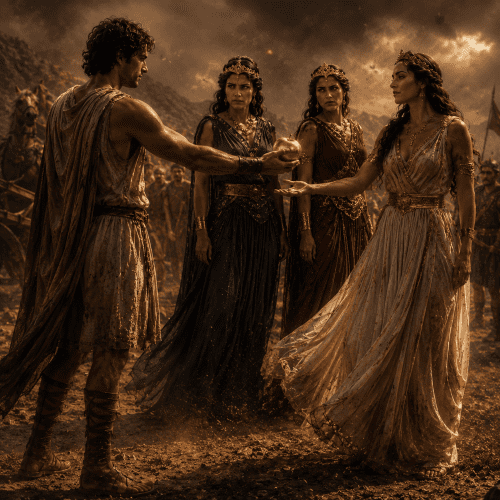
The story begins with a simple truth: all stories belong to Nyame. Humans have none, and the world lacks the richness that storytelling provides. Anansi, seeing this imbalance, decides to obtain the stories for himself.
When he approaches Nyame, the Sky God sets a near-impossible price. Anansi must capture four formidable beings: the deadly hornets, the powerful python, the fierce leopard, and the elusive fairy. Each task is designed to test not strength, but ingenuity.
Anansi succeeds through clever deception. He convinces the python to stretch itself against a stick to prove its length, then ties it down. He tricks the hornets into entering a gourd by simulating rain. He captures the leopard using a hidden pit and binds it once trapped. Finally, he ensnares the fairy using a sticky doll baited with food.
When Anansi presents these captives, Nyame is forced to honor his promise. The stories are handed over, and from that moment on, they are known as Anansi’s stories. This act does more than transfer ownership. It transforms storytelling into something accessible, dynamic, and deeply human.
Symbolism
The Theft of Stories is rich with symbolic meaning. At its core, it represents the transition of knowledge from exclusive divine control to shared human experience. Anansi himself symbolizes the triumph of intellect over brute force. Despite his small size and lack of physical power, he overcomes challenges that seem insurmountable. Each creature he captures represents a different kind of obstacle—natural danger, unpredictability, strength, and the unseen. His victories suggest that wisdom and creativity are more powerful than physical dominance.
The “box” or “pot” of stories symbolizes hidden knowledge. By bringing it into the human world, Anansi breaks the barrier between the sacred and the everyday. This reflects the Akan belief that storytelling is not just entertainment but a vital cultural force. At a deeper level, the myth acknowledges that rebellion against authority can serve a greater purpose. Anansi challenges Nyame, but in doing so, he ultimately enriches the world.
Comparative Mythology
The Theft of Stories fits into a broader global pattern of myths where a trickster or hero brings something valuable to humanity. In Greek tradition, Prometheus steals fire from the gods, giving humans the power to create and survive. In Native American traditions, Coyote often spreads knowledge or disrupts order in ways that benefit humanity.
Similarly, figures like Maui in Polynesian traditions manipulate the natural world to improve human life. These stories share a common theme: the breaking of divine boundaries to empower humans. However, Anansi’s story is unique in its focus on narrative itself. While others bring fire or tools, Anansi brings stories—the foundation of culture, identity, and memory. This elevates the act beyond survival and into the realm of meaning.
Cultural Impact
Among the Akan, storytelling is a communal activity deeply tied to social life. Anansi stories, or Anansesem, are traditionally told during gatherings, often at night, accompanied by performance, rhythm, and audience participation. The Theft of Stories reinforces the idea that storytelling belongs to everyone. It legitimizes the act of sharing knowledge and experiences, making it a cornerstone of cultural identity.
As these stories traveled through the Atlantic slave trade, they evolved but retained their essence. In the Caribbean, Anansi became Anancy, a symbol of resistance and survival. His cleverness mirrored the strategies enslaved people used to navigate oppressive systems. Even today, Anansi remains a powerful cultural figure, representing resilience, intelligence, and the enduring power of narrative.
Modern Influence
Anansi continues to influence modern storytelling across multiple mediums. In literature, he appears prominently in Neil Gaiman’s Anansi Boys and American Gods, where his character is reimagined for contemporary audiences. Television adaptations further expand his reach, introducing him to global viewers.
In education, Anansi stories are used to teach critical thinking, morality, and cultural heritage. Digital platforms and podcasts have also begun to revive these tales, ensuring they remain relevant in a rapidly changing world. Across the African diaspora, Anansi’s legacy persists as a symbol of creativity and resistance. Whether in literature, music, or visual media, his presence continues to evolve while staying rooted in tradition.



Sources
Rattray, R. S. (1930). Akan-Ashanti folk-tales. Clarendon Press.
Vecsey, C. (1981). The exception who proves the rules: Ananse the Akan trickster. Journal of Religion in Africa, 12(3), 161–177.
Rattray, R. S. (1916). Ashanti proverbs. Clarendon Press.
Haley, G. E. (1970). A story a story: An African tale. Atheneum Books.
Wikipedia. (2026). Anansi. https://en.wikipedia.org/wiki/Anansi
EBSCO Research Starters. (n.d.). Anansi. https://www.ebsco.com/research-starters/literature-and-writing/anansi
Yankah, K. (1984). “The Akan trickster cycle: Myth, ritual, and performance.” Research in African Literatures, 15(2), 3–22.
Frequently Asked Questions
What is the Theft of Stories myth?
The Theft of Stories is an Akan myth where Anansi wins ownership of all stories from Nyame by completing impossible tasks.
Why are stories called Anansesem?
They are called Anansesem because Anansi earned the rights to all stories, making them “spider stories.”
Who is Nyame in the story?
Nyame is the Sky God and original keeper of all stories, representing divine authority.
What do the creatures symbolize in the myth?
Each creature represents different challenges such as danger, strength, unpredictability, and the supernatural.
How did the story spread outside Africa?
The story spread through the African diaspora, especially during the Atlantic slave trade, becoming central to Caribbean folklore.