Record of Ragnarok : A Tournament Between Gods and Legends
| Description | |
|---|---|
| Origin | Norse Mythology |
| Language | Japanese |
| Type | Reimagination |
| Seasons | 3 (2021–2025; 4th announced) |
| Cast | Miyuki Sawashiro, Tomoyo Kurosawa, Hikaru Midorikawa, Soma Saito, Wataru Takagi |
| OTT Platform / TV Channel | Netflix |
Record of Ragnarok
Introduction
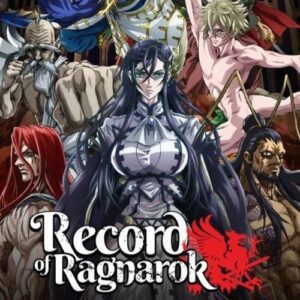
Record of Ragnarok (Shūmatsu no Valkyrie) is one of the most ambitious mythology-inspired anime of recent years. Adapted from the manga written by Shinya Umemura and Takumi Fukui, with artwork by Azychika, the series imagines a world where gods from every major mythology gather to judge humanity. Their verdict is simple: humans have become beyond redemption and deserve extinction.
Before the sentence can be carried out, the Valkyrie Brunhilde invokes an ancient rule known as Ragnarok. Instead of destroying humanity immediately, the gods must prove they are superior in a tournament consisting of thirteen one-on-one battles. If humanity can claim seven victories, it earns another thousand years of existence.
Although its title comes directly from the Norse apocalypse, Record of Ragnarok is far more than a retelling of Norse mythology. It blends characters from Greek, Hindu, Japanese, Chinese, Abrahamic, and other traditions into a single arena, creating one of anime’s most unique cross-cultural mythological spectacles.
Plot
The story begins in the majestic halls of Valhalla, where the divine council gathers every thousand years to determine humanity’s future. Convinced that human civilization has become violent, destructive, and beyond saving, the gods unanimously vote for extinction.
Brunhilde refuses to accept their decision. She challenges the gods to Ragnarok, an ancient contest that allows mortals to fight for their survival. The tournament follows a simple rule: thirteen gods face thirteen human champions, and the first side to win seven matches decides the fate of mankind.
Since ordinary humans cannot harm divine beings, each champion receives the aid of one of the Valkyries. Through a sacred technique known as Volundr, the Valkyrie transforms herself into a powerful weapon uniquely suited to her chosen warrior, allowing humans to stand against gods on equal footing.
Every battle reveals more than physical strength. The opening clash between Thor and the legendary Chinese general Lü Bu explores the loneliness of unrivaled warriors. Adam’s battle against Zeus celebrates the resilience of humanity itself, while Kojiro Sasaki’s duel with Poseidon demonstrates how experience and perseverance can triumph over overwhelming power.
As victories and defeats accumulate, the tournament becomes more than a fight for survival. Both gods and humans are forced to question their assumptions about strength, justice, pride, and what truly makes someone worthy of respect.
Mythological Basis
The title Record of Ragnarok is borrowed from Ragnarök, the prophesied end of the world in Norse mythology. In the original myths, Ragnarök is a cataclysmic series of events that includes the terrible Fimbulwinter, the breaking of ancient bonds, the release of monsters such as Fenrir and Jörmungandr, and the final battle in which many of the Norse gods—including Odin and Thor—meet their deaths before the world is reborn.
The anime takes this famous concept as inspiration rather than following the traditional story. Instead of an unavoidable cosmic apocalypse, Ragnarok becomes a formal tournament held in Valhalla where humanity is given a final chance to defend its existence.
The series also draws upon authentic Norse figures such as Brunhilde, Odin, Thor, Loki, and the Valkyries. In traditional mythology, the Valkyries choose worthy warriors who die in battle and escort them to Valhalla. Record of Ragnarok expands their role considerably by making them active participants who sacrifice themselves to empower humanity through Volundr.
While Norse mythology provides the framework, the series quickly broadens its scope. Greek gods such as Zeus, Poseidon, and Hades stand alongside Shiva from Hindu mythology, Susanoo from Japanese mythology, and numerous legendary humans from different cultures. The result is a fictional universe where mythology from around the world exists within the same cosmic hierarchy.
Characters & Archetypes
One of the biggest strengths of Record of Ragnarok is its reinterpretation of legendary figures through timeless mythological archetypes. Brunhilde serves as the rebellious guide who challenges divine authority on behalf of humanity. Although she remains a Valkyrie, her determination and willingness to sacrifice everything transform her into the emotional heart of the series.
Thor represents the ideal warrior. Unlike many versions of the thunder god, he is portrayed as a quiet fighter searching for an opponent capable of matching his immense strength. His battle with Lü Bu reflects the universal mythological theme of warriors seeking purpose through worthy rivals.
Odin embodies the mysterious ruler whose motives remain hidden beneath calm observation. His silence often suggests that he understands far more than he reveals, reinforcing the classic archetype of the all-seeing strategist.
The human champions each symbolize different aspects of human potential. Adam represents unconditional love and self-sacrifice as the father of humanity. Kojiro Sasaki demonstrates how constant learning can overcome natural talent, while figures such as Nikola Tesla, Leonidas, Jack the Ripper, and Qin Shi Huang showcase the diversity of human achievement across history.
Rather than presenting a simple conflict between good and evil, Record of Ragnarok portrays both gods and humans as flawed individuals driven by pride, honor, ambition, fear, and compassion. This complexity gives each battle emotional weight beyond its spectacular action sequences.
Creative Liberties
Although Record of Ragnarok draws heavily from mythology, it is ultimately a work of fantasy that freely reimagines its source material. The most obvious departure is its shared mythological universe. In traditional belief systems, Norse, Greek, Hindu, Japanese, Egyptian, and other pantheons exist independently. The anime merges them into a single divine council, allowing famous gods from different cultures to interact as equals.
The concept of Ragnarok itself is also transformed. Rather than an inevitable prophecy involving giants, monsters, and the destruction of the cosmos, it becomes a tournament governed by rules and individual duels. This shift allows the series to focus on personal rivalries and philosophical debates instead of large-scale warfare.
Another original addition is Volundr, where Valkyries merge with human champions to create divine weapons. While inspired by Norse themes of magical craftsmanship and divine assistance, this ability does not appear in surviving Norse texts and was created specifically for the manga.
Historical figures are similarly reimagined with extraordinary abilities that blur the line between history and legend. Characters such as Nikola Tesla, Qin Shi Huang, and Jack the Ripper are transformed into larger-than-life heroes capable of standing against immortal gods.
These creative liberties are not intended to faithfully recreate mythology. Instead, they celebrate myths from around the world by asking a compelling question: if humanity’s greatest heroes truly stood before the gods, would they be worthy of saving the human race?