
Ragnarok : A Modern Norse Myth Reimagined
| Description | |
|---|---|
| Origin | Norse Mythology |
| Language | Norwegian |
| Type | Reimagination |
| Seasons | 3 (2020–2023) |
| Cast | David Stakston, Jonas Strand Gravli, Herman Tømmeraas, Theresa Frostad Eggesbø, Gísli Örn Garðarsson, Synnøve Macody Lund |
| OTT Platform / TV Channel | Netflix |
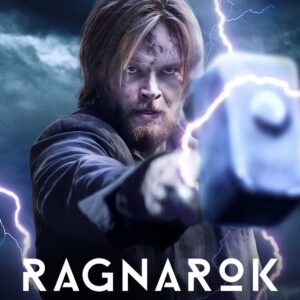
Ragnarok
Introduction
Ragnarok is a Norwegian fantasy drama that reimagines ancient Norse legends through a contemporary lens. Created by Adam Price and produced by SAM Productions, the series premiered on Netflix in January 2020 and concluded in August 2023 after three seasons. Set in the fictional town of Edda, the show blends mythological storytelling with grounded, real-world concerns, particularly environmental decline and corporate power.
At its core, Ragnarok is not just about gods and giants returning to Earth. It is about what those ancient forces would look like in a modern society shaped by climate anxiety, identity struggles, and moral ambiguity. The series stands out because it treats mythology not as distant folklore, but as something alive, evolving, and deeply relevant today.
Plot
The story follows Magne Seier, a socially awkward teenager who returns to Edda with his family. As strange events begin to unfold around him, Magne slowly realizes that he possesses extraordinary abilities connected to Thor. His awakening is not immediate or heroic. Instead, it unfolds gradually, reflecting confusion, fear, and responsibility.
Edda itself is not an ordinary town. It is dominated by the powerful Jutul family, industrial elites who secretly belong to an ancient race of giants. Their factories pollute the environment, poisoning the land and water while maintaining a façade of respectability. As Magne begins to understand his role, he also uncovers the truth about the Jutuls and their destructive influence.
Across three seasons, the narrative expands from personal discovery into a broader conflict. Magne’s journey becomes a struggle between destiny and choice. His brother Laurits complicates matters further, embodying traits of Loki and introducing chaos into an already fragile balance. The series builds toward a version of Ragnarök, not as a sudden apocalypse, but as a slow-burning crisis shaped by human decisions, environmental collapse, and mythological inevitability.
Mythological Basis
The foundation of Ragnarok lies in ancient Norse texts such as the Poetic Edda and Prose Edda, where Ragnarök describes the downfall of gods and the destruction of the cosmos, followed by renewal. In traditional mythology, this event involves a great winter, catastrophic battles, and the deaths of major deities including Odin and Thor.
The series adapts this concept into a modern framework. Instead of literal gods descending from the heavens, it presents them as reincarnated or awakened individuals living ordinary lives. The giants, known as Jötnar in myth, are portrayed as powerful elites who exploit nature for profit. This reinterpretation transforms myth into metaphor, where environmental destruction becomes the modern equivalent of cosmic imbalance.
Elements of the original myths remain clearly visible. The tension between Thor and the giants echoes their ancient rivalry. Loki’s unpredictable nature and connection to chaos are preserved through Laurits. Even the idea of cyclical destruction and rebirth remains intact, suggesting that Ragnarök is not purely an ending, but also a transformation. By grounding these mythological elements in realism, the series makes ancient stories accessible without losing their symbolic depth.
Characters & Archetypes
The strength of Ragnarok lies in how it reinterprets mythological figures as human characters shaped by modern struggles. Magne Seier represents Thor, but not as a fully formed god. He begins as uncertain and physically awkward, gradually growing into his role as a protector. His journey reflects the archetype of the reluctant hero, someone who must accept responsibility rather than seek it.
Laurits Seier embodies Loki, but with added emotional complexity. His identity, loyalty, and inner conflict make him one of the most layered characters in the series. Like his mythological counterpart, he exists between order and chaos, never fully belonging to either side.
The Jutul family represents the giants. Vidar stands as the traditional patriarchal force of destruction, while Saxa and Fjor introduce nuance, showing that even destructive forces can evolve or question their nature. Ran, the matriarch, maintains control through calculated authority, reflecting the enduring power of ancient entities in a modern world.
Other characters subtly align with Norse archetypes as well, including figures resembling Odin, Freyja, and Heimdall. These interpretations are not always literal, but they preserve the essence of each mythological role while adapting them to contemporary storytelling. Together, these characters transform myth into psychology, exploring how ancient archetypes manifest in human behavior, relationships, and choices.
Creative Liberties
One of the most compelling aspects of Ragnarok is how freely it reshapes its source material. The decision to set the story in modern-day Norway immediately changes the stakes. Instead of mythical realms, the conflict unfolds in schools, homes, and corporate boardrooms.
Environmental themes take center stage, turning the mythological concept of cosmic destruction into a reflection of climate change. The giants are no longer just monsters. They symbolize unchecked industrial power and ecological harm, making the story feel urgent and relevant.
Character reinterpretation is another major departure. Loki’s portrayal through Laurits introduces themes of identity, fluidity, and belonging that were only hinted at in traditional myths. Thor, instead of being a confident warrior, must grow into his power, making his journey more relatable.
The series also embraces ambiguity, particularly in its conclusion. By leaving room for psychological interpretation, it challenges viewers to question whether the events are literal, symbolic, or a blend of both. This approach adds depth, encouraging multiple readings rather than offering a single definitive answer.
Ultimately, these creative choices do not weaken the mythology. Instead, they demonstrate its flexibility. Ragnarok proves that ancient stories can evolve with time, retaining their core meaning while adapting to new cultural and environmental realities.