

Thor vs Indra : The Storm Gods of Norse and Indian Mythology
When lightning splits the sky and thunder rolls across the horizon, many ancient cultures imagined a divine force at work. Storms were unpredictable, powerful, and life-changing, capable of bringing destruction one moment and nourishment the next. It is no surprise, then, that some of the world’s most celebrated mythologies gave rise to mighty gods who ruled the heavens through thunder and lightning.
Among these divine figures, few are as iconic as Thor of Norse mythology and Indra of Indian mythology. Both are celebrated warriors who wield legendary weapons, defeat monstrous enemies, and stand as protectors of the cosmic order. Yet despite these striking similarities, the two gods embody very different ideas of strength, leadership, and heroism.
The comparison of Thor vs Indra is more than a debate over who would win in battle. It is an opportunity to explore how two civilizations separated by thousands of miles imagined power, responsibility, and the forces of nature through their greatest storm gods.
The Guardians of Their Worlds
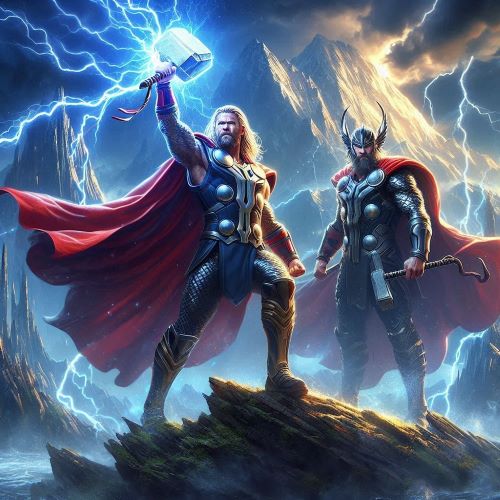
Thor is the thunder god of Norse mythology and one of the most beloved members of the Æsir. As the son of Odin and the earth goddess Jörð, he serves as the protector of both the gods and humanity. While Odin often pursues wisdom and hidden knowledge, Thor is a god of action. He rides across the skies in a chariot pulled by two magical goats, carrying his legendary hammer, Mjölnir, wherever danger threatens the Nine Realms.
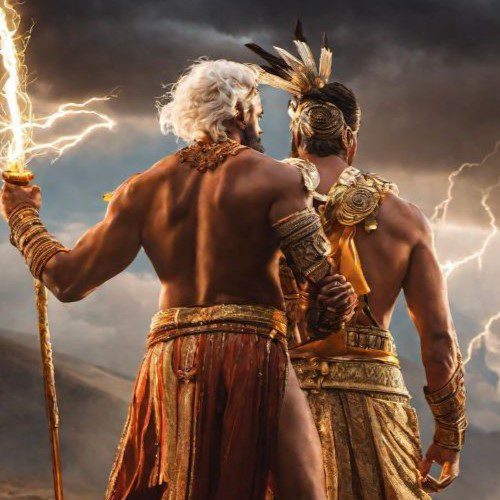
Indra occupies an equally significant place in the earliest traditions of Indian mythology. In the Vedic texts, he is the king of the devas and the ruler of the heavens. His authority extends over rain, storms, lightning, and warfare, making him one of the most frequently praised deities in the Rigveda. Ancient communities depended upon seasonal rains for survival, so Indra was not simply a warrior god but also the divine force responsible for sustaining life itself.
Although both gods command thunder, their responsibilities reveal an important distinction. Thor exists primarily as a guardian who protects the established order, while Indra rules over that order as both king and defender.
Thunder as a Symbol of Power
For the Vikings, thunder represented raw strength. Every storm echoed Thor’s presence as he battled giants who threatened the balance of the world. His lightning was not merely a spectacular display of power but a reminder that someone stood between civilization and chaos. Farmers, sailors, and warriors alike looked to Thor as a dependable protector who would never abandon them.
In Indian mythology, thunder carries an additional meaning. Storms bring rain, and rain brings life. Indra’s control over lightning and the monsoon connects him directly to fertility, agriculture, and prosperity. His victories are not only military triumphs but acts that restore rivers, nourish crops, and ensure the survival of entire civilizations. Where Thor’s thunder often symbolizes protection, Indra’s thunder symbolizes renewal.
This subtle difference reflects the environments that shaped each mythology. The harsh northern landscapes of Scandinavia demanded endurance and resilience, while the agricultural societies of ancient India relied upon seasonal rainfall to flourish.
The Weapons That Changed Mythology
No discussion of Thor vs Indra would be complete without their legendary weapons, both of which have become enduring symbols in world mythology. Thor wields Mjölnir, the enchanted hammer forged by dwarven craftsmen. More than a weapon, Mjölnir represents divine protection. It always returns to Thor’s hand after being thrown, channels thunder and lightning, and possesses the strength to shatter mountains. Beyond warfare, it was also used to bless marriages, sanctify ceremonies, and protect communities. This dual role reveals Thor’s nature as both destroyer of evil and guardian of society.
Indra carries the Vajra, a weapon born from extraordinary sacrifice. According to Indian mythology, the sage Dadhichi willingly gave his life so that his bones could be fashioned into the Vajra, enabling Indra to defeat the great serpent Vritra. Unlike Mjölnir, the Vajra is not remembered solely for its destructive force. It also represents indestructibility, divine authority, and the triumph of truth over chaos. In later Indian traditions, it even became a profound spiritual symbol associated with enlightenment and unshakable wisdom.
Both weapons are expressions of thunder itself, yet they also reveal the values of the cultures that created them. Mjölnir embodies steadfast protection, while the Vajra reflects both power and spiritual purpose.
The Monsters They Were Destined to Face
Every great storm god must confront chaos, and both Thor and Indra earn their reputations through battles that define their mythologies. Thor spends much of his life fighting the giants, ancient beings whose immense strength threatens both gods and humans. His greatest rival is Jörmungandr, the World Serpent, whose enormous body encircles the earth. Their final confrontation takes place during Ragnarök, the catastrophic end of the world. Thor succeeds in slaying the serpent but dies moments later after succumbing to its deadly venom. His victory is therefore bittersweet, demonstrating that even the mightiest hero cannot escape fate.
Indra’s defining battle is against Vritra, a colossal serpent or dragon who imprisons the world’s waters and plunges creation into drought. Armed with the Vajra, Indra defeats the monster and releases the rivers, allowing rain to return to the earth. This victory is one of the foundational myths of Indian mythology because it transforms the storm into a force of creation rather than destruction.
Although both gods defeat serpentine embodiments of chaos, the outcomes differ significantly. Thor’s greatest victory comes at the cost of his own life, while Indra’s triumph restores prosperity and establishes his authority as king of the devas.
Strength and Leadership
One of the greatest differences between Thor and Indra lies in their personalities. Thor is admired for his honesty, courage, and unwavering loyalty. He rarely relies on deception or political maneuvering, preferring to confront problems directly with immense strength and determination. Even when faced with impossible odds, Thor never hesitates to defend those who depend upon him. His stories celebrate reliability, bravery, and the willingness to sacrifice everything for the greater good.
Indra, by contrast, is a far more complex ruler. While undeniably courageous, he is also capable of pride, jealousy, insecurity, and impulsive decisions. Several myths portray him making mistakes, losing his position through arrogance, or seeking redemption after allowing power to cloud his judgment. Rather than diminishing his importance, these flaws make him a deeply human figure whose stories explore the challenges of leadership itself.
Thor is the ideal protector, while Indra is the imperfect king. Together, they represent two different visions of what true strength looks like.
Their Place in the Lives of Ordinary People
Neither Thor nor Indra existed solely in distant myths. Both played active roles in the everyday lives of the people who worshipped them. Across Scandinavia, Thor became the god most closely associated with ordinary families. His hammer was worn as an amulet for protection, his name was invoked during important ceremonies, and his blessings were believed to safeguard homes, crops, and travelers. Unlike Odin, whose mysteries often appealed to kings and poets, Thor belonged to everyone.
Indra occupied a similarly practical role in ancient India. Communities prayed for his favor before battles, invoked his blessings during rituals, and depended upon his storms to ensure successful harvests. In a society shaped by agriculture, rain was the difference between abundance and famine, making Indra one of the most vital deities of the Vedic age.
Their popularity reminds us that mythology was never simply about entertaining stories. These gods represented hope during uncertain times and offered reassurance that powerful forces watched over the world.
Thor vs Indra: Who Is More Powerful?
It is tempting to ask which of these legendary thunder gods would emerge victorious in battle, but mythology rarely offers simple answers to such questions. Thor possesses extraordinary physical strength and repeatedly defeats monsters capable of destroying entire realms. Even when facing his own prophesied death, he never retreats. His courage is as legendary as his hammer, making him the ultimate warrior of Norse mythology.
Indra commands not only lightning but the heavens themselves. As king of the devas, his authority extends beyond combat into the very forces that sustain life. His victories restore rivers, end droughts, and preserve cosmic balance, giving his power a broader significance than martial prowess alone.
Ultimately, comparing them by strength alone misses the point. Thor represents the fearless guardian who stands against overwhelming odds, while Indra embodies the ruler whose storms maintain the rhythm of creation. Their greatness lies not in defeating each other but in fulfilling the roles their cultures imagined for them.
No posts were found.