Brunhilde : The Powerful Queen of Germanic Legend
At a glance
| Description | |
|---|---|
| Origin | Germanic Mythology |
| Classification | Mortals |
| Family Members | N/A |
| Region | Germany |
| Associated With | Strength, Honor, Royal authority, Trials, Betrayal |
The Mythlok Perspective
In Mythlok’s Perspective, Brunhilde represents the transformation of power under constraint. Unlike divine figures, her strength is not eternal but conditional, shaped by social structures and betrayal. This makes her closer to figures like the Greek Clytemnestra or the Indian Gandhari, where dignity and anger emerge from injustice rather than ambition. Across cultures, such characters reveal a shared truth: when agency is stripped, power does not disappear—it changes form, often becoming more dangerous and enduring
Brunhilde
Introduction
Brunhilde is one of the most powerful and enigmatic figures in Germanic heroic legend. Unlike her Norse counterpart, she is not primarily a divine warrior but a formidable queen whose strength, pride, and sense of honor shape one of the greatest tragic epics in European literature. Her story is most famously preserved in the Nibelungenlied, where she appears as a ruler of extraordinary ability, bound by strict codes of loyalty and status.
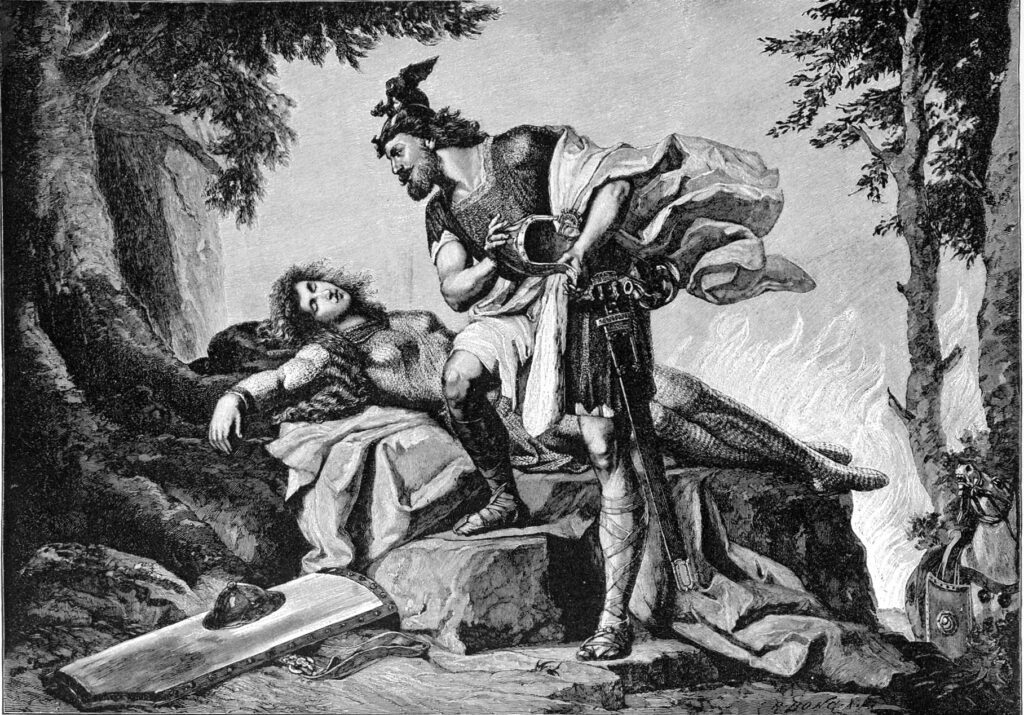
At the center of Brunhilde’s narrative is her connection to Siegfried and her eventual marriage to Gunther. What begins as a tale of courtship and alliance quickly turns into one of deception, humiliation, and vengeance. Brunhilde’s story is not driven by divine fate but by human actions—broken trust, political ambition, and the consequences of betrayal.
In the Germanic tradition, Brunhilde represents a rare archetype: a woman whose strength rivals that of kings, yet whose downfall is engineered through manipulation rather than defeat in battle. Despite sharing a name, this Brunhilde is distinct from the Norse Brynhildr, emerging instead from Germanic heroic tradition where her story is grounded in human power, deception, and political tragedy rather than divine destiny
Physical Traits
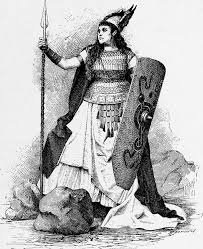
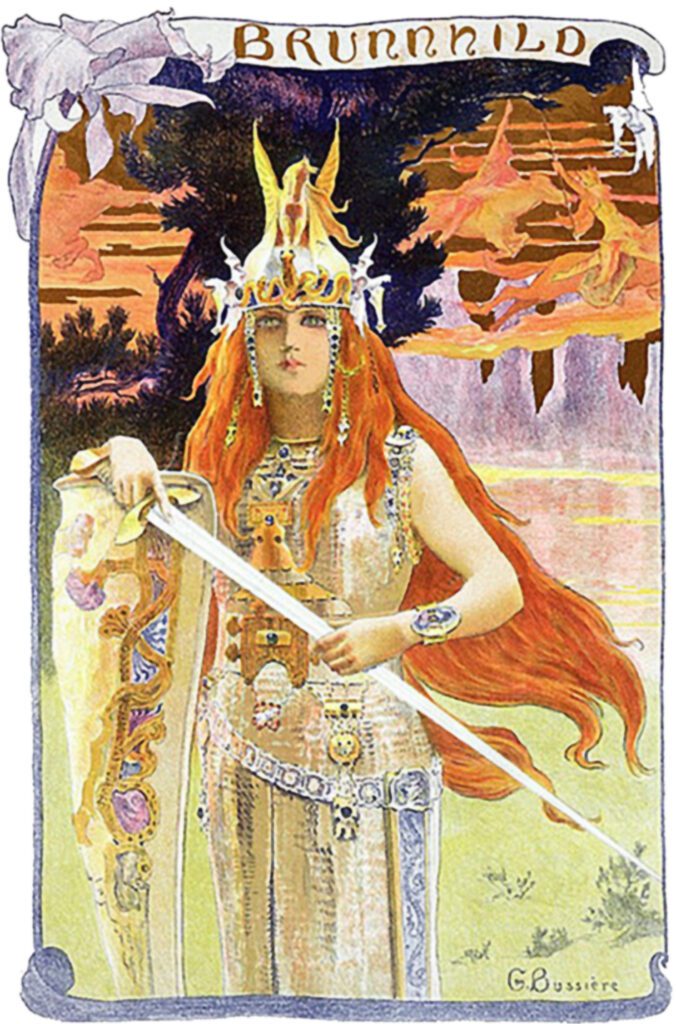
In Germanic sources, Brunhilde is portrayed as an extraordinary woman whose physical presence sets her apart from all others. She is described as tall, commanding, and strikingly beautiful, embodying both royal elegance and warrior-like strength. Her appearance is not merely aesthetic; it reflects her authority and the near-mythic aura surrounding her rule.
Unlike typical queens of medieval literature, Brunhilde possesses immense physical power. In the Nibelungenlied, she subjects her suitors to trials of strength, including throwing heavy weapons and leaping great distances. These feats are not symbolic exaggerations but essential elements of her identity, reinforcing her status as a ruler who cannot be easily subdued.
Her attire is often depicted as regal yet functional, blending royal garments with elements suited for physical contests. This combination highlights her dual nature as both sovereign and warrior, a balance rarely afforded to female figures in medieval European narratives.
Family
In the Germanic tradition, Brunhilde’s family background is notably understated. Unlike the Norse versions that connect her to divine lineage, the Nibelungenlied focuses more on her role as an independent ruler rather than her ancestry.
She is introduced as the queen of Iceland, a distant and formidable land, ruling without reliance on a dominant male authority. This independence is central to her character, as it establishes her as a figure of power before her marriage.
Her story becomes intertwined with the Burgundian court through her union with Gunther. However, this marriage is built on deception, as Gunther relies on the hidden assistance of Siegfried to win her challenges. This act of deceit ultimately destabilizes her position and sets the stage for the tragedy that follows.
Other names
Brunhilde appears under several variations of her name across Germanic texts, reflecting linguistic and regional differences. In the Nibelungenlied, she is most commonly referred to as Brünhilt, while later German adaptations use Brünhilde.
The name itself derives from Old High German elements meaning “armor” and “battle,” a fitting description of her character. Unlike the Norse Brynhildr, which carries strong mythological connotations, the Germanic forms emphasize her identity within heroic and royal traditions. These variations illustrate how her story evolved through oral and written transmission, gradually shifting from mythic origins to a more grounded heroic narrative.
Powers and Abilities
Brunhilde’s abilities in the Germanic tradition are rooted in extraordinary human strength rather than overt supernatural power. She is capable of feats that surpass even the strongest warriors, making her nearly unbeatable in physical contests.
Her suitors are required to prove their worth through trials that test strength, skill, and endurance. In these challenges, Brunhilde demonstrates her superiority by throwing spears of immense weight and performing feats that would normally require multiple men. This portrayal reinforces her as a figure who exists at the upper limits of human capability.
However, her strength is not absolute. After her marriage to Gunther, her power diminishes—a narrative shift that reflects the social dynamics of the time. This transition is not simply physical but symbolic, representing the loss of autonomy and the imposition of societal roles.
Beyond physical prowess, Brunhilde’s true power lies in her sense of honor and perception of truth. When she discovers the deception behind her marriage, her reaction is not impulsive but calculated. Her demand for justice and her role in the events leading to Siegfried’s death highlight her influence within the narrative, even when stripped of her earlier strength.
Modern Day Influence
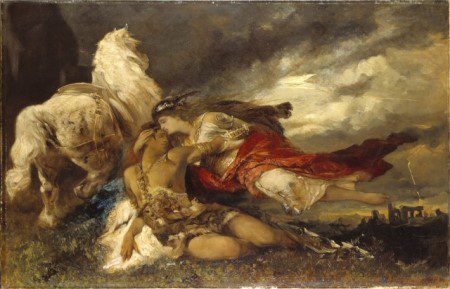
Brunhilde’s Germanic version has had a lasting impact on European cultural and artistic traditions. The most influential reinterpretation comes from Richard Wagner’s opera cycle Der Ring des Nibelungen, which blends Germanic and Norse elements but retains her core identity as a tragic heroine.
In literature, her character has inspired countless retellings that explore themes of power, gender, and betrayal. Early German writers and poets used her story to reflect societal values, while modern interpretations often reframe her as a symbol of resistance against manipulation and loss of agency.
Brunhilde also appears in films, stage productions, and contemporary media, where her image continues to evolve. Whether portrayed as a warrior queen, a tragic figure, or a symbol of strength, she remains a compelling presence in storytelling.
Her enduring appeal lies in her complexity. She is neither purely heroic nor entirely villainous, but a figure shaped by circumstance, whose actions are driven by a deep sense of justice and wounded pride.
Related Images






Source
Anonymous. (ca. 1200). Nibelungenlied [Epic poem]. https://en.wikipedia.org/wiki/Nibelungenlied
Encyclopædia Britannica. (2026). Brunhild. Retrieved April 14, 2026, from https://www.britannica.com/topic/Brunhild-Norse-mythology
Encyclopedia.com. (n.d.). Brunhilde. Retrieved April 14, 2026, from https://www.encyclopedia.com/history/encyclopedias-almanacs-transcripts-and-maps/brunhilde
Hatto, A. T. (1964). The Nibelungenlied (A. T. Hatto, Trans.). Penguin Classics.
Liuzzi, F. (2009). The Nibelungenlied: A story of love, death and revenge. CreateSpace Independent Publishing Platform. https://www.enotes.com/topics/nibelungenlied/characters
LitCharts. (n.d.). Brunhild character analysis in The Nibelungenlied. Retrieved April 14, 2026, from https://www.litcharts.com/lit/the-nibelungenlied/characters/brunhild
Tripp, R. P. (1976). A complete concordance to the Nibelungenlied. Bold Strummer.
Wikipedia contributors. (2026). Brünhild. In Wikipedia, Die freie Enzyklopädie. Retrieved April 14, 2026, from https://de.wikipedia.org/wiki/Brünhild
Frequently Asked Questions
Who is Brunhilde in Germanic legend?
Brunhilde is a powerful queen in the Nibelungenlied, known for her strength, pride, and role in a tragic tale of betrayal.
Is Brunhilde a valkyrie in the Germanic version?
No, in Germanic tradition she is portrayed as a mortal queen rather than a divine valkyrie.
What happens to Brunhilde in the Nibelungenlied?
She is deceived into marriage, later discovers the truth, and plays a key role in the events leading to Siegfried’s death.
Why is Brunhilde so strong?
Her strength symbolizes her independence and authority, setting her apart from typical medieval female figures.
Is Brunhilde based on a real person?
Some scholars link her to historical queens like Brunhilda of Austrasia, though her story is largely legendary.