

Kantara (2022) : Spirit Worship and the Fury of the Forest
| Description | |
|---|---|
| Country of Origin | India |
| Language | Kannada |
| Genre | Thriller |
| Cast | Rishab Shetty, Kishore Kumar, G. Achyuth Kumar, Sapthami Gowda, Manasi Sudhir |
| Directed by | Rishab Shetty |

Kantara
Kantara (2022), directed by and starring Rishab Shetty, stands out in modern Indian cinema because its narrative is deeply rooted in the living folklore of coastal Karnataka. While many films borrow elements from ancient legends or epic traditions, Kantara draws its power from the indigenous spiritual system of Tulu Nadu. At the heart of the story lies the ritual tradition of Bhoota Kola, a sacred performance in which a human performer becomes the vessel of a local spirit deity known as a Daiva. Through this ritual, the film explores themes of land, justice, ancestry, and the relationship between humans and the unseen forces believed to govern the natural world.
The mythology portrayed in Kantara is not derived from classical Sanskrit texts or pan-Indian epic traditions. Instead, it reflects the folk religious practices of the coastal regions of Karnataka, where communities maintain a unique system of spirit worship that predates many formal religious institutions. In this worldview, Daivas function as guardians of villages, forests, and ancestral lands. These spirits are believed to protect communities, resolve disputes, and ensure moral balance. Among the many Daivas revered in the region, the film prominently features Panjurli, a powerful spirit often associated with the form and strength of a wild boar. Panjurli is widely regarded as a protector who punishes injustice and safeguards the natural order.
The film’s opening sequence immediately establishes the mythological framework of the story. A local chieftain encounters a divine presence in the forest and agrees to leave the land under the protection of the deity in exchange for prosperity and peace. This moment represents a symbolic covenant between humans and the spiritual forces of the land. In many folk traditions across India, land is not viewed simply as property but as a sacred trust overseen by divine guardians. Kantara uses this belief as the foundation of its narrative, suggesting that human authority over land exists only as long as it respects the spiritual order established by the Daivas.
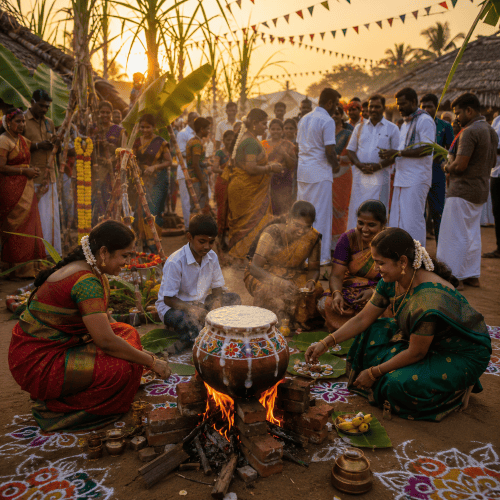
Central to the mythological atmosphere of the film is the ritual performance of Bhoota Kola. In real life, Bhoota Kola ceremonies are elaborate events involving music, dance, fire, and intricate costumes. During the ritual, a performer enters a trance-like state and is believed to become possessed by the spirit deity. Villagers then approach the possessed performer to seek guidance, resolve disputes, or ask for blessings. The possessed figure is treated not as a performer but as the living embodiment of the Daiva itself. Kantara’s depiction of this ritual is strikingly authentic, capturing the intensity, symbolism, and spiritual significance associated with the practice.
The film also explores the mythological concept of sacred landscapes. In many indigenous belief systems, forests are not merely physical spaces but spiritual territories inhabited by protective entities. The forest in Kantara is portrayed as a realm governed by divine forces, where the actions of humans are constantly observed and judged. This perspective reflects an ancient ecological worldview in which nature is inseparable from spirituality. The Daivas are seen as custodians of the land, ensuring that balance between humans and the environment is maintained. Any attempt to exploit or dominate the land without respect for its spiritual guardians is believed to invite consequences.
Another important mythological theme in the film is divine justice. Folk traditions across South Asia often describe local deities as enforcers of moral order who intervene when human institutions fail. In Kantara, the spirit of the Daiva becomes the ultimate authority in conflicts involving land rights, power, and corruption. The narrative suggests that while humans may manipulate legal or political systems, they cannot escape the judgment of the spiritual forces that oversee the land.
The climax of the film reflects this belief in a powerful and visually striking way. As the protagonist Shiva becomes involved in the ritual possession sequence, the boundary between human and divine presence begins to blur. The performance transforms into a moment of mythic revelation, where the will of the Daiva manifests through the human body. In many Bhoota Kola traditions, such moments are believed to represent the direct intervention of the deity in human affairs. The film portrays this transformation not as fantasy but as an accepted spiritual reality within the cultural context of the community.
Kantara also highlights the role of ancestral continuity in sustaining folk mythology. Ritual performers, land custodians, and village elders all inherit responsibilities passed down through generations. These traditions form a cultural memory that preserves the authority of the Daivas and ensures that the spiritual covenant between the land and its people remains intact. Unlike institutional religions built around scripture and centralized authority, this system relies on oral traditions, ritual performance, and community participation to maintain its beliefs.
One of the film’s greatest strengths is the respect it shows toward the cultural traditions it portrays. Rather than reducing Bhoota Kola to spectacle, Kantara presents it as a meaningful and living spiritual practice that continues to shape identity and community life in the region. The mythological elements of the story are not distant legends but active forces influencing everyday decisions and conflicts.
From a mythological perspective, Kantara demonstrates how folklore remains deeply embedded in contemporary society. The film reminds audiences that myths are not always ancient stories preserved in books or temples. In many communities, they continue to guide moral values, land relationships, and collective identity. By bringing the spiritual traditions of Tulu Nadu to the screen with authenticity and intensity, Kantara offers a rare cinematic exploration of how local mythology can still shape the worldview of an entire community.