


Chang’e Lunar Exile : The Eternal Price of Immortality
| Description | |
|---|---|
| Origin | Chinese Mythology |
| Epics/Texts | Guicang, Huainanzi, Shan Hai Jing |
| Key Characters | Chang’e, Hou Yi, Queen Mother, Jade Rabbit |
| Type of Event | Exile |
| Symbolism | Love, Sacrifice, Immortality, Solitude, Feminine empowerment |
Mythlok Perspective
In Mythlok’s View, the Chang’e Lunar Exile represents more than the origin of China’s Moon Goddess. It is a meditation on the cost of immortality, showing that eternal life can demand the sacrifice of love, family, and belonging. Chang’e’s ascent transforms her into a divine figure, yet her greatest punishment is the distance that separates her from the mortal world she once cherished. Similar themes appear in other traditions, from the Greek myth of Persephone, whose departure divides the world between life and the underworld, to the Japanese tale of Princess Kaguya, who leaves Earth to return to the Moon despite her attachment to humanity. Unlike these stories, however, Chang’e’s legend focuses not on captivity or destiny but on the irreversible consequences of a single choice, making her exile one of mythology’s most enduring reflections on longing and the true price of transcendence.
Chang’e Lunar Exile
Introduction
The story of Chang’e Lunar Exile is one of the most beloved and emotionally powerful legends in Chinese mythology. Known as the Moon Goddess, Chang’e became an immortal after consuming the elixir of immortality and ascending to the moon, where she remains forever separated from the human world. Her tale blends love, sacrifice, ambition, and loss into a myth that has captivated generations for more than two thousand years.
Although many people associate Chang’e primarily with the Mid-Autumn Festival, her legend extends far beyond a seasonal celebration. The myth explores timeless questions about the price of eternal life and whether immortality is truly a blessing. Across literature, art, religion, and even modern space exploration, Chang’e has remained a symbol of longing, beauty, and the emotional distance between earthly happiness and divine existence.
Source Texts
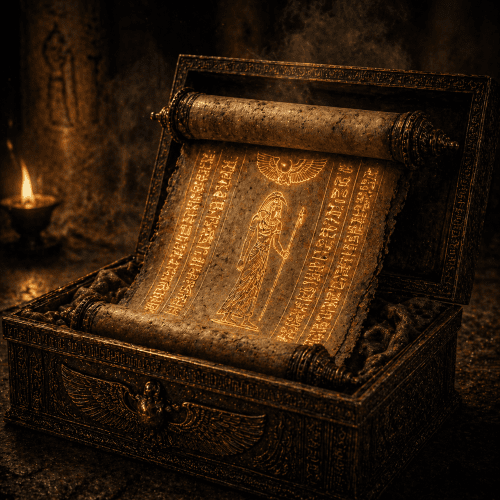
The legend of Chang’e developed gradually through centuries of Chinese literature rather than appearing in a single definitive account. One of the earliest references is found in the Guicang (Gui Cang), an ancient divination text from the Zhou period, where fragments mention Chang’e’s ascent to the moon. These early passages provide only glimpses of the story but establish her connection with the lunar realm.
The Huainanzi, compiled during the Western Han Dynasty in the second century BCE, presents the earliest complete version of the myth familiar today. It introduces Hou Yi, the elixir of immortality granted by the Queen Mother of the West, and Chang’e’s flight to the moon after drinking the potion.
Other classical works contributed additional layers to the tradition. The Classic of Mountains and Seas (Shan Hai Jing) preserves ancient beliefs surrounding lunar deities that likely influenced Chang’e’s later development, although it does not narrate her story directly. During the Eastern Han Dynasty, the astronomical treatise Lingxian describes Chang’e transforming into a toad after reaching the moon, reflecting an older Chinese association between the moon and the three-legged toad.
By the Tang Dynasty, poets such as Li Shangyin transformed Chang’e into a literary symbol of loneliness and regret. Their poems shifted the emphasis from supernatural adventure to emotional isolation, cementing her role as one of Chinese literature’s greatest tragic figures.
Key Characters
Chang’e stands at the heart of the legend as the woman whose decision forever changed her destiny. Depending on the version, she appears either as a devoted wife making a difficult sacrifice, an ambitious woman seeking eternal life, or someone caught in circumstances beyond her control. These differing portrayals have allowed each generation to reinterpret her character.
Her husband, Hou Yi, is celebrated as one of China’s greatest legendary heroes. When ten suns rose into the sky and scorched the earth, he used his extraordinary archery skills to shoot down nine of them, restoring balance to the world. His reward was the precious elixir of immortality.
The Queen Mother of the West (Xiwangmu) serves as the divine guardian of immortality. She grants Hou Yi the elixir as recognition for saving humanity, setting the events of the myth into motion.
In many popular retellings, Peng Meng, one of Hou Yi’s apprentices, attempts to steal the elixir while Hou Yi is away. To prevent it from falling into dangerous hands, Chang’e drinks it herself.
Once she reaches the moon, Chang’e is accompanied by the Jade Rabbit, who spends eternity preparing the elixir of life. Later folklore also introduces Wu Gang, a woodcutter condemned to endlessly chop a self-healing cassia tree on the moon. His eternal punishment mirrors Chang’e’s own endless isolation, reinforcing the moon as a realm of beautiful but sorrowful immortals.
Narrative Summary
According to the most familiar version of the myth, ten suns once appeared together in the sky, scorching crops, drying rivers, and threatening all life on Earth. Emperor Yao called upon the legendary archer Hou Yi, who successfully shot down nine of the suns, leaving only one to illuminate the world.
As a reward for saving humanity, Hou Yi received a single elixir of immortality from the Queen Mother of the West. Rather than drink it immediately, he entrusted the potion to Chang’e because he wished to remain with his wife instead of abandoning mortal life.
The story then branches into several traditions. In the most widely accepted version, Peng Meng attempted to steal the elixir while Hou Yi was away. To keep such immense power out of his hands, Chang’e consumed it herself. Other versions suggest she drank it because she desired immortality, while some portray the act as an accident.
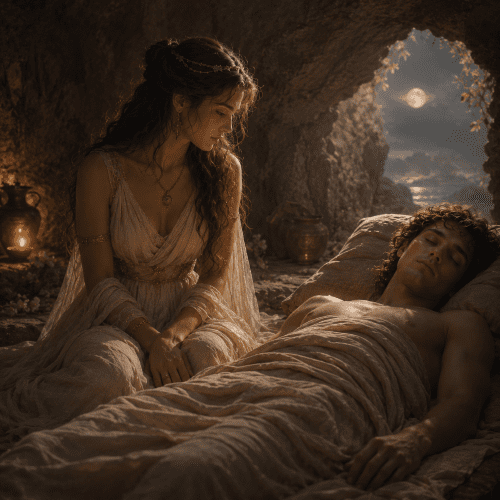
Regardless of the motive, the outcome remains the same. The elixir caused Chang’e to become weightless, and she floated toward the heavens. Out of love for Hou Yi, she chose the moon because it was the closest celestial body to Earth. There she established her home in the Moon Palace, forever watching over the world below but unable to return.
Hou Yi, heartbroken by their separation, is said to have placed Chang’e’s favorite fruits and cakes beneath the full moon in remembrance. This act is traditionally regarded as one of the inspirations behind the customs of the Mid-Autumn Festival.
Symbolism
The myth of Chang’e Lunar Exile derives much of its emotional power from its rich symbolism. The moon represents beauty, reflection, reunion, and longing within Chinese culture. Every full moon becomes a reminder that families may be separated physically yet remain emotionally connected.
The elixir of immortality symbolizes humanity’s eternal desire to overcome death. However, Chang’e’s story also serves as a cautionary tale by showing that eternal life may come at the cost of earthly love and companionship.
Chang’e herself embodies the paradox of immortality. She achieves divine status but loses the simple joys of ordinary human existence. Her exile reminds audiences that every extraordinary gift demands an equally significant sacrifice.
The Jade Rabbit represents perseverance, renewal, and the endless search for life-giving wisdom through its ceaseless preparation of the elixir. Wu Gang, condemned to chop an unbreakable tree forever, reflects another aspect of immortality: endless labor without fulfillment. Together, these figures transform the moon into a symbolic landscape where eternity is accompanied by solitude.
Comparative Mythology
Chang’e shares similarities with several lunar deities found throughout world mythology, yet her story possesses a distinctly Chinese perspective. The Greek goddess Selene also personifies the moon and is associated with beauty and eternal love. Both figures inspire poetry centered on longing, but Selene’s mythology emphasizes romance, whereas Chang’e’s focuses on separation and sacrifice.
Another Greek moon-associated deity, Artemis, represents independence, wilderness, and protection. Unlike Artemis, whose power is rooted in divine autonomy, Chang’e’s transformation arises from a deeply personal decision whose consequences define her existence.
In Japanese mythology, Tsukuyomi serves as the male god of the moon, highlighting how lunar symbolism varies across cultures. While Tsukuyomi represents celestial authority, Chang’e embodies emotional resilience and the human cost of immortality. These comparisons reveal how different civilizations viewed the moon either as a source of divine power or as a reflection of deeply human emotions.
Cultural Impact
Chang’e remains inseparable from the Mid-Autumn Festival, one of China’s most important traditional celebrations. Observed on the fifteenth day of the eighth lunar month, the festival brings families together to admire the full moon, share mooncakes, and remember loved ones who are far away.
Her influence extends throughout Chinese literature, particularly during the Tang and Song dynasties, when poets frequently invoked Chang’e to express homesickness, nostalgia, and unattainable love. Artists similarly portrayed her as an elegant celestial maiden drifting gracefully through the heavens.
The phrase “Chang’e on the moon” eventually became an idiom describing extraordinary beauty that seems almost beyond human reach. Her story continues to inspire operas, paintings, sculptures, and seasonal performances across East Asia.
Modern Influence
The legend of Chang’e continues to evolve in the modern world. China’s lunar exploration program, known as the Chang’e Program, deliberately connects ancient mythology with contemporary scientific achievement. Missions including Chang’e 4, the first spacecraft to land on the far side of the moon, and Chang’e 5, which successfully returned lunar samples to Earth, demonstrate how an ancient legend has become a symbol of national innovation. The Jade Rabbit also entered modern science through the Yutu lunar rovers, named after Chang’e’s faithful companion.
Beyond science, Chang’e frequently appears in films, television dramas, animation, video games, fashion, and advertising. Contemporary writers increasingly reinterpret her as a woman who exercised agency over her own destiny rather than merely becoming a victim of circumstance. These modern readings have transformed Chang’e into a symbol of resilience, independence, and female empowerment while preserving the emotional depth that has defined her legend for centuries.

Sources
Encyclopedia.com. (n.d.). Chang’e | Moon Goddess, Lunar Goddess, Chinese Mythology. https://www.encyclopedia.com/philosophy-and-religion/eastern-religions/chinese/chang-e
Wikipedia contributors. (n.d.). Chang’e. https://en.wikipedia.org/wiki/Chang%27e
Asian Religions at the University of Tennessee, Knoxville. (n.d.). Chang’e: The Moon Goddess. https://asianreligions.utk.edu/chang-e-the-moon-goddess/
The China Story / Chinese mythology resource page. (n.d.). Chang’e 嫦娥 [the goddess on the moon]. https://www.thechinastory.org/2014/09/chang-e/
Birrell, A. (1993). Chinese mythology: An introduction. Johns Hopkins University Press.
Yang, L., & An, D. (2005). Handbook of Chinese mythology. Oxford University Press.
Eberhard, W. (1986). A dictionary of Chinese symbols: Hidden symbols in Chinese life and thought. Routledge & Kegan Paul.
Wang, X. (2022). Chang’e in Chinese cultural memory: Moon goddess, festival symbol, and modern identity. Journal of Chinese Studies, 16(2), 45–62.
Frequently Asked Questions
Who is Chang’e in Chinese mythology?
Chang’e is the Chinese Moon Goddess who became immortal after drinking the elixir of immortality and ascending to the moon, where she lives with the Jade Rabbit.
Why is Chang’e called the Lunar Exile?
She is known as the Lunar Exile because gaining immortality forced her to live apart from her husband Hou Yi and the human world, making eternal life a form of permanent separation.
Why did Chang’e drink the elixir of immortality?
Different versions of the myth offer different explanations. The most popular tradition says she drank it to stop Peng Meng from stealing it, while other versions suggest ambition or accidental consumption.
How is Chang’e connected to the Mid-Autumn Festival?
During the Mid-Autumn Festival, families admire the full moon, eat mooncakes, and remember Chang’e’s story, which symbolizes reunion despite physical distance.
Why are China's moon missions named after Chang’e?
China named its lunar exploration program after Chang’e to connect one of its oldest myths with modern scientific exploration, symbolizing humanity’s enduring fascination with the moon.


