Figures Associated With the Sky in Ancient Civilizations and Mythological Traditions
The sky has inspired some of the oldest and most enduring figures in world mythology. Stretching above mountains, forests, and oceans, it was often understood as a living presence that connected the earth with the greater universe. Ancient cultures personified the sky through gods, goddesses, and supernatural beings who represented its vastness, changing appearance, and relationship with the world below. Some were believed to embody the entire sky, while others represented the boundary between the earthly and divine realms.
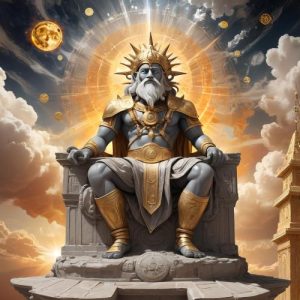
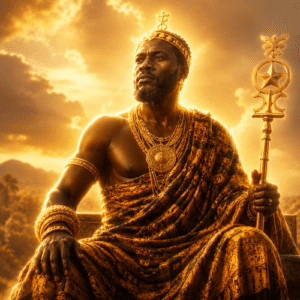
In Greek mythology, Uranus is the primordial personification of the sky and one of the earliest cosmic beings. Born from Gaia, the Earth, he becomes her consort and the father of several generations of divine beings, including the Titans. Their relationship represents the union of earth and sky in the earliest stages of creation. Uranus is not simply a ruler who lives in the heavens; he embodies the sky itself as a fundamental part of the universe.
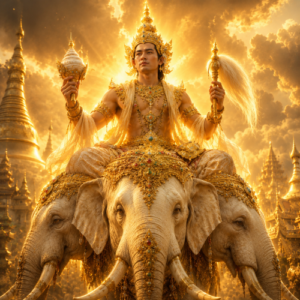
Indian traditions feature Dyaus, the Vedic sky deity whose name is associated with the bright celestial expanse. In the Rigveda, Dyaus appears alongside Prithvi, the Earth, as part of the cosmic pairing Dyaus Pitr and Prithvi Mata. Together, they represent the sky above and the earth below, forming a fundamental relationship within early Vedic cosmology. Although Dyaus becomes less prominent in later Indian traditions, his presence in the Vedas reveals the importance of the sky in early religious thought.
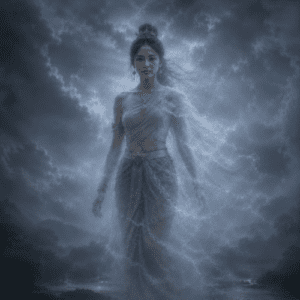
In ancient Egyptian mythology, Nut is the goddess who personifies the sky. She is commonly depicted as a woman arching over the earth, with her body covered in stars. Her mythology connects the sky with the movement of celestial bodies and the recurring journey of the sun. Nut also plays an important role in Egyptian ideas about death and renewal, as the heavens provide the setting for the daily cycle of celestial movement.
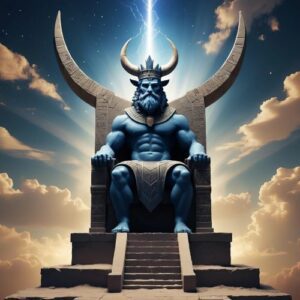
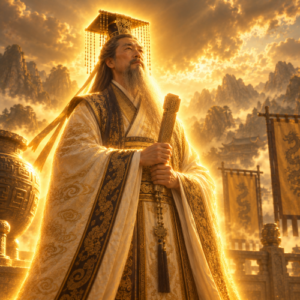
Mesopotamian mythology features Anu, the sky god and one of the principal divine authorities in ancient Sumerian and Akkadian traditions. His name is closely associated with the heavens, and he occupies a prominent position in the divine hierarchy. Anu represents the distant authority of the sky, with other deities often exercising more direct influence over earthly affairs. His mythology illustrates how the sky could represent both a physical expanse and a source of divine authority.
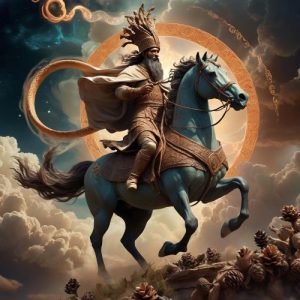
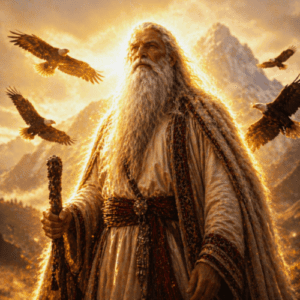
In Turkic and Mongolic traditions, Tengri represents the eternal blue sky and the supreme celestial power. Tengri is particularly important in traditional Tengrism, where the sky is understood as a sacred presence connected with cosmic order, authority, and the legitimacy of rulers. Rather than appearing solely as a human-like deity, Tengri can represent the vast and enduring power of the sky itself.
Across these traditions, the sky is understood in different ways. Uranus embodies the primordial heavens, Dyaus represents the celestial counterpart of the earth, Nut personifies the star-filled sky, Anu carries divine authority, and Tengri represents the eternal blue expanse. Their stories demonstrate how cultures transformed the familiar sky into a powerful mythological presence.
Studying these figures reveals how ancient communities understood the world above them. The sky was a source of wonder, a framework for observing natural cycles, and a symbolic connection between earthly existence and the greater universe.