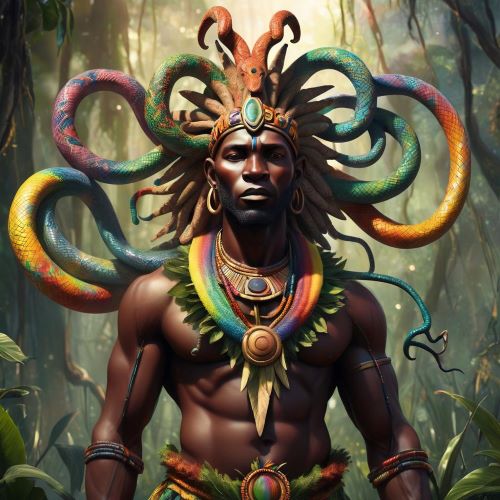


Arebati : The Moon God and Creator of Humanity in Mbuti Mythology
At a glance
| Description | |
|---|---|
| Origin | Mbuti Mythology |
| Classification | Gods |
| Family Members | N/A |
| Region | Democratic Republic of the Congo |
| Associated With | Creation, Moon, Sky, Humanity, Immortality, Death |
The Mythlok Perspective
In Mythlok’s Perspective, Arebati feels like a blend of the creator gods found across world mythology, combining the life-giving role of figures such as Prometheus and the sky-father authority of deities like Uranus, yet retaining a distinctly African identity rooted in the forest and moonlit heavens. What makes Arebati especially compelling is that his myths focus less on divine battles and more on humanity’s relationship with mortality. His stories explore why death exists, why life changes, and how cosmic order can be altered by a single mistake. Arebati reminds us that creation and loss are inseparable parts of existence, and that understanding mortality often gives life its deepest meaning.
Arebati
Introduction
Arebati is one of the most important divine figures in the mythology of the Mbuti and Efé peoples of the Ituri Forest in the Democratic Republic of the Congo. Revered as a creator deity, sky father, and lunar god, Arebati occupies a central place in stories that explain the origins of humanity, life, aging, and death.
Like many indigenous African traditions, Mbuti mythology exists primarily through oral storytelling rather than written scripture. As a result, different communities preserve slightly different versions of the same myths. In some traditions, the role of supreme creator is attributed to deities such as Khonvoum or Tore, while in others Arebati stands as the primary creator of the world and humankind.
What remains consistent across these narratives is Arebati’s connection to the heavens. Associated with the moon and the sky, he represents the forces that govern life and renewal. Through his myths, the Mbuti and Efé peoples explore profound questions about mortality, human origins, and humanity’s relationship with the natural world.
Physical Traits
Unlike many gods found in Greek, Norse, or Egyptian mythology, Arebati is not typically portrayed as a human-like figure with a detailed physical appearance. Traditional stories focus on his actions and cosmic role rather than describing his body, clothing, or features.
Instead, Arebati’s presence is expressed through his association with the sky and the moon. The moon serves as one of the clearest symbols of his divine nature, reflecting cycles of growth, renewal, and transformation. This celestial connection reinforces his status as a being who exists beyond ordinary physical limitations.
The absence of a fixed physical form is significant. In Mbuti mythology, Arebati functions less as a character with a recognizable appearance and more as a cosmic force responsible for shaping the world and maintaining the balance of life. His power is understood through creation itself rather than through visual imagery. This distinction sets Arebati apart from many mythological deities whose identities are strongly tied to artistic depictions or elaborate iconography.
Family
The mythology surrounding Arebati contains very little information about a divine family. Unlike many pantheons where gods have spouses, children, and extensive genealogies, Mbuti traditions focus primarily on Arebati’s role as creator and protector rather than on familial relationships.
Some traditions connect Arebati with other major spiritual figures such as Tore and Khonvoum. Depending on the community and the version of the myth being told, these beings may be viewed as separate deities, aspects of the same divine force, or alternative names for a supreme creator.
Arebati is frequently referred to as a Sky Father, a title that highlights his relationship with humanity rather than with other gods. In this role, he serves as the spiritual ancestor and guardian of all people, establishing a paternal connection between the creator and his creations.
The lack of a defined divine family reflects the broader structure of Mbuti cosmology, where the emphasis falls on humanity’s connection to the forest, the sky, and the forces that sustain life rather than on complex divine dynasties.
Other names
The name Arebati appears in several forms across the traditions of Central African forest communities. Variations arise because the Mbuti and Efé peoples consist of multiple groups with distinct dialects and storytelling traditions.
One of the most commonly associated names is Baatsi, particularly among the Efé. In certain myths, Baatsi performs roles that closely resemble those attributed to Arebati, including the creation of humanity and the governance of life and death.
Another important name is Tore. Some traditions identify Tore as a separate deity associated with the forest, hunting, and thunder, while others treat Tore and Arebati as manifestations of the same supreme spiritual being.
The creator god Khonvoum is also occasionally linked to Arebati. Certain creation stories credit Khonvoum with forming humanity, whereas others assign this role to Arebati. These overlapping identities reflect the fluid nature of oral traditions, where stories evolve across generations and regions. Rather than indicating contradictions, these different names demonstrate the richness and diversity of Mbuti spiritual beliefs.
Powers and Abilities
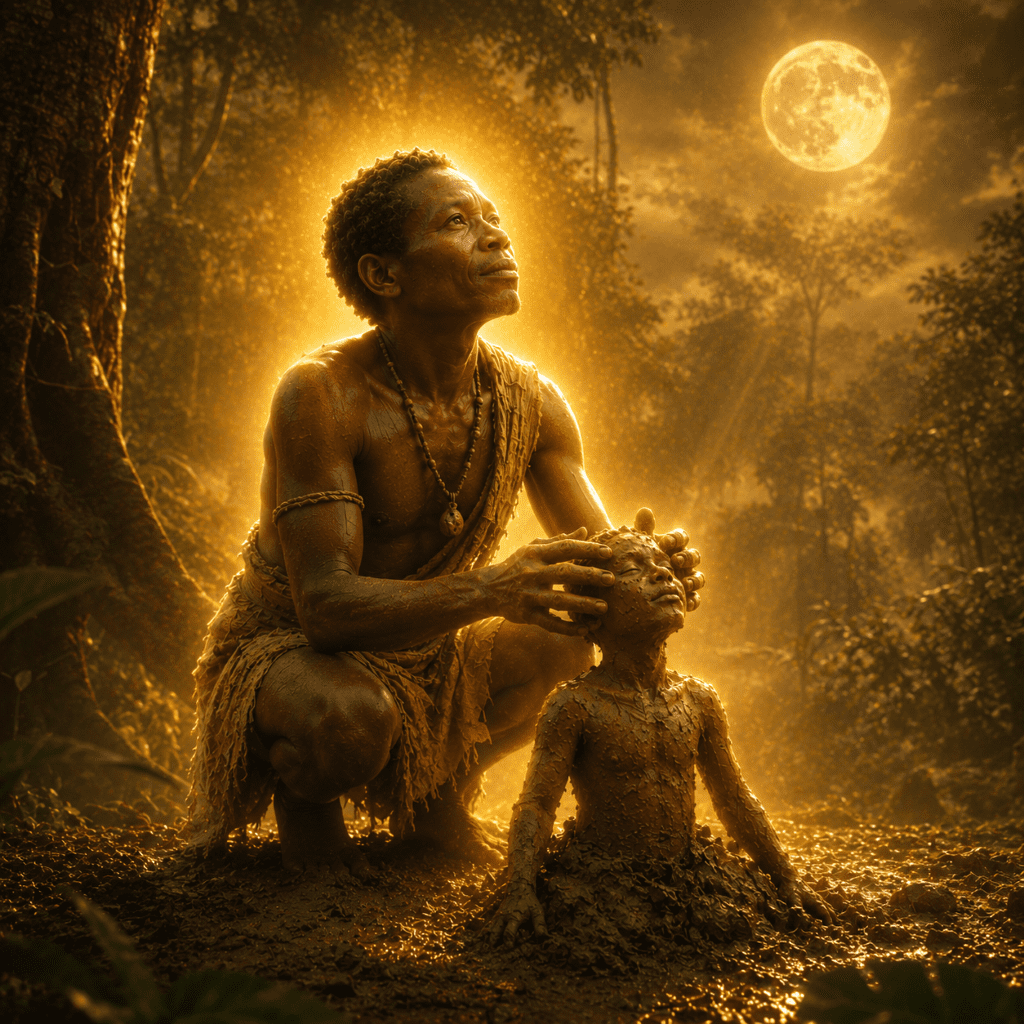
As a supreme creator deity, Arebati possesses powers that extend over life, death, creation, and the cosmos itself. One of his most famous abilities is the creation of humanity. According to several Efé traditions, Arebati fashioned the first people from clay. He molded their bodies, covered them with skin, and filled them with blood, bringing them to life through divine power. This story emphasizes humanity’s connection to the earth while presenting Arebati as the ultimate source of existence.
Another remarkable aspect of his mythology involves immortality. In the earliest age of the world, people did not die permanently. When individuals grew old, Arebati restored them to youth, allowing them to continue living. This ability made him the master of aging and renewal.
The most significant myth associated with Arebati explains how death entered the world. In one version, he attempted to revive a deceased woman by instructing animals to transport her body carefully. During the journey, a toad dropped the corpse into a pit. Arebati had warned that such an accident would bring disaster, and from that moment death became a permanent condition for humanity.
Other traditions tell a different story involving a forbidden fruit. Humans were commanded not to eat from a sacred tree. When this command was broken, the creator withdrew the gift of immortality and introduced death as a consequence of disobedience. In some versions of this narrative, the moon acts as a witness and messenger. These stories reveal Arebati as a deity who governs not only creation but also the moral and cosmic laws that shape human existence.
Modern Day Influence
Although Arebati is not as widely recognized internationally as figures from Greek or Egyptian mythology, his stories remain an important part of African mythological studies and indigenous cultural heritage. Anthropologists and scholars of religion frequently examine Arebati’s myths to better understand the spiritual worldview of the Mbuti and Efé peoples. His narratives provide valuable insight into how forest-dwelling hunter-gatherer societies explain creation, mortality, and humanity’s place within nature.
The clay-creation myth associated with Arebati is often compared with creation stories from other cultures around the world. These comparisons highlight recurring human questions about where people come from and why death exists.
Today, Arebati also appears in educational resources, mythology encyclopedias, and studies of African traditional religions. As interest in indigenous mythologies continues to grow, his stories help preserve the cultural knowledge of the Ituri Forest and introduce new audiences to one of Central Africa’s most fascinating creator deities. Far from being a forgotten figure, Arebati remains a powerful symbol of humanity’s enduring search for meaning, origins, and connection with the natural world.
Related Images


Source
Lynch, P. A. (2010). African mythology A to Z (2nd ed., J. Roberts, Ed.). New York, NY: Facts On File.
Mbuti mythology. (n.d.). Wikipedia. Retrieved June 22, 2026, from https://en.wikipedia.org/wiki/Mbuti_mythology
Mbuti. (2026). eHRAF World Cultures. Human Relations Area Files. Retrieved June 22, 2026, from https://ehrafworldcultures.yale.edu/cultures/fo04/summary
Mbuti Pygmies. (n.d.). Anthropology.net. Retrieved June 22, 2026, from https://anthropology.iresearchnet.com/mbuti-pygmies/
Metropolitan Museum of Art. (2008, March 31). African influences in modern art. Retrieved June 22, 2026, from https://www.metmuseum.org/essays/african-influences-in-modern-art
Lynch, P. A., & Roberts, J. (2010). African Mythology, A to Z. Infobase Publishing.
Thomas, D., & Alanamu, T. (2018). African Religions: Beliefs and Practices through History. ABC-CLIO.
Frequently Asked Questions
Who is Arebati in Mbuti mythology?
Arebati is a creator deity, sky father, and lunar god worshipped in the mythology of the Mbuti and Efé peoples of the Democratic Republic of the Congo.
What is Arebati the god of?
Arebati is associated with creation, the moon, the sky, immortality, rejuvenation, and the origin of death.
Did Arebati create humans?
Yes. In several Efé traditions, Arebati created the first humans from clay and brought them to life through divine power.
How did death enter the world according to Arebati's myths?
Different myths exist, but most explain that death became permanent due to either a failed resurrection attempt or human disobedience to a divine command.
Is Arebati the same as Tore or Khonvoum?
Some traditions treat Arebati, Tore, and Khonvoum as distinct deities, while others view them as different names or aspects of a supreme creator being.