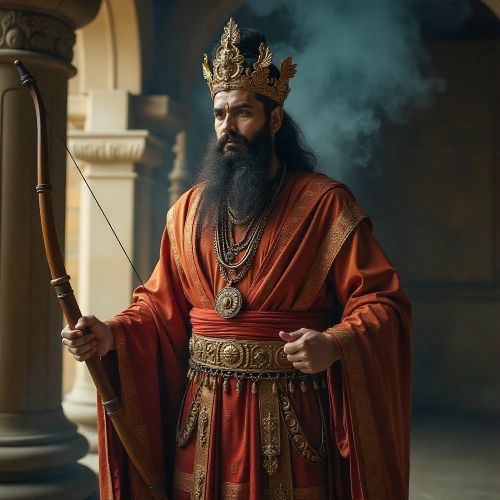


Thagyamin : The Burmese King of Heaven and Sky
Listen
At a glance
| Description | |
|---|---|
| Origin | Burmese Mythology |
| Classification | Gods |
| Family Members | Sujā (Wife) |
| Region | Myanmar |
| Associated With | Thunder, Lightning, Rain, Sky, Heaven |
The Mythlok Perspective
In Mythlok’s Perspective, Thagyamin is not merely a storm god but a moral mirror. His thunder is less about destruction and more about accountability. Like Zeus in Greek tradition and Thor in Norse lore, he commands lightning, yet unlike them, his authority is deeply tied to merit rather than raw power. Thagyamin stands closer to a cosmic administrator than a warrior, reflecting a uniquely Buddhist vision of divine leadership rooted in ethical responsibility.
Thagyamin
Introduction
Thagyamin (သိကြားမင်း), pronounced roughly as Thagya Min, is the supreme celestial ruler in Burmese spiritual tradition. His name derives from Śakra, an epithet of Indra, combined with “Min,” the Burmese word for king or lord. In Myanmar’s religious imagination, Thagyamin stands at the intersection of indigenous nat worship, Hindu cosmology, and Theravāda Buddhist doctrine.
Historically, King Anawrahta of Pagan formally recognized Thagyamin in the 11th century as the highest among the official 37 nats. This move was not merely theological. It was political and cultural, designed to harmonize older animist beliefs with the expanding authority of Buddhism. Unlike many nats who were once human beings that died violent deaths and became spirits, Thagyamin ascended through merit. In Buddhist narratives, he was once Māgha, a virtuous youth whose generosity, truthfulness, and devotion earned him rebirth as the king of the Trāyastriṃśa heaven. Thagyamin therefore represents more than a storm god. He embodies moral order, divine kingship, and the idea that virtue leads to cosmic authority.
Physical Traits
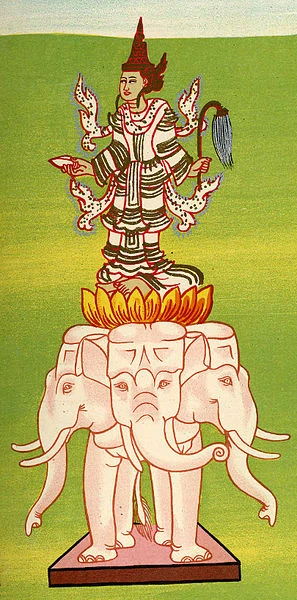
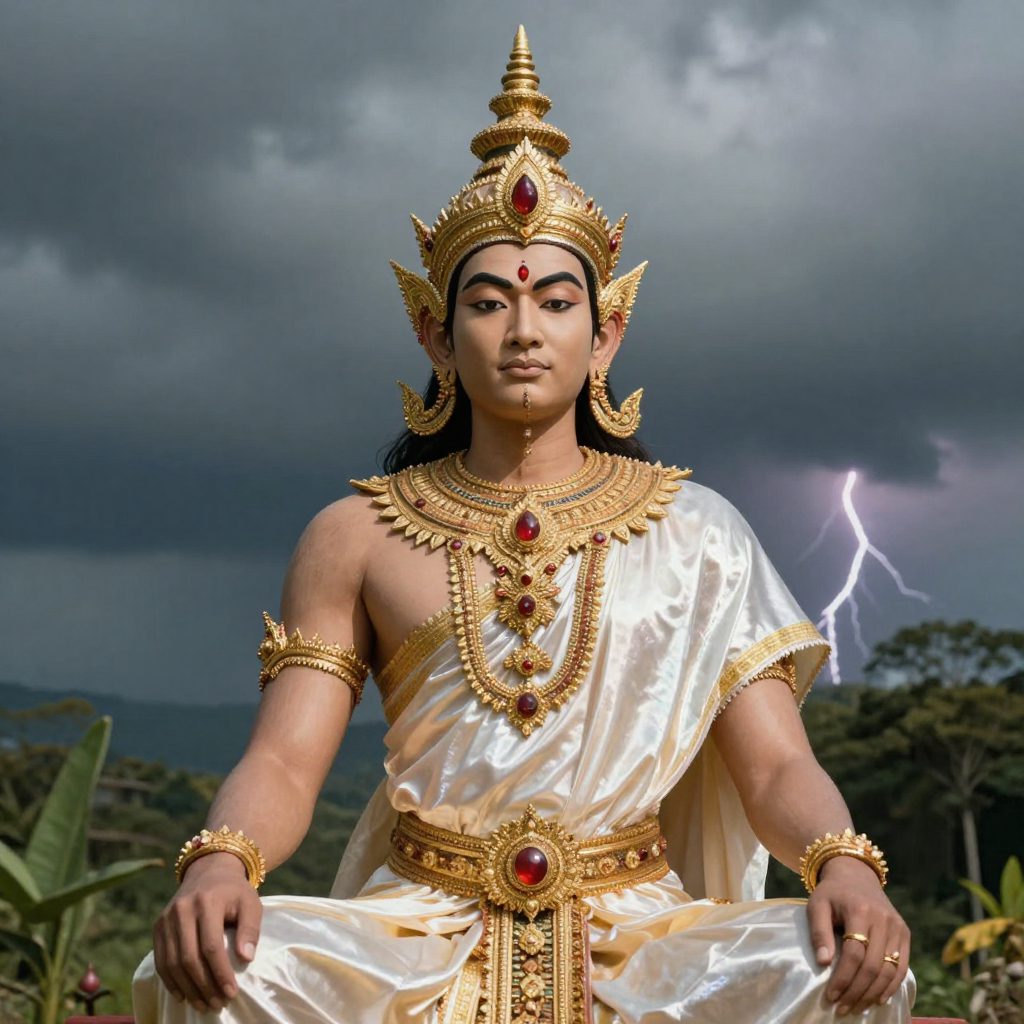
Thagyamin’s iconography reflects both Indic and Burmese artistic traditions. He is most commonly shown seated or standing upon Airavata, the three-headed white elephant known in Sanskrit as Airavata. In Burmese depictions, Airavata symbolizes royal authority, divine strength, and celestial purity. The elephant is not an ordinary animal but a divine being capable of assuming elephant form for Thagyamin’s journeys.
In many portrayals, Thagyamin holds a conch shell in one hand and a yak-tail fly-whisk in the other, symbols of sovereignty and ritual authority. In other traditions closer to his Vedic origins, he carries the vajra, the thunderbolt weapon that signifies his dominion over storms and lightning.
When traveling across the heavens, he rides the Vejayantā chariot, driven by the celestial charioteer Mātali. Texts describe this chariot as vast and radiant, drawn by a thousand divine horses. Such imagery reinforces his status as ruler of the Trāyastriṃśa heaven, located atop Mount Meru within Buddhist cosmology. His elaborate crown, celestial garments, and jeweled ornaments in pagoda sculptures further affirm his identity as a divine monarch rather than a wandering spirit.
Family
In Burmese adaptations of the Indra cycle, Thagyamin’s consort is often identified as Sujā, reflecting continuity with Buddhist and Indic traditions. He is also described as having chief queens and a retinue of celestial attendants.
More significant than his marital ties, however, are his 32 companions from his earthly life as Māgha. According to Buddhist texts, these companions were reborn as guardian devas in the Trāyastriṃśa heaven, serving and protecting him. Their presence emphasizes a central Buddhist idea: merit shared in one life bears fruit collectively in the next. His celestial abode is Amarāvati, capital of the Heaven of the Thirty-Three. From this realm, Thagyamin oversees both heavenly affairs and moral developments in the human world.
Other names
Thagyamin’s name reflects layers of translation and adaptation. Śakra, one of Indra’s most common Sanskrit epithets, became “Thagya” in Burmese phonetics, while “Min” signified kingship.
He is also called U Magha, referencing his former human identity as Māgha. In Buddhist texts, he remains Śakra Devanam Indra, the lord of the devas. His parallels extend globally. In Greek tradition, his closest equivalent is Zeus. In Roman belief, he aligns with Jupiter. In Norse cosmology, he shares attributes with Thor. Among Slavic traditions, he resembles Perun. These cross-cultural parallels highlight an archetype: the sky sovereign who commands thunder and safeguards cosmic order.
Powers and Abilities
As ruler of the Trāyastriṃśa heaven, Thagyamin commands thunder, lightning, and rain. His authority over weather links him directly to agricultural fertility and seasonal balance in Myanmar’s largely agrarian history.
Beyond natural forces, he governs moral equilibrium. One of the most distinctive elements of Burmese belief is the Paṇḍukambala Rock Throne. This divine throne is said to heat up whenever a morally significant event occurs: the rise of an exceptionally virtuous person, the need to assist a righteous being, or an impending shift in cosmic balance. When it grows warm, Thagyamin investigates and intervenes.
His immortality is conditional rather than absolute. In Buddhist cosmology, even gods are subject to impermanence, but their lifespans are vast. Thagyamin’s position is earned through merit, meaning another supremely virtuous being could one day replace him.
During the Thingyan festival, he descends invisibly to earth. He records the names of the virtuous in a golden book and the wicked in a dog-skin book. This moral accounting reinforces ethical behavior, especially among children raised with stories of his annual inspection. Thunderstorms during the festival are traditionally interpreted as signs of his displeasure toward wrongdoing.
Modern Day Influence
Thagyamin remains central to Thingyan, Myanmar’s New Year water festival. The days known as A Kyo, A Kya, A Kyat, and A Tat symbolize his descent, stay, and return to heaven. Traditionally, cannons were fired to announce his arrival.
Thingyan blends religious devotion and joyful celebration. Water splashing symbolizes washing away sins of the previous year. Merit-making activities such as almsgiving, monastery visits, and acts of charity intensify during this period. In 2024, Thingyan was recognized by UNESCO as Intangible Cultural Heritage, affirming its global cultural importance.
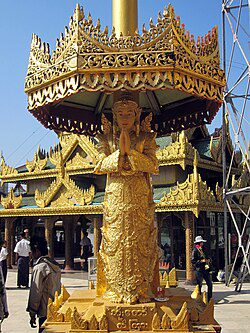
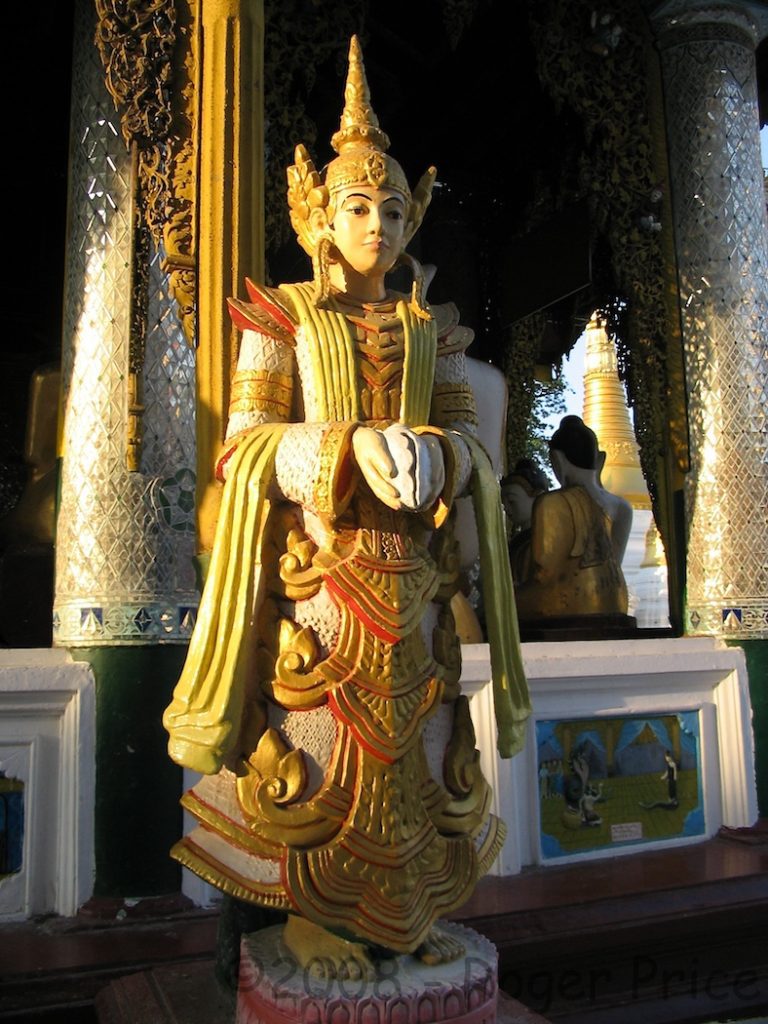
Statues of Thagyamin appear in major pagodas, including the Shwedagon Pagoda. Even within predominantly Buddhist worship spaces, his presence reflects Myanmar’s layered spiritual identity. In contemporary culture, Thagyamin functions as both mythic guardian and moral metaphor. He represents accountability, leadership, and the belief that unseen forces observe human conduct.
Related Images


Source
Htin Aung, U. (1959). Folk elements in Burmese Buddhism. U. Myint Maung.
Irrawaddy. (n.d.). Thagyamin is watching you. https://www2.irrawaddy.com/article.php?art_id=2886
Phoenix Voyages. (2020, December 6). The legend of Thagyamin in Myanmar. https://phoenixvoyages.com/the-legend-of-thagyamin-in-myanmar/
Shwaygyi, M. (n.d.). Folk elements in Burmese Buddhism. http://tuninst.net/MYANMAR/Folk-elements/ch03-new-yr/ch03-new-yr.htm
Wikipedia contributors. (2024). Thagyamin. Wikipedia. https://en.wikipedia.org/wiki/Thagyamin
Htin Aung, U. (1962). Thirty-seven nats: A phase of pre-Buddhist worship in Burma. (
Khin Myo Chit. (Cited in Irrawaddy). (n.d.). Scholarly works on Burmese folklore.
Frequently Asked Questions
Who is Thagyamin in Burmese tradition?
Thagyamin is the king of the nats (spirits) and ruler of the Trāyastriṃśa heaven in Burmese belief. He is the Burmese adaptation of Indra, shaped by Theravāda Buddhist cosmology and indigenous nat worship.
Is Thagyamin the same as Indra?
Thagyamin is closely related to Indra but not identical. He originates from the Sanskrit name Śakra, a title of Indra, yet his character evolved within Myanmar’s religious landscape. I
What role does Thagyamin play during Thingyan?
During Thingyan, the Burmese New Year festival, Thagyamin is believed to descend from heaven to observe humanity. He records good deeds in a golden book and wrongdoings in a separate ledger.
Does Thagyamin control thunder and rain?
Yes, Thagyamin governs thunder, lightning, and rainfall. As a sky deity, his power over storms connects him to agricultural fertility and seasonal cycles.
Why is Thagyamin still important in modern Myanmar?
Thagyamin remains culturally significant because he represents divine justice, kingship, and ethical responsibility. His presence during Thingyan celebrations, depictions in pagodas, and role in folklore ensure that he continues to influence moral storytelling and communal traditions across Myanmar.