

Pamulak Manobo : The Supreme Creator of the Bagobo People
At a glance
| Description | |
|---|---|
| Origin | Philippine Mythology |
| Classification | Gods |
| Family Members | N/A |
| Region | Philippines |
| Associated With | Creation, Sky, Nature, Agriculture, |
The Mythlok Perspective
In Mythlok’s Perspective, Pamulak Manobo represents a form of divinity that is less about dominance and more about balance. Unlike highly anthropomorphic gods, his presence is abstract, almost environmental, reflecting a worldview where creation itself is sacred rather than controlled. This aligns closely with other creator figures like the Polynesian Io or certain Native American Great Spirit concepts, where the divine is not seen but experienced. Compared to figures like Zeus or Odin, Pamulak Manobo is less concerned with hierarchy and conflict, and more with sustaining harmony across existence.
Pamulak Manobo
Introduction
Pamulak Manobo stands at the center of Bagobo belief systems in the Philippines, representing the ultimate source of life, order, and cosmic balance. Revered as a creator deity, he is deeply tied to the identity and worldview of the Bagobo people of Mindanao. His name itself reflects this connection, with “Pamulak” meaning flower, symbolizing life in bloom, and “Manobo” linking him directly to the people who worship him.
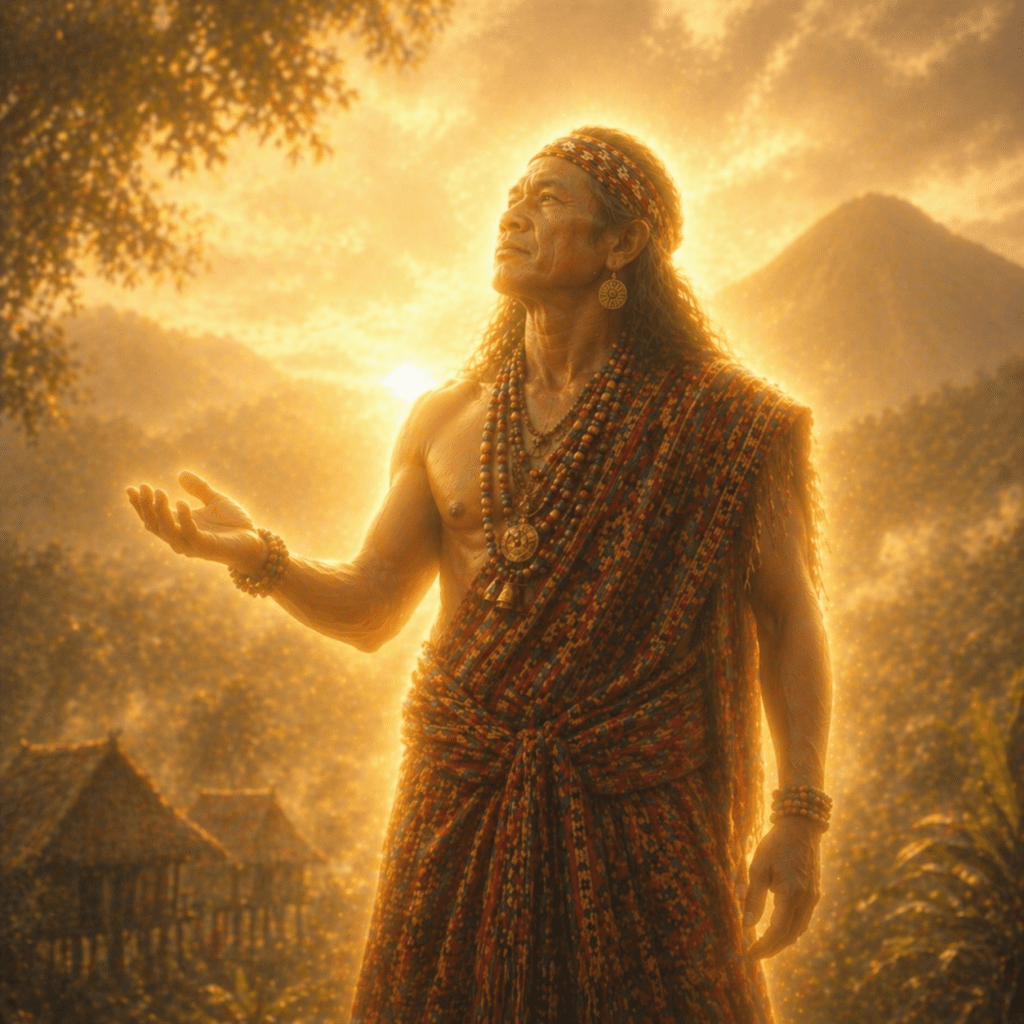
In traditional narratives, Pamulak Manobo is not just a distant god but an active force behind the creation of the world, humanity, and the natural environment. He is associated with the heavens, yet his influence is seen in everyday life, from rainfall and agriculture to moral guidance and community order. Through oral traditions recorded by anthropologists such as Laura Watson Benedict, he emerges as a figure who bridges the divine and the natural world, shaping both existence and cultural identity.
Physical Traits
Unlike many deities portrayed in human form, Pamulak Manobo is rarely described with physical characteristics. Instead, he exists as a powerful, unseen presence. This absence of form is not a limitation but a reflection of his cosmic nature. He is understood as a force rather than a figure, manifesting through elements like the sky, mountains, and natural events.
Bagobo traditions emphasize what Pamulak Manobo does rather than how he looks. His presence is felt in the shaping of landscapes, the rhythm of seasons, and the balance of life. This aligns with many indigenous belief systems where supreme creators are beyond human comprehension and therefore not confined to physical representation.
Family
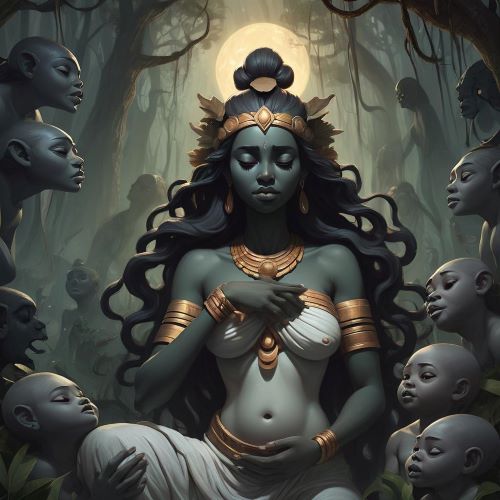
Pamulak Manobo presides over a structured pantheon of deities and spirits, though he is not described as having a conventional family lineage. Instead, he delegates responsibilities to various divine beings who maintain different aspects of life and society.
Among his closest assistants are Tuglay and Tuglibon, who play vital roles in human life. They are associated with birth, marriage, language, and customs, and in some traditions, they are even credited with shaping humanity itself.
Other figures within this divine system include Mandaragan and Darago, who embody war and reside in sacred spaces such as Mount Apo. Tigyama serves as a protector of families, while Tarabumo governs agriculture, reflecting the importance of farming in Bagobo life.
The pantheon also includes darker entities like the Buso, malevolent spirits linked to death and decay. Their presence highlights the balance within Pamulak Manobo’s creation, where both benevolent and destructive forces coexist.
Other names
Pamulak Manobo is most commonly referred to by his original name, which has remained largely untouched by external religious influences. Unlike other Philippine deities whose identities have been blended with later traditions, Pamulak Manobo retains a strong indigenous identity.
He is sometimes described in broader terms such as the “Creator God” or the “Supreme God of the Bagobo,” but these are descriptive titles rather than alternative names. This consistency reflects the preservation of Bagobo cultural traditions and their resistance to syncretism.
Powers and Abilities
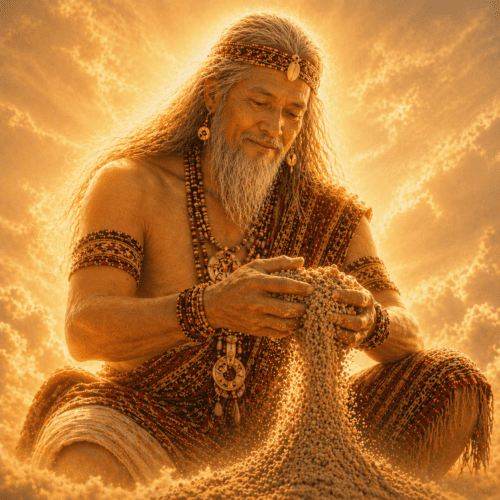
As a creator deity, Pamulak Manobo is credited with forming the universe, the earth, and all living beings. He is said to have created the first humans, Tuglay and Tuglibon, establishing the foundation of human society and culture.
His influence extends into natural phenomena. Rain is interpreted as water cast down from the heavens, while clouds are seen as smoke from divine activity. Earthquakes are explained through mythic creatures he created, such as an eel and a crab, whose interactions disturb the earth.
Beyond physical creation, Pamulak Manobo governs knowledge, morality, and balance. He is believed to guide human behavior, influencing decisions, social order, and harmony with nature. Agricultural success, animal behavior, and environmental conditions are all seen as reflections of his will.
A defining aspect of his power is delegation. Rather than controlling every domain directly, he empowers other deities to manage specific aspects of existence. This structure reflects a complex and organized cosmology where balance is maintained through interconnected roles.
Modern Day Influence
Even in contemporary times, Pamulak Manobo continues to hold cultural significance among the Bagobo people. While modernization and the spread of global religions have influenced traditional practices, elements of his worship and symbolism remain alive through rituals, storytelling, and community traditions.
Cultural preservation efforts have played a major role in sustaining his legacy. Festivals, dances, and oral histories continue to pass down knowledge about Pamulak Manobo, ensuring that his role in Bagobo identity is not forgotten. Rituals connected to agriculture and thanksgiving still echo his importance as a provider and protector.
Anthropologically, Pamulak Manobo is a key figure in understanding indigenous cosmology in Mindanao. His mythology offers insight into how communities interpret nature, structure society, and maintain ecological balance. In modern interpretations, his role is sometimes linked to environmental awareness, emphasizing harmony with nature.
Related Images
Source
Benedict, L. W. (1913). A study of Bagobo ceremonial, magic, and myth. The Manila Bureau of Printing. https://archive.org/details/studyofbagobocer00beneuoft
Benedict, L. W. (2005). Bagobo myths (Reprint ed.). Kessinger Publishing.
Diaz, M. C. (2013). Manobo cultural practices. Agham Tao, Philippine Social Science Council. https://pssc.org.ph/wp-content/pssc-archives/Aghamtao/2013/7-DIAZ%20manobo.pdf
FilipiKnow. (2016, May 12). The ancient Mindanao deities of Philippine mythology. https://filipiknow.net/THE-ANCIENT-MINDANAO-DEITIES-OF-PHILIPPINE-MYTHOLOGY/
Pantheon.org. (2007, September 19). Pamulak Manobo: Facts, information, and mythology. https://pantheon.org/articles/p/pamulak_manobo.html
Ramos, M. D. (1990). Philippine demonological legends and their cultural bearings; The creatures of midnight. Phoenix Publishing.
Wikipedia contributors. (2024). Manobo. Wikipedia. https://en.wikipedia.org/wiki/Manobo_people
Jocano, F. L. (1969). Outline of Philippine Mythology. Quezon City: Capitol Publishing House.
Demetrio, F. R. (1992). The Soul Book: Philippine Shamanism, Spirit Beliefs, and Ancestor Traditions. Quezon City: GCF Books.
Eugenio, D. L. (2001). Philippine Folk Literature: The Myths. Quezon City: University of the Philippines Press.
Frequently Asked Questions
Who is Pamulak Manobo?
Pamulak Manobo is the supreme creator deity of the Bagobo people, believed to have created the world and humanity.
What does Pamulak Manobo represent?
He represents creation, nature, balance, and divine guidance in Bagobo belief systems.
Is Pamulak Manobo described physically?
No, he is seen as a cosmic force rather than a human-like figure.
What are Pamulak Manobo’s powers?
He created the universe, controls natural phenomena, and governs moral and social order.
Is Pamulak Manobo still worshipped today?
Yes, elements of his worship continue through Bagobo traditions, rituals, and cultural preservation efforts.