
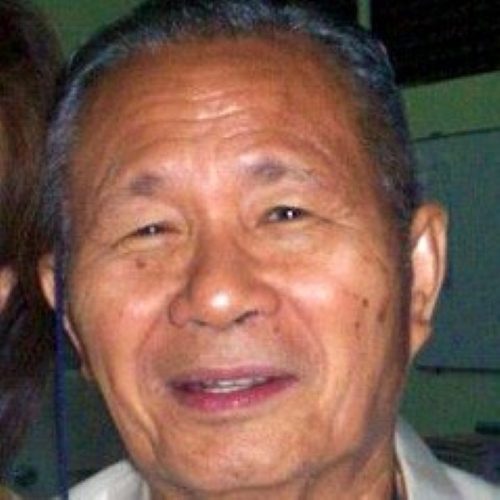
Dr. F. Landa Jocano: Architect of Philippine Myth and Anthropology
Mythlok Perspective
In Mythlok’s perspective, Dr. F. Landa Jocano represents the scholar as cultural custodian. His work did not extract myth for analysis but preserved it within lived community context. By grounding interpretation in indigenous experience, Jocano showed that myth is not inherited fantasy but social memory. This mirrors how African oral historians, Indian folklorists, and Native American ethnographers protected narrative traditions against erasure. Across cultures, myth survives when scholars listen before they interpret, and Jocano’s legacy embodies that principle.
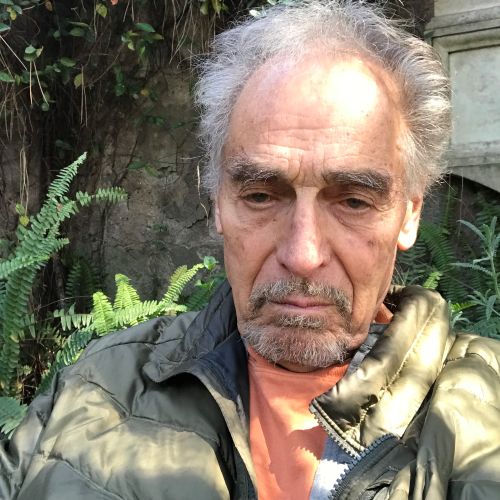
Dr. F. Landa Jocano
Introduction
Dr. F. Landa Jocano (1930-2013), a distinguished Filipino anthropologist, left a lasting impact on the study of Philippine mythology, folklore, and cultural anthropology. His work provided a pioneering look into the cultural narratives that form Filipino identity, combining field research, academic analysis, and educational outreach to deepen appreciation for the Philippines’ rich traditions.
Area of Expertise
Dr. Jocano focused on Philippine mythology and the anthropology of Filipino culture. With degrees from Central Philippine University and the University of Chicago, he brought a rigorous approach to his studies, emphasizing the societal role of myths in shaping community values. His insights extended into kinship, social structure, and pre-colonial Filipino customs, with methods like participant observation and ethnography that were groundbreaking in Philippine anthropology.
Books & Publications
Dr. Jocano authored influential works in Philippine mythology and anthropology. His “Outline of Philippine Mythology” (1969) remains a key reference on local deities and traditional narratives. Another major work, “Hinilawod: Adventures of Humadapnon Tarangban I” (2000), documents the Western Visayan epic “Hinilawod,” capturing the mythological exploits of demigods from the Sulod people. His research also explored Filipino kinship systems and social organization, as seen in “Sulod Society” (1968) and “Filipino Prehistory” (1998), which addressed both ancient heritage and its modern relevance.
Research & Contributions
Dr. Jocano’s fieldwork went beyond preserving folklore, highlighting the broader significance of mythology within Filipino culture. His work on the “Hinilawod” epic preserved crucial oral traditions, showcasing his dedication to Filipino heritage. He advocated for culturally sensitive research, emphasizing the importance of understanding myths within the lived experiences of communities. His approach shaped Philippine anthropology, urging scholars to avoid simplistic interpretations and instead explore how stories influence identity.
Awards & Recognitions
Throughout his career, Dr. Jocano received prestigious awards, including the Ten Outstanding Young Men (TOYM) award in 1965, the National Science Special Award of Merit in 1974, and the Lifetime Achievement Award in 2006. He was also recognized as one of the Philippines’ top scientists in 1988. His impact extended beyond academia, as he influenced policies promoting cultural awareness and social development. Through his mentorship, his legacy lives on in the work of his students who continue his mission.
Social Media Profiles
Given his era, Dr. Jocano did not have personal social media profiles. However, various online groups and pages commemorate his work, allowing enthusiasts to share and celebrate his contributions to anthropology and Filipino culture.
Bibliographic Sources
Jocano, F. L. (1969). Philippine mythology. Quezon City, Philippines: Punlad Research House.
Jocano, F. L. (1975). Filipino prehistory: Rediscovering precolonial heritage. Quezon City, Philippines: Punlad Research House.
Jocano, F. L. (1967). Folk medicine in a Philippine municipality. Quezon City, Philippines: University of the Philippines Press. https://press.up.edu.ph/store/books/folk-medicine-in-a-philippine-municipality
Jocano, F. L. (1999). Working with Filipinos: A cross-cultural encounter. Quezon City, Philippines: Punlad Research House.
University of the Philippines Diliman. (n.d.). F. Landa Jocano. https://anthro.upd.edu.ph/faculty/f-landa-jocano/
Wikipedia contributors. (n.d.). F. Landa Jocano. In Wikipedia. https://en.wikipedia.org/wiki/F._Landa_Jocano


Frequently Asked Questions
Who was F. Landa Jocano?
Dr. F. Landa Jocano was a Filipino anthropologist and folklorist known for documenting Philippine myths, oral traditions, and indigenous belief systems.
What is F. Landa Jocano known for?
He is best known for Philippine Mythology and his extensive ethnographic research on Filipino culture, ritual, and social organisation.
Why is F. Landa Jocano important to mythology studies?
His work established Philippine myth and folklore as serious academic subjects rooted in indigenous perspectives rather than colonial interpretation
Did F. Landa Jocano study indigenous beliefs?
Yes. His research focused heavily on indigenous cosmology, oral epics, ritual practices, and community-based belief systems.
Is F. Landa Jocano still influential today?
Yes. His books remain foundational texts in Philippine anthropology, folklore studies, and cultural history.