


Shenlong : The Chinese Divine Dragon of Rain and Storms
At a glance
| Description | |
|---|---|
| Origin | Chinese Mythology |
| Classification | Animals |
| Family Members | N/A |
| Region | China |
| Associated With | Rain |
Mythlok Perspective
In Mythlok’s Perspective, Shenlong represents the Chinese understanding of nature as both generous and formidable. His connection with rain makes him less a creature of destruction than a force sustaining life, distinguishing him from Western dragons often portrayed as hoarders or adversaries. Like India’s Indra, whose power is tied to rain and storms, Shenlong embodies humanity’s dependence on forces beyond its control, transforming weather into a symbol of divine influence and renewal.
Shenlong
Introduction
Shenlong, meaning “Divine Dragon” or “Spirit Dragon,” is one of the most powerful dragons in Chinese mythology. Associated with rain, clouds, wind and storms, Shenlong represents the forces of nature that could determine whether communities experienced abundance or hardship. In an agricultural society dependent on seasonal rainfall, the dragon’s ability to bring rain gave it enormous spiritual importance.
Unlike the fire-breathing dragons familiar from much of Western fantasy, Shenlong is closely connected with water and the sky. His presence represents the arrival of rain, the movement of clouds and the renewal of the earth. Chinese traditions often portray dragons as supernatural beings capable of influencing weather, making them important figures in rituals and beliefs surrounding rainfall and agricultural prosperity.
Shenlong therefore occupies a fascinating position in Chinese mythology. He is both a magnificent dragon and a personification of nature’s unpredictable power. His image came to represent strength, auspiciousness and authority, while his connection with rain made him a symbol of life and renewal.
Physical Traits
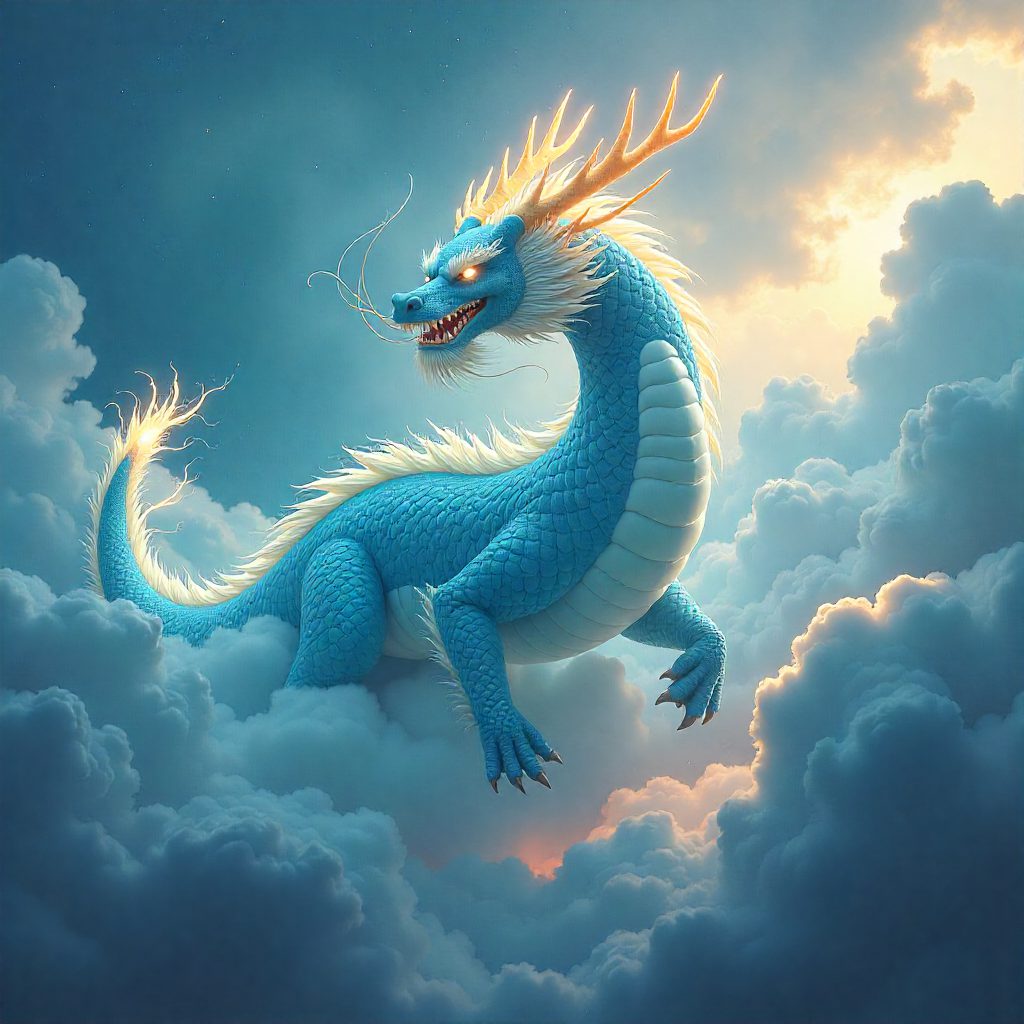
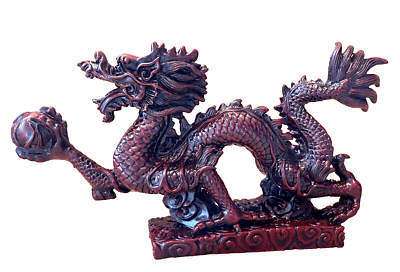
Shenlong is traditionally imagined in the characteristic form of a Chinese dragon: long and serpentine, with a powerful body covered in scales and four legs ending in clawed feet. His head combines several animal features, including horns or antler-like projections, long whiskers, a prominent snout and a flowing mane. These features give him an appearance that is both fearsome and majestic.
Shenlong is frequently associated with blue, green or azure colouring, reflecting his connection with the heavens, clouds and water. Artistic representations can vary considerably, however, and there is no single colour that defines him. He may appear surrounded by clouds, mist or swirling water, reinforcing his role as a dragon of the sky and weather.
Unlike the winged dragons of European mythology, Shenlong is generally shown without wings. His ability to move through the heavens is an inherent supernatural quality of the Chinese dragon. He can rise into the clouds and disappear among them, creating a visual connection between the earthly world and the celestial realm. The famous dragon pearl is also frequently associated with Chinese dragon imagery. Often depicted as a luminous pearl or flaming jewel, it represents power, wisdom, prosperity and supernatural energy. When shown with Shenlong, it reinforces his status as a powerful celestial dragon.
Family
Shenlong does not possess a clearly established family narrative comparable to the genealogies found in some other mythologies. Instead, he belongs to the much wider world of Chinese dragons, which includes numerous beings associated with different natural and cosmic forces.
Other important dragons include Qinglong, the Azure Dragon of the East; Tianlong, the Heavenly Dragon; Yinglong, the winged or responding dragon; and Zhulong, the Torch Dragon. Each has its own identity and place within Chinese mythology, while collectively demonstrating how varied the Chinese conception of dragons could be. Shenlong is particularly distinguished by his connection with rain and weather. His importance comes not from a famous lineage but from his role as a divine force capable of influencing the natural environment.
Chinese mythology also contains traditions about the Dragon Kings, or Longwang, who govern bodies of water and are particularly important in stories and religious traditions concerning the seas, rivers and rainfall. These traditions overlap with the broader Chinese belief that dragons have power over water, but Shenlong remains identifiable through his association with celestial weather and rain.
Other Names
The name Shenlong (神龙) is commonly translated into English as “Divine Dragon,” “Spirit Dragon,” or “God Dragon.” The first character, shen (神), conveys the idea of something divine, spiritual or supernatural, while long (龙) means dragon. The name therefore immediately communicates Shenlong’s nature: he is not simply an ordinary dragon but a supernatural dragon associated with powerful natural forces.
Shenlong can also be described as a rain dragon in English-language discussions because of his strong association with rainfall and weather. This is best understood as a descriptive title rather than a separate formal name. The characters 神龙 are read as Shénlóng in Mandarin Chinese. In Japanese, the same characters can be read Shinryū, demonstrating the broader influence of Chinese writing and mythology across East Asia.
Powers and Abilities
Shenlong’s greatest power is his ability to control rain and weather. He is closely associated with clouds, rainfall and storms, making him an important supernatural force in a culture where agriculture depended heavily on seasonal weather. His command of rain gives Shenlong a dual character. Rain can nourish crops, replenish rivers and bring prosperity, but excessive rainfall can also cause floods and destruction. The dragon therefore embodies the unpredictable power of nature rather than representing simple benevolence.
Shenlong’s connection with the sky also gives him the ability to move between the heavens and the earthly world. Chinese dragons traditionally possess extraordinary mobility, allowing them to travel through clouds, water and the air despite lacking wings. His supernatural nature is further reflected in the ability of dragons to appear, disappear and change their form or size in traditional Chinese lore. Such qualities make the dragon an elusive being, capable of moving beyond the limitations of ordinary creatures.
Beyond physical power, Shenlong represents the relationship between heaven, weather and earthly life. His rains sustain crops and communities, making his mythology closely connected with fertility, abundance and the continuation of life. His power is therefore not merely destructive or martial; it is fundamentally connected with renewal.
Modern Day Influences
Shenlong remains an important part of the enduring image of the Chinese dragon. Across Chinese art and popular culture, dragons continue to represent strength, prosperity, good fortune and supernatural power. Their connection with rain and water also preserves an older association between dragons and the natural world.
The dragon remains particularly prominent during Chinese New Year and other celebrations, where dragon dances bring elaborate dragon figures to life through coordinated movement, music and performance. These dragons represent auspiciousness, vitality and communal prosperity, although such traditions should not be understood as being exclusively devoted to Shenlong.
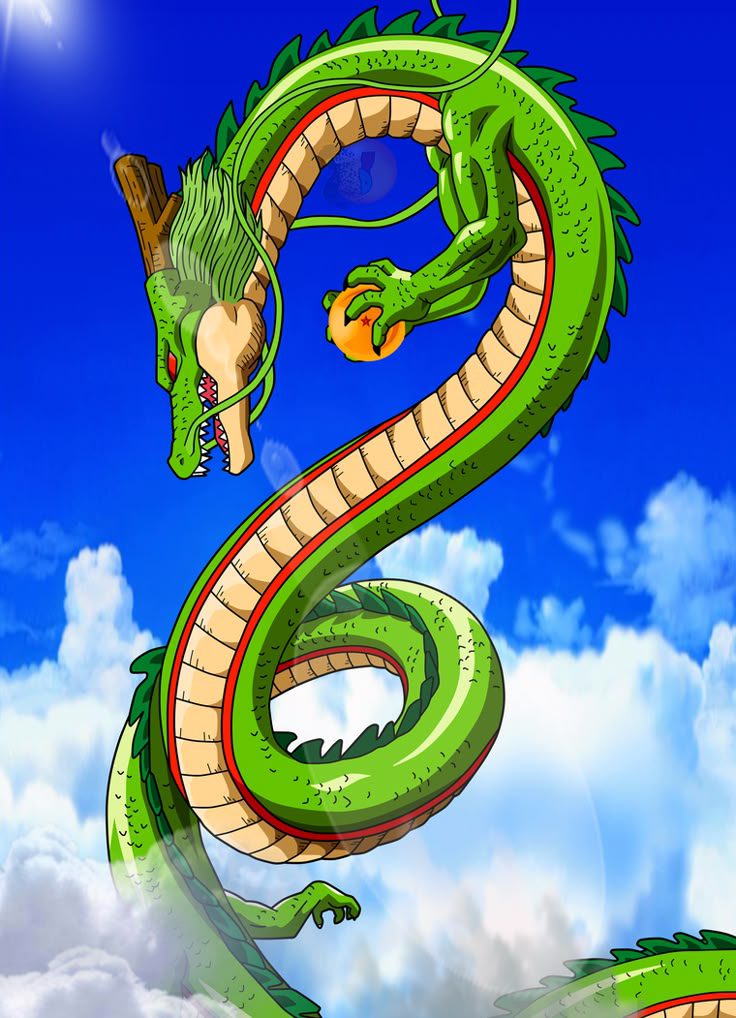
Chinese dragons have also become globally recognizable through cinema, animation, literature and video games. One of the most famous modern examples is Shenron from Dragon Ball, whose name and appearance draw heavily on the Chinese dragon tradition. Although Shenron is a modern fictional character with a different mythology, his name is derived from Shénlóng and demonstrates how the concept of the divine dragon has travelled far beyond its original cultural setting.
Related Images
Source
Birrell, A. (1999). Chinese Mythology: An Introduction. Baltimore: Johns Hopkins University Press.
Wikipedia. (2003). Shenlong. Retrieved from https://en.wikipedia.org/wiki/Shenlong
Gods and Monsters. (2024). Shenlong. Retrieved from https://godsandmonsters.info/shenlong/
StorytellingDB. (n.d.). Shenlong: The Spiritual Chinese Dragon. Retrieved from https://storytellingdb.com/shenlong/
Mythopedia. (2022). Shennong. Retrieved from https://mythopedia.com/topics/shennong/
Gods and Demons Wiki. (2007). Shenlong. Retrieved from https://gods-and-demons.fandom.com/wiki/Shenlong
AnyofChina. (2025, July 23). 17 Types of Chinese Dragons in Mythology (with names). Retrieved November 24, 2025, from https://anyofchina.com/types-of-chinese-dragons/
Wu, C. (2024, October 24). The Legendary Shenlong: The Dragon of Rain and Agriculture. Chinese
Mythology Worldwide. Retrieved November 24, 2025, from https://chinese.mythologyworldwide.com/the-legendary-shenlong-the-dragon-of-rain-and-agriculture/
Birrell, A. (1993). Chinese Mythology: An Introduction. Baltimore: Johns Hopkins University Press.
Eberhard, W. (2003). A Dictionary of Chinese Symbols: Hidden Symbols in Chinese Life and Thought. London: Routledge.
Yang, L., & An, D. (2005). Handbook of Chinese Mythology. Oxford: Oxford University Press.
Littleton, C. S. (2002). Gods, Demons and Symbols of Ancient China. San Francisco: HarperCollins.
Loewe, M., & Black, M. (1993). Divination, Mythology and Monarchy in Han China. Cambridge: Cambridge University Press.
Frequently Asked Questions
Who is Shenlong in Chinese mythology?
Shenlong is the celestial dragon responsible for rain, storms, and atmospheric balance, revered for sustaining agricultural prosperity.
Why is Shenlong associated with rain?
As the divine controller of weather, Shenlong governs rainfall and seasonal cycles, making him central to ancient Chinese farming rituals.
Does Shenlong have wings?
How is Shenlong different from the Dragon Kings?
Shenlong is a heavenly dragon of the skies, while the Dragon Kings rule oceans and rivers. Shenlong’s role focuses on weather and celestial forces.
Is Shenlong the inspiration for Shenron in Dragon Ball?
Yes, the wish-granting dragon Shenron was inspired by Shenlong, adapting his majestic form and divine presence for modern storytelling.


