


Bundjil : The Australian Eagle Creator and Lawgiver
Listen
At a glance
| Description | |
|---|---|
| Origin | Taungurung Mythology |
| Classification | Gods |
| Family Members | Binbeal (Son), Palian (Brother) |
| Region | Australia |
| Associated With | Creation, Law, Sky |
The Mythlok Perspective
From the Mythlok perspective, Bundjil represents creation as responsibility rather than domination. His authority is expressed through order, restraint, and long-term balance, not conquest or punishment. The land responds to law because law is embedded within it, making culture and ecology inseparable. Comparable figures appear elsewhere, such as the sky-watching creator deities of Polynesia or the law-giving gods of ancient Mesopotamia. Yet Bundjil remains distinct in how closely moral order, kinship, and environment are woven together. His legacy shows that creation myths can function as sustainable systems rather than symbolic origin stories alone.
Bundjil
Introduction
Bundjil is among the most important creator beings of southeastern Australia, deeply rooted in the spiritual worldview of the Taungurung people, who form part of the wider Kulin Nation of central Victoria. Known primarily as the wedge-tailed eagle ancestor, Bundjil is not a distant or abstract god but a shaping presence whose actions defined the land, the people, and the laws that bind them together. In Taungurung tradition, the world did not simply emerge by chance. It was organised, instructed, and stabilised through Bundjil’s deliberate acts of creation and governance.
Bundjil’s role extends beyond the making of mountains, rivers, animals, and humans. He established the rules of social conduct, kinship obligations, and moral responsibility that structured Taungurung life. These laws were not symbolic alone; they regulated marriage, ceremonial duties, and relationships with Country. After completing his work on earth, Bundjil ascended to the sky, where he continues to watch over his people as a celestial guardian. His presence in the heavens reinforces the belief that creation is ongoing, watched, and sustained rather than finished and abandoned.
Physical Traits
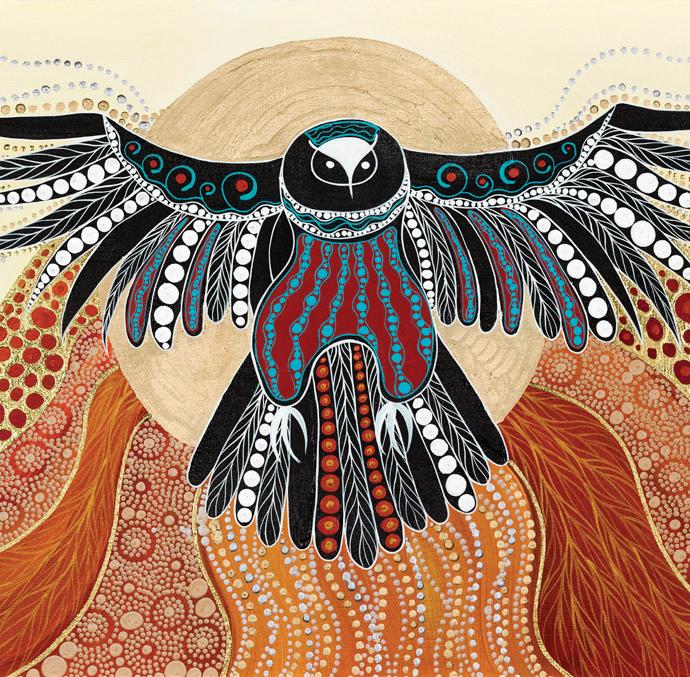
Bundjil is most commonly envisioned as the wedge-tailed eagle, Australia’s largest bird of prey. This form reflects authority, clarity of vision, and sovereignty over the skies. The eagle’s ability to soar at immense heights mirrors Bundjil’s cosmic oversight, while its sharp eyes and talons symbolise justice, discernment, and decisive power. Within Taungurung thought, these traits are not ornamental but instructional, representing the qualities expected of leaders and law keepers.
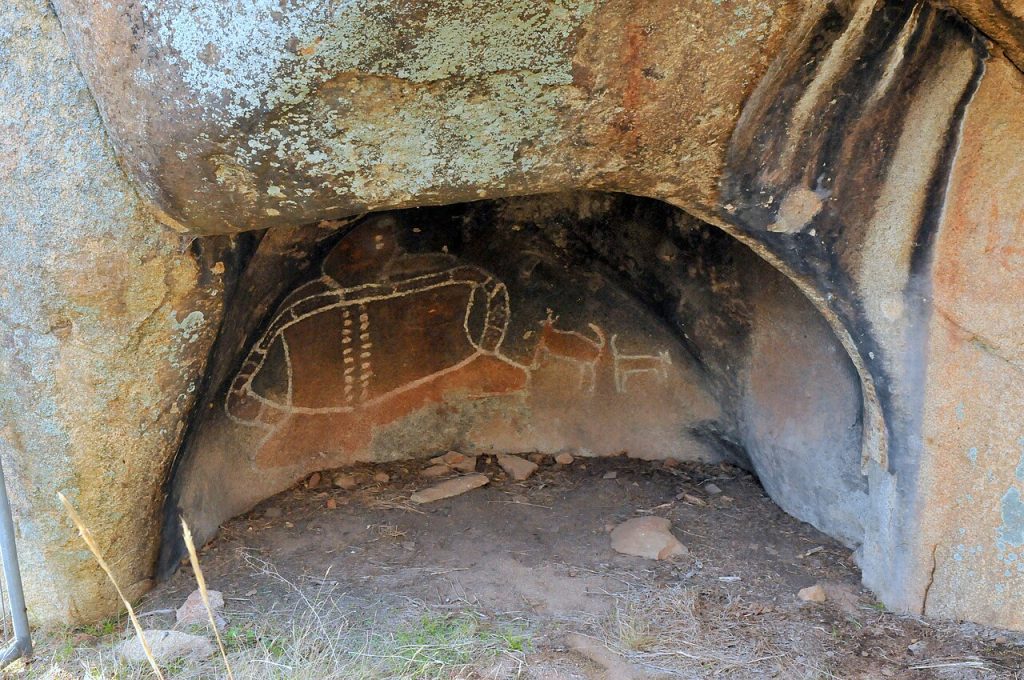
At certain moments in mythic narratives, Bundjil is also described as walking the land in a more human-like form. This dual expression allows him to engage directly with people, shape the earth with his hands, and intervene when balance is threatened. Rock art sites such as Bunjil’s Shelter in the Gariwerd region depict him in stylised form, grounding his spiritual authority in physical landscape. Whether seen in the sky or imagined on the land, Bundjil’s appearance conveys watchfulness, stability, and commanding presence.
Family
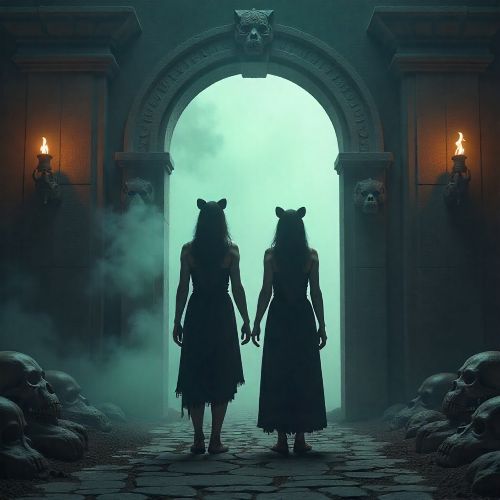
Bundjil’s family relationships reflect the Taungurung understanding of balance and interdependence. He is said to have two wives, often associated in later traditions with black swans, who accompany him during his ascension to the sky. Their presence reinforces the idea that creation and law are collective responsibilities rather than solitary acts.
His son, Binbeal, embodies the rainbow and represents connection between earth and sky, water and light, continuity and renewal. Through Binbeal, Bundjil’s influence extends into seasonal cycles and natural transitions. Bundjil’s brother, Palian or Pailian, appears as the bat and represents the opposing moiety within Kulin society. This relationship is foundational, as Taungurung communities are organised into complementary divisions that regulate marriage and social harmony.
Bundjil is also assisted by six wirmums, ancestral helpers linked to specific animal forms and clans. Together, this extended family structure reinforces Bundjil’s role as a unifier, ensuring cooperation between clans and maintaining cosmic and social equilibrium.
Other names
The name Bundjil appears in several variant spellings, including Bunjil, Pundjel, and Pundjil, reflecting differences in pronunciation across Kulin languages and early colonial transcription. These variations do not indicate separate beings but rather the breadth of Bundjil’s recognition across southeastern Aboriginal communities.
Within Kulin tradition, Bundjil is consistently identified as the eagle ancestor, positioned in symbolic contrast to Waang, the crow. This pairing forms the backbone of the moiety system that governs kinship and marriage. Even when rendered under different spellings or dialects, Bundjil’s identity as creator, lawgiver, and sky ancestor remains constant.
Powers and Abilities
Bundjil’s powers are fundamentally creative and regulatory rather than destructive. He shaped the physical features of the land, bringing mountains, rivers, animals, and plants into their proper places. Human beings were also formed through his design, with distinct origins that emphasised connection to earth and forest. These acts of creation were inseparable from instruction, as Bundjil embedded law directly into the fabric of existence.
As a lawgiver, Bundjil established rules governing marriage, respect between clans, and responsibilities toward Country. When these laws were broken, imbalance followed in the form of floods, conflict, or environmental disruption. Bundjil’s authority over natural forces allowed him to correct such threats, reinforcing obedience not through fear but through restoration of harmony. After ascending to the sky, Bundjil’s power became observational and protective, watching from above and intervening only when necessary.
Modern Day Influence
Bundjil continues to hold deep cultural relevance for Taungurung people and the wider Aboriginal community in Victoria. His stories remain central to cultural education programs, where they are used to teach kinship, responsibility, and respect for land. The moiety system he established still informs ceremonial life and community relationships.
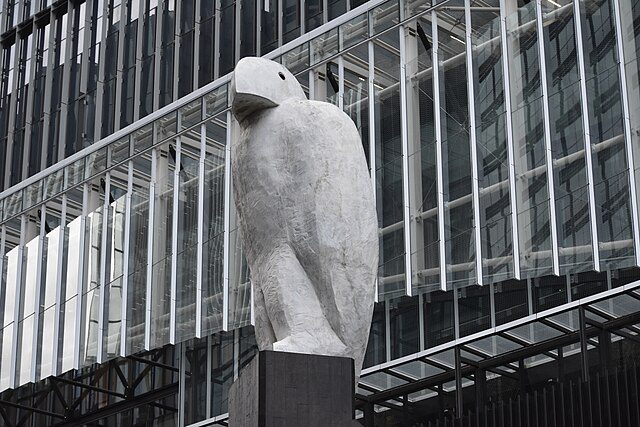
In contemporary Australia, Bundjil has also become a symbol of Indigenous presence and resilience. Public artworks, educational curricula, and cultural institutions increasingly reference his image and stories. Environmental stewardship initiatives draw upon Bundjil’s role as protector of Country, aligning ancient law with modern ecological values. Through these channels, Bundjil’s influence persists not as mythology frozen in the past, but as a living framework for identity and ethical engagement with the world.
Related Images




Source
Massola, A. (1968). Bunjil’s cave: Myths, legends and superstitions of the Aborigines of south-east Australia. Lansdowne Press.
Taungurung Land & Waters Council. (n.d.). Creation stories. https://taungurung.com.au/creation-stories/
Wikipedia contributors. (2026). Bunjil. Wikipedia. https://en.wikipedia.org/wiki/Bunjil
Healy, L. (2021). How Bundjil the eagle created the world. Garland Magazine. https://garlandmag.com/article/bundjil/
GBC MA. (n.d.). Taungurung Country Plan. https://www.gbcma.vic.gov.au/downloads/Traditional_Owners/Taungurung_CountryPlan_WEB.pdf
Padgham, L. (2011). A brief history. Taungurung News. http://taungurung.net/2011/04/taungurung_a_brief_history.html
EBSCO. (2019). Bunjil | Research Starters. https://www.ebsco.com/research-starters/religion-and-philosophy/bunjil
Frequently Asked Questions
Who is Bundjil in Australian tradition?
Bundjil is a creator being of the Taungurung people, responsible for shaping the land, establishing law, and guiding social order.
Why is Bundjil associated with the eagle?
The wedge-tailed eagle symbolises authority, vision, and sky dominion, reflecting Bundjil’s role as overseer and guardian.
What laws did Bundjil create?
He established kinship rules, marriage systems, moral conduct, and responsibilities toward land and community.
Is Bundjil still important today?
Yes, Bundjil remains central to cultural education, land stewardship, and Aboriginal identity in Victoria.
Where can Bundjil be seen in art or landscape?
Bundjil is depicted in rock art sites like Bunjil’s Shelter and in contemporary public artworks across Victoria.
