

Kur : The Sumerian Underworld Beneath the Earth
| Description | |
|---|---|
| Mythology | Sumerian Mythology |
| Description | Dark cavern beneath earth, dusty, clay food |
| Ruler/Guardian | Ereshkigal |
| Inhabitants | Spirits, Demons, Ereshkigal’s court |
| Nature | Neutral |
Mythlok Perspective
In Mythlok’s perspective, Kur represents one of humanity’s earliest attempts to confront mortality without illusion. It does not promise paradise, nor does it threaten eternal torment. Instead, it presents death as a leveling force, stripping kings and commoners alike of status and identity. This stark neutrality feels intellectually honest, shaped by the unforgiving Mesopotamian landscape where survival itself was uncertain and fragile. When compared to the Egyptian Duat, which weighs the heart against Ma’at, or the Greek Tartarus, which punishes the wicked, Kur feels almost philosophical in its restraint. It resembles the Norse Hel more closely, yet remains even more elemental. Kur reminds us that early civilizations did not initially moralize death. They accepted it as a return to dust, a cosmic inevitability rather than a divine verdict.
Kur
Introduction
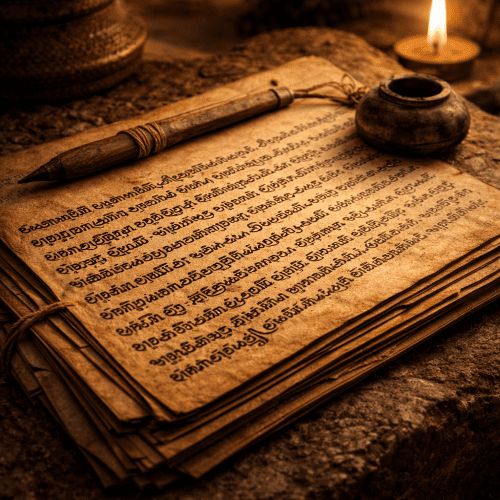
Kur is one of the oldest recorded concepts of the underworld in human history. Emerging from the religious imagination of ancient Sumer in southern Mesopotamia, Kur represents both a cosmic space beneath the earth and, in some early traditions, a primordial force of chaos. When discussing Kur, scholars draw primarily from Sumerian hymns, temple inscriptions, and mythological narratives preserved on clay tablets written in cuneiform. These sources reveal that Kur was not a realm of reward or punishment but a universal destination for the dead.
In early Sumerian language, the word “kur” originally meant “mountain” or “foreign land.” Over time, its meaning evolved into a metaphysical realm beneath the earth. This shift reflects how geography shaped belief. The mountains east of Sumer, especially toward the Zagros region, were distant and mysterious. Gradually, that unknown terrain became associated with the unknown world of the dead. Kur eventually came to signify what later texts call the “Land of No Return,” a place from which no mortal soul could escape.
Sumerian literature also uses other names for the underworld, including Irkalla, Arali, Kigal, and Ganzir. In Akkadian texts, the term erṣetu could refer to both the earth and the underworld, showing how closely the physical ground and the realm of the dead were conceptually linked.
Description
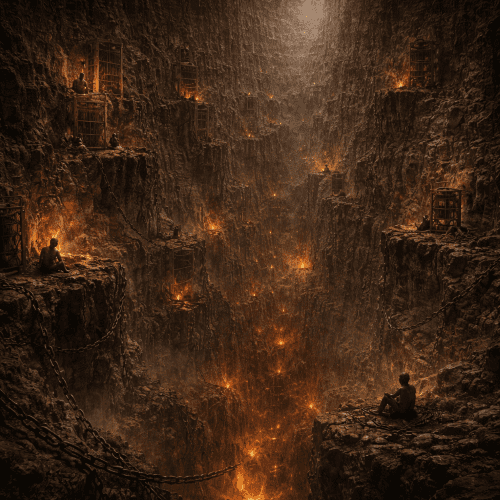
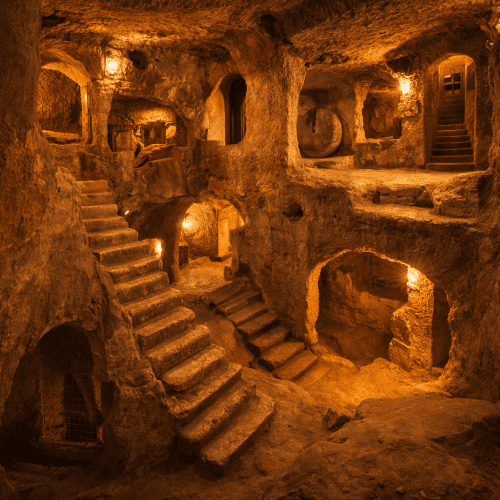
Kur was imagined as a vast subterranean realm located beneath the earth’s surface. Unlike later religious traditions that divided the afterlife into heavens and hells, Kur was a single shadowy domain. It was dark, dry, and filled with dust. Texts such as “Inanna’s Descent to the Netherworld” describe it as a place where the dead consumed dust and clay. There was no fiery torment and no radiant paradise. Instead, existence continued in a muted, diminished state.
The cuneiform sign for kur (𒆳) originally represented a mountain, reinforcing the term’s earlier geographic meaning. Over centuries, that same sign came to represent the underworld itself. This linguistic transformation reflects the evolution of Sumerian cosmology. What began as a reference to mountainous foreign lands gradually became the cosmic “great below,” sometimes called ki-gal, meaning “great place beneath.”
Some traditions describe Kur as lying even deeper than the Abzu, the subterranean freshwater ocean associated with the god Enki. In other accounts, the entrance to Kur was imagined at the edge of the world, possibly in the far west or east. Regardless of location, Kur was understood as inaccessible to the living except through divine intervention.
Ruler/Guardian
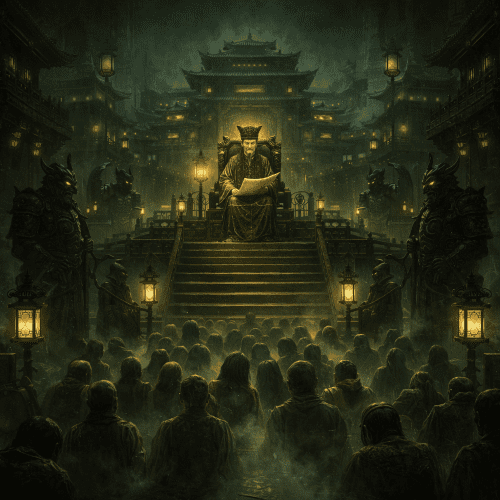
The supreme ruler of Kur was Ereshkigal, the powerful goddess of the dead. She reigned from her palace called Ganzir and exercised absolute authority over the realm. Unlike later mythologies where death gods act as judges, Ereshkigal’s rule appears administrative and sovereign rather than moral. She governed the dead because death itself required order.
In earlier Sumerian traditions, her consort was Gugalanna. In later Akkadian mythology, particularly after the rise of Babylonian influence, Nergal became her husband and co-ruler. This shift reflects evolving theological traditions in Mesopotamia.
The seven gates of Kur were guarded by the divine gatekeeper Neti. Another important figure was Namtar, Ereshkigal’s attendant and messenger, who carried out her commands. Together, these figures structured the underworld as a realm governed by hierarchy and divine protocol rather than chaos.
Inhabitants
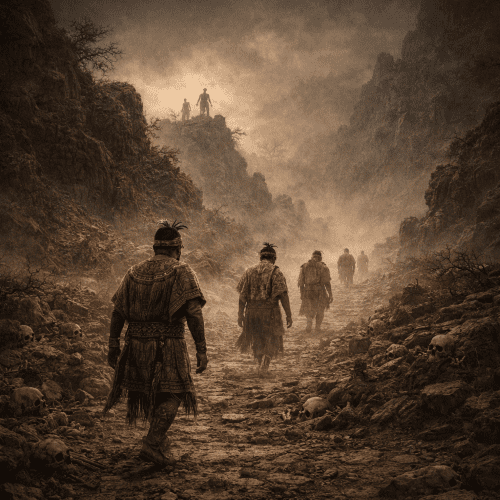
Kur was populated primarily by the souls of the deceased. All people, regardless of social status or moral conduct, were believed to enter the same afterlife. Kings and commoners shared the same dusty fate. This absence of moral judgment distinguishes Kur from later traditions such as the Egyptian Duat or the Christian heaven and hell.
The dead were sustained by offerings from the living. Families poured libations into graves through clay pipes so their ancestors could drink. Those who died without descendants were believed to suffer most, as no one remained to provide offerings. Such restless spirits were feared as potential hauntings among the living.
Kur was also inhabited by various demons, including the galla, who dragged mortals into the underworld. Deities associated with death and vegetation cycles also resided there. The shepherd god Dumuzid was said to spend part of the year in Kur, symbolizing seasonal change. His sister Geshtinanna took his place for the remaining months, reflecting agricultural rhythms embedded within myth.
Access
Access to Kur required passing through seven gates. Each gate represented a boundary between worlds. In the famous descent narrative, as a visitor passes through each gate, symbols of status and power are removed. This ritual stripping illustrates a key Sumerian belief: death equalizes all.
The gates were secured with bolts and guarded by Neti. In some traditions, a staircase led downward to the entrance. Once inside, return was nearly impossible without divine assistance. Kur was truly the “Land of No Return.”
Instances of Visit
The most famous descent into Kur appears in “Inanna’s Descent to the Netherworld.” Inanna travels to Kur to confront her sister Ereshkigal. As she passes through each of the seven gates, she is stripped of her regalia and authority. Eventually, she is judged and killed, only to be restored through divine intervention arranged by Enki. This myth highlights the irreversible power of death and the fragile boundary between divine and mortal existence.
Another tradition describes the sun god Utu traveling through the underworld at night before rising again in the east. His nightly journey symbolized cosmic continuity. Even in death’s realm, divine order persisted.
Symbolism
Kur symbolizes inevitability. Death was not a punishment but a universal destiny. The stripping at the gates reflects the surrender of earthly identity. The dusty existence of the dead underscores the fragility of human life in the harsh Mesopotamian environment.
In earlier mythic layers, Kur may also have represented a chaotic dragon-like force opposing cosmic order, similar to the Babylonian Tiamat. In this sense, Kur embodied both the realm of the dead and primordial disorder. Over time, its identity stabilized as a structured underworld governed by Ereshkigal.
Comparative Analysis
Kur shares similarities with Tartarus in its deep subterranean imagery. However, Tartarus eventually became associated with punishment, whereas Kur remained morally neutral. Compared to the Egyptian Duat, which included judgment by Osiris, Kur lacked evaluation of deeds. Its closest parallel may be Hel in Norse belief, a shadowy domain where most souls resided without reward or torment.
These comparisons demonstrate that the earliest recorded underworld concept emphasized inevitability rather than justice. Moralized afterlives developed later in religious history.
Modern Influence
Kur continues to shape academic discussions in comparative religion and mythology. Scholars such as Samuel Noah Kramer helped reconstruct Sumerian beliefs from fragmentary tablets, allowing modern readers to understand this ancient worldview.
In contemporary fantasy literature and gaming, neutral underworld realms often echo the structure of Kur. The motif of descending through gates, surrendering power, and confronting a sovereign of death remains a powerful narrative archetype. Kur survives not as a living religion but as a foundational mythic template influencing storytelling across cultures.
Sources
Black, J., & Green, A. (1992). Gods, demons and symbols of ancient Mesopotamia: An illustrated dictionary. University of Texas Press.
Dragons of Fame. (2024, June 28). Kur. http://www.blackdrago.com/fame/kur.htm
Jacobsen, T. (1976). The treasures of darkness: A history of Mesopotamian religion. Yale University Press.
Katz, D. (2004). The land of the dead in Sumerian literature. Aula Orientalis, 22(1), 105–124.
Kramer, S. N. (1944). Sumerian mythology. University of Pennsylvania Press.
MIFOLOGIA. (2025, November 17). Kur: The primordial dragon. https://www.mifologia.com/kur/
Sumer Fandom. (n.d.). KUR (Sumerian underworld). Retrieved February 18, 2026, from https://sumer.fandom.com/wiki/KUR_(Sumerian_underworld)[4]
Wikipedia. (2025, February 26). Ancient Mesopotamian underworld. https://en.wikipedia.org/wiki/Ancient_Mesopotamian_underworld
Frequently Asked Questions
What is Kur in Sumerian belief?
Kur is the Sumerian underworld, a subterranean realm where all souls went after death, regardless of moral conduct.
Who ruled Kur?
Kur was ruled by the goddess Ereshkigal, later joined in some traditions by the god Nergal.
Was Kur a place of punishment?
No, Kur was not a place of moral judgment. All souls shared the same shadowy existence.
How did souls enter Kur?
Souls passed through seven gates guarded by divine beings, symbolizing the stripping away of earthly identity.
Is Kur similar to Hell?
Kur differs from later concepts of Hell because it did not involve eternal punishment, but rather a neutral, inevitable afterlife.