

Haoma : The Sacred Drink of Zoroastrian Mythology
| Description | |
|---|---|
| Origin | Iranian Mythology |
| Availability | Mountainous regions, Ephedra imported today |
| Associated Characters | Haoma (deified plant), Zoroastrian priests |
| Symbolism | Immortality, Purity, Vitality, Divine connection |
| Source Texts | Avesta (Yasna, Hom Yasht) |
Mythlok Perspective
From the Mythlok perspective, Haoma is less a miraculous drink than a ritual made tangible. Unlike the Greek ambrosia or the Norse apples of Iðunn, whose power lies in the substance itself, Haoma derives its sanctity from the act of preparing, offering, and consuming it according to cosmic order. Its divinity is not bottled inside the plant but emerges through ritual. That distinction reveals a uniquely Iranian worldview where immortality is not bestowed by magic alone but cultivated through right action, sacred speech, and harmony with Asha.
Haoma
Introduction
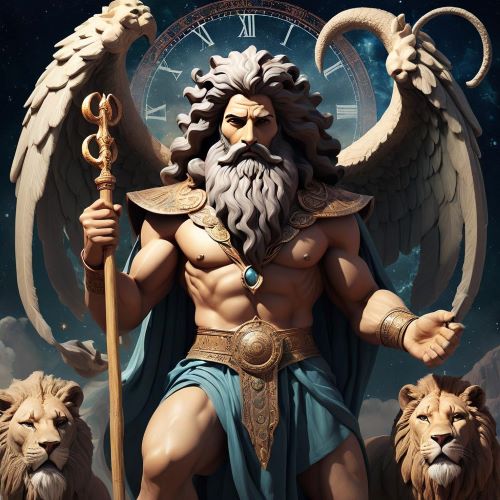
Haoma occupies a unique place in Iranian mythology because it is simultaneously a sacred plant, a ritual drink, and a divine being. Few mythological figures blur the line between the physical and the spiritual so completely. In Zoroastrian tradition, Haoma represents vitality, purity, wisdom, and the enduring relationship between humanity and the divine. For thousands of years, priests have prepared the sacred extract during religious ceremonies, continuing a tradition that stretches back to the earliest Indo-Iranian cultures.
The importance of Haoma extends well beyond ritual practice. Ancient texts portray it as a powerful yazata—a divine being worthy of reverence—who blesses worshippers with strength, health, righteous offspring, and spiritual insight. At the same time, the physical plant used to prepare the ritual drink remains one of history’s greatest botanical mysteries. Although many scholars identify it with species of Ephedra, the original plant has never been conclusively identified. This combination of mythology, religion, archaeology, and botanical mystery continues to make Haoma one of the most fascinating subjects in Zoroastrian studies.
Mythological Context
The earliest descriptions of Haoma appear in the Avesta, the sacred scripture of Zoroastrianism, particularly in the Hōm Yašt (Yasna 9–11). Here, Haoma is not simply an ingredient for ritual ceremonies but a divine being who personally appears before the prophet Zarathustra. Rather than acting as an intoxicating deity, Haoma encourages righteous living and devotion to Ahura Mazda while promising blessings to those who faithfully perform the sacred rituals.
Ancient tradition also preserves Haoma’s deep Indo-Iranian heritage. The Iranian Haoma and the Vedic Soma share striking linguistic, ritual, and mythological similarities, pointing to a common religious tradition that existed before the Iranian and Indian cultures developed separately. While Zoroastrianism and Vedic religion eventually followed different theological paths, both retained the idea of a sacred plant whose pressed juice connected mortals with divine power.
Haoma is also associated with legendary figures who first prepared its sacred extract. The Avesta recounts how righteous individuals such as Vivanghvant, Athwya, Thrita, and Pourushaspa received extraordinary sons after offering Haoma correctly. These stories reinforce the belief that the drink bestowed divine favour rather than magical power.
Symbolism
Haoma symbolizes far more than a ritual beverage. It represents life itself—renewed, purified, and aligned with the cosmic order established by Ahura Mazda. Every stage of its preparation, from gathering the plant to pressing its stalks and reciting sacred prayers, reflects the Zoroastrian emphasis on purity and the triumph of truth over chaos.
The drink is frequently associated with vitality, courage, wisdom, and spiritual clarity. Rather than encouraging reckless intoxication, Haoma is portrayed as strengthening both body and mind, enabling worshippers to fulfil their religious duties with greater devotion. Ancient hymns praise it as a source of health, righteousness, and divine inspiration.
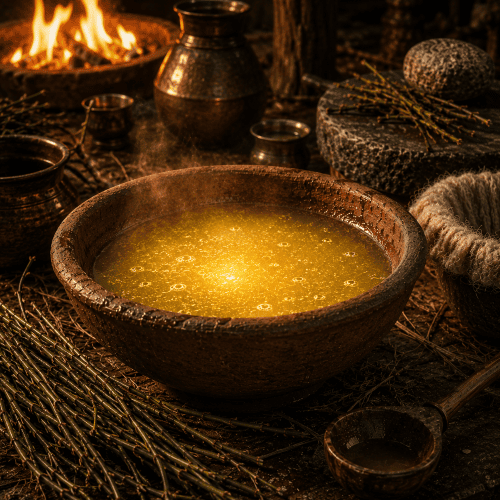
Its characteristic golden-green colour carries symbolic meaning as well. Gold represents divine light and purity, while green reflects growth, fertility, and the life-giving power of nature. Together, these qualities reinforce Haoma’s role as a bridge between the earthly world and the divine realm.
Origin and Source
According to Zoroastrian tradition, Haoma grows high in sacred mountains, far removed from ordinary human habitation. These elevated locations emphasize its divine origin and its separation from everyday life. Mythological texts also describe a celestial White Haoma connected with Gaokerena, the mythical Tree of All Seeds that stands within the cosmic sea Vourukasha. At the end of time, this sacred plant will play a role in the Frashokereti, the final renewal of creation, granting immortality to the righteous.
The identity of the historical Haoma plant has remained a subject of scholarly debate for more than a century. Today, the strongest evidence points toward species of Ephedra, which continue to be used by many Zoroastrian communities in Iran and India. Archaeological discoveries in Central Asia have also strengthened this theory by uncovering traces of Ephedra in ancient ritual contexts.
Alternative candidates, including Peganum harmala (Syrian Rue), Amanita muscaria, and combinations of multiple plants, have occasionally been proposed. However, none has gained the same level of academic acceptance as Ephedra. The exact botanical identity therefore remains uncertain, adding another layer of intrigue to Haoma’s enduring legacy.
Maker or Provider
Haoma is unusual because the deity and the sacred substance are inseparable. In mythology, Haoma himself is the divine provider of the ritual drink, embodying the sacred power contained within the plant. This reflects a broader Indo-Iranian belief that certain natural elements possess living spiritual identities rather than merely symbolic significance.
Within Zoroastrian worship, specially trained priests prepare the drink during the Yasna ceremony. The preparation is governed by strict ritual purity, with prayers accompanying each stage of the process. The resulting sacred liquid, known as parahaoma, is not viewed as an ordinary beverage but as a consecrated offering through which divine blessings flow into both the ritual participants and the wider world.
Recipe and Content
Preparing Haoma is an act of worship rather than simple food preparation. During the Yasna ceremony, priests traditionally pound fresh Haoma twigs in a mortar before mixing the extracted juice with pure water. Pomegranate twigs also form part of the ritual preparation, and milk is incorporated during later stages of the ceremony according to established liturgical practice.
Every element of the preparation is accompanied by the recitation of sacred Avestan prayers. The ritual sequence is considered just as important as the ingredients themselves because the sanctity of the drink comes from both its physical components and its ceremonial consecration.
Unlike modern alcoholic beverages, Haoma is not described in Zoroastrian texts as causing drunkenness. If Ephedra was indeed the original plant, its stimulant properties would have promoted alertness and physical energy rather than hallucinations. Although modern comparisons with psychoactive brews such as ayahuasca are common, the available historical evidence does not support equating Haoma directly with visionary psychedelics.
Instances of Serving and Procurement
Haoma occupies a central role in the Yasna, the principal act of Zoroastrian worship. During the ceremony, priests prepare the sacred extract while reciting portions of the Avesta, transforming the drink into an offering dedicated to Ahura Mazda and the divine beings who uphold cosmic order.
Part of the consecrated liquid is offered during the Ab-Zohr ritual, in which water is symbolically strengthened and purified. This ceremony expresses gratitude toward creation and reflects the Zoroastrian commitment to protecting the natural world. Portions of the prepared Haoma may also be consumed by officiating priests as part of the liturgy.
Historically, obtaining the plant required journeys into mountainous regions where suitable specimens could be collected. Today, many Zoroastrian communities continue to use Ephedra imported from Afghanistan or neighbouring regions to preserve the continuity of ancient ritual practice.
Effects
Ancient Zoroastrian texts consistently describe Haoma as a source of strength, health, and spiritual renewal. Worshippers believed it promoted courage, sharpened awareness, and reinforced their commitment to righteousness. Heroes and priests alike sought its blessings, not for worldly pleasure, but for the ability to fulfil their sacred responsibilities.
Haoma was also associated with healing and fertility. The Avesta praises it for supporting physical well-being and granting worthy descendants to the faithful. These blessings were understood as gifts from the divine rather than automatic effects of consuming a medicinal plant.
Most importantly, Haoma nurtures the soul. By participating in its ritual preparation and consumption, worshippers symbolically renew their covenant with Ahura Mazda and reaffirm their place within the cosmic struggle between truth and falsehood.
Modern Influence
Although Haoma belongs to an ancient religious tradition, its influence continues today. Zoroastrian priests in Iran and among the Parsi community in India still prepare parahaoma during important religious ceremonies, preserving rituals that have survived for more than two millennia.
Outside Zoroastrianism, Haoma is most frequently compared with the Vedic Soma because both traditions preserve memories of an ancestral Indo-Iranian ritual centred on a sacred pressed plant. While modern researchers sometimes compare Haoma with entheogenic or psychoactive religious substances from other cultures, these comparisons should be made carefully. The surviving Zoroastrian texts consistently emphasise moral discipline, ritual purity, and communion with the divine rather than altered states of consciousness.
Today, Haoma continues to attract historians, archaeologists, botanists, linguists, and religious scholars alike. Its enduring mystery reminds us that some of humanity’s oldest spiritual traditions still hold unanswered questions, inviting each generation to rediscover the remarkable relationship between myth, ritual, and nature.



Sources
Boyce, M. (1970). Haoma, priest of the sacrifice. In M. Boyce & I. Gershevitch (Eds.), W. B. Henning memorial volume (pp. 62–80). London: Lund Humphries.
Cotwal, F. M., & Boyd, J. W. (1991). A Persian offering: The Yasna, a Zoroastrian high liturgy. Paris: Association pour l’avancement des études iraniennes.
Guard, N. R. (1992). Ritual drink in the Iranian and Indian traditions. Retrieved from Wisdomlib: https://www.wisdomlib.org/history/essay/ritual-drink-in-the-iranian-and-indian-traditions/d/doc1458772.html
Hinnells, J. R. (1989). The Zoroastrian diaspora: Religion and migration. Oxford: Oxford University Press.
Kotwal, F. M., & Kreyenbroek, P. G. (Eds.). (1995). The Hērbedestān and Nērangestān II. Paris: Association pour l’avancement des études iraniennes.
Malandra, W. W. (1983). An introduction to ancient Iranian religion: Readings from the Avesta and Achaemenid inscriptions. Minneapolis: University of Minnesota Press.
“HAOMA ii. THE RITUALS.” (2024). In Encyclopaedia Iranica. Retrieved from https://www.iranicaonline.org/articles/haoma-ii/
“Haoma: Unveiling the mysteries of Iran’s sacred Zoroastrian botanical tradition.” (n.d.). Ethnobotany Journal. Retrieved from https://ethnobotanyjournal.org/index.php/era/article/download/6824/2153/68175
Frequently Asked Questions
What is Haoma in Zoroastrianism?
Haoma is both a sacred ritual drink and a divine being in Zoroastrianism. It is prepared during religious ceremonies and symbolizes purity, vitality, and communion with Ahura Mazda.
Is Haoma the same as Soma?
Haoma and the Vedic Soma share a common Indo-Iranian origin and many ritual similarities, but they belong to different religious traditions that developed independently over time.
What plant was used to make Haoma?
Most scholars believe the original Haoma plant was a species of Ephedra, although its exact botanical identity remains uncertain.
Is Haoma still used today?
Yes. Zoroastrian priests continue to prepare parahaoma during Yasna ceremonies, often using Ephedra obtained from regions such as Afghanistan.
Did Haoma have psychoactive effects?
Ancient texts describe Haoma as promoting strength, clarity, healing, and spiritual awareness. While some researchers have proposed psychoactive interpretations, the strongest historical evidence suggests it functioned primarily as a sacred ritual stimulant and consecrated offering rather than a hallucinogenic drink.