


Mead of Valhalla : The Endless Feast of Odin’s Warriors
| Description | |
|---|---|
| Origin | Norse Mythology |
| Availability | Eternal supply from Heiðrún |
| Associated Characters | Odin, Valkyries, Einherjar, Heiðrún |
| Symbolism | Eternal reward, Fellowship, Divine sustenance |
| Source Texts | Prose Edda, Poetic Edda |
Mythlok Perspective
In Mythlok’s Perspective, the Mead of Valhalla is less about intoxication and more about belonging. The drink represents a warrior’s acceptance into a sacred community where courage is remembered forever. Its endless flow reflects the Norse belief that honor survives death and continues into the cosmic struggle of Ragnarök. The mead transforms the battlefield’s sacrifice into eternal fellowship. A similar idea appears in other cultures. The Greek gods consumed ambrosia and nectar to maintain their divine status, while the heroes of Celtic tradition often feasted in the Otherworld’s endless halls. Like these traditions, the Mead of Valhalla turns food and drink into symbols of immortality. Yet the Norse version remains distinct because it celebrates not divine privilege, but the enduring bond between warriors who have earned their place among the gods.
Mead of Valhalla
Introduction
The Mead of Valhalla is one of the most fascinating beverages in Norse mythology. Unlike ordinary mead brewed by humans, this legendary drink flows endlessly within Valhalla, the great hall ruled by Odin. It is consumed by the einherjar, the warriors who died bravely in battle and were chosen by the Valkyries to prepare for Ragnarök, the final battle that will shape the fate of gods and mortals alike.
Although modern audiences often associate Norse mead with Viking feasting and celebration, the Mead of Valhalla represents something much deeper. It symbolizes divine hospitality, eternal reward, and the privileged status granted to heroic warriors after death. The drink is not simply a source of pleasure. It is part of a sacred cycle that sustains the chosen dead as they train, feast, and await their destiny. Through its connection to the magical goat Heiðrún and the cosmic tree Læraðr, the Mead of Valhalla occupies a unique place within Norse cosmology and remains one of the most enduring symbols of the heroic afterlife.
Mythological Context
The Mead of Valhalla exists within the legendary setting of Valhalla, known in Old Norse as Valhöll, meaning “Hall of the Slain.” According to the Poetic Edda and Snorri Sturluson’s Prose Edda, this magnificent hall stands in Asgard under Odin’s rule.
The warriors who reside there are known as the einherjar. These fallen heroes spend each day engaging in combat, sharpening their skills and preparing for Ragnarök. Despite being wounded or slain during these daily battles, they are restored by evening and gather together for grand feasts.
Food and drink within Valhalla are never exhausted. The boar Sæhrímnir is cooked each night and returns to life the following day, while the Mead of Valhalla flows endlessly to satisfy every warrior. This abundance reflects the idealized Norse vision of the afterlife, where courage in battle is rewarded with eternal honor, companionship, and celebration.
Symbolism
The Mead of Valhalla carries several layers of symbolic meaning within Norse tradition. Most importantly, it represents the reward earned through bravery and sacrifice. Only those selected by the Valkyries gain access to Odin’s hall and its endless feast.
The drink also symbolizes fellowship. In Viking society, communal drinking strengthened alliances, reinforced loyalty, and established social bonds. Within Valhalla, mead serves a similar function by uniting the einherjar as a brotherhood of warriors preparing for a common purpose.
Another important aspect of the symbolism is divine favor. The endless supply of mead demonstrates Odin’s generosity toward his chosen dead. Unlike mortal life, where resources are limited, Valhalla offers abundance without end. The mead therefore becomes a sign that the warriors have transcended ordinary existence and entered a sacred realm blessed by the gods.
Origin and Source
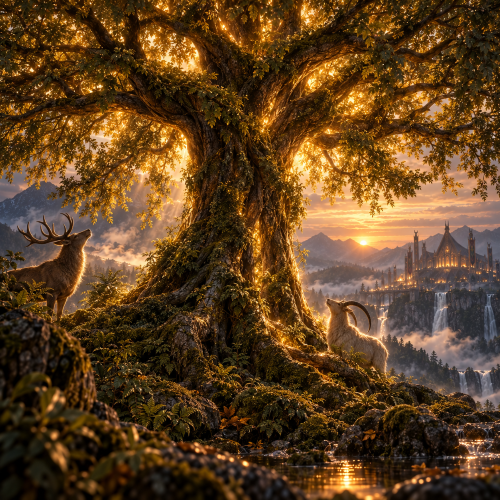
The source of the Mead of Valhalla is one of the most unusual elements of Norse mythology. According to Gylfaginning in the Prose Edda, the magical goat Heiðrún stands atop Valhalla and feeds on the leaves of a tree known as Læraðr.
As she consumes the foliage, Heiðrún produces mead from her udders rather than milk. This miraculous liquid flows continuously into a large vessel, providing enough drink for all the warriors gathered within Odin’s hall.
The exact nature of Læraðr remains debated among scholars. Some believe it may be connected to Yggdrasil, the world tree that links the Nine Realms. Whether identical to Yggdrasil or not, the association between the tree and the mead suggests that the drink originates from a cosmic source, transforming the vitality of the mythic tree into divine nourishment.
Maker or Provider
Unlike many legendary drinks that require brewing, crafting, or magical preparation, the Mead of Valhalla has no traditional maker. The goat Heiðrún functions as a living source that continuously transforms the leaves of Læraðr into mead.
While Heiðrún produces the beverage, the Valkyries serve it to the einherjar during their nightly feasts. This role reinforces their dual identity as both battlefield selectors and attendants of the heroic dead. Odin also plays an indirect role as provider. As ruler of Valhalla, he grants worthy warriors access to the hall and its blessings. Without Odin’s selection and the Valkyries’ guidance, no warrior could partake in the legendary mead.
Recipe and Content
Unlike historical Scandinavian mead, the Mead of Valhalla does not possess a recorded recipe. Traditional mead was created through the fermentation of honey, water, and yeast, often enhanced with herbs, fruits, or spices. It was widely consumed throughout the Viking Age and held both social and ceremonial importance.
The Mead of Valhalla, however, exists beyond ordinary brewing practices. Its supernatural origin bypasses fermentation entirely. Produced directly by Heiðrún after grazing on the sacred tree, it represents an idealized and divine form of mead.
Ancient texts describe it as a drink of exceptional quality and abundance, but they do not specify its flavor, strength, or ingredients. This lack of detail emphasizes its symbolic role rather than its physical composition. The focus remains on its inexhaustible nature and its ability to sustain the heroic dead.
Instances of Serving and Procurement
Every evening in Valhalla, the einherjar gather after a day of combat to enjoy food and drink together. During these nightly feasts, the Mead of Valhalla is served continuously, ensuring that every warrior can drink freely. The Valkyries act as cupbearers, distributing the mead throughout the hall. Their service reflects a long-standing tradition in Germanic and Norse culture where ceremonial drinking was closely connected with honor, hospitality, and social status.
Unlike the famous Mead of Poetry, which Odin acquires through deception and daring theft from the giant Suttungr, the Mead of Valhalla requires no quest or struggle to obtain. Access depends entirely upon a warrior’s deeds in life and their selection after death. In this sense, courage itself becomes the true price of admission.
Effects
The Mead of Valhalla serves both practical and symbolic functions within the mythology. At the most basic level, it refreshes and nourishes the einherjar after their daily battles. Beyond physical sustenance, the mead reinforces the sense of identity shared by Valhalla’s warriors. Drinking together strengthens their bond and reminds them of their place within Odin’s army.
Unlike the Mead of Poetry, there is no evidence in surviving texts that the Mead of Valhalla grants wisdom, creativity, or prophetic insight. Instead, its power lies in sustaining the heroic community and preserving the warriors’ readiness for Ragnarök. It symbolizes eternal vitality, honor, and participation in the divine order established by the gods.
Modern Influence
The Mead of Valhalla continues to inspire modern culture. Mead producers around the world frequently use imagery associated with Valhalla, Odin, and Heiðrún to connect their products with Norse heritage and warrior traditions.
Popular films, novels, television series, and video games often portray mead halls as central features of Viking culture, drawing heavily from descriptions of Valhalla. These portrayals have helped introduce new audiences to the mythology while reinforcing the connection between mead and heroic identity.
At the same time, historians emphasize that mead existed long before the Viking Age and was consumed across many cultures throughout Europe and Asia. The Mead of Valhalla therefore represents a uniquely Norse interpretation of a much older human tradition. Its enduring popularity demonstrates how myths can transform an everyday beverage into a powerful symbol of courage, community, and eternal remembrance.
Sources
Larrington, C. (Trans.). (2014). The Poetic Edda (Rev. ed.). Oxford University Press.
Pollington, S. (2003). Mead-hall: The feasting tradition in Anglo-Saxon England. Anglo-Saxon Books.
Snorri Sturluson. (1995). Edda (A. Faulkes, Trans.). Everyman.
World History Encyclopedia. (2019, January 6). Norse alcohol & the mead of poetry. https://www.worldhistory.org/article/1307/norse-alcohol–the-mead-of-poetry/
The Viking Herald. (2025, October 27). Vikings believed a goat in Valhalla would supply them with endless mead from its udders. https://thevikingherald.com/article/vikings-believed-a-goat-in-valhalla-would-supply-them-with-endless-mead-from-its-udders/80
The Wicked Griffin. (2026, January 18). The mead drink in Norse mythology: The sacred brew of the Norse gods. https://thewickedgriffin.com/mead-drink-norse-mythology/
Valhalla’s Goat. (n.d.). Mead: A definitive guide to the drink of the gods. https://www.valhallasgoat.com/mead
Norse-Mythology.org. (2017, September 19). Valhalla. https://norse-mythology.org/cosmology/valhalla/
Frequently Asked Questions
What is the Mead of Valhalla?
The Mead of Valhalla is a divine drink that endlessly nourishes the warriors living in Odin’s hall after death.
Who produces the Mead of Valhalla?
The magical goat Heiðrún produces the mead after feeding on the leaves of the sacred tree Læraðr.
Is the Mead of Valhalla the same as the Mead of Poetry?
No. The Mead of Poetry grants wisdom and inspiration, while the Mead of Valhalla serves as sustenance and reward.
Who drinks the Mead of Valhalla?
The einherjar, warriors chosen by the Valkyries after dying honorably in battle, drink the mead in Valhalla.
What does the Mead of Valhalla symbolize?
It symbolizes divine favor, eternal reward, fellowship, abundance, and the honor earned through courage.
