
Mead of Poetry : The Norse Drink of Wisdom and Creativity
| Description | |
|---|---|
| Origin | Norse Mythology |
| Availability | Mythical, Guarded by giants |
| Associated Characters | Kvasir, Fjalar, Galar, Suttungr, Gunnlöd, Odin |
| Symbolism | Poetic inspiration, Wisdom, Divine gift |
| Source Texts | Skáldskaparmál (Prose Edda) |
Mythlok Perspective
In Mythlok’s View, the Mead of Poetry represents the universal belief that creativity is not purely human but accessed through transformation. It reflects how cultures link inspiration with sacrifice and altered states of awareness. In Norse tradition, this appears through Odin’s quest, while in Greek thought it emerges through the Muses, and in Vedic traditions through divine speech like Vak. Across cultures, the message remains consistent: true expression comes from beyond the ordinary mind.
Mead of Poetry
Introduction
The Mead of Poetry is one of the most compelling ideas in Norse tradition, where creativity is not just learned but consumed. This mythical drink is said to grant anyone who tastes it the power of eloquence, wisdom, and poetic mastery. At its core, the story explains how language itself became sacred. It ties inspiration to divine origins and presents creativity as something rare, almost dangerous, and deeply transformative.
Unlike simple folklore, the Mead of Poetry is a complete narrative about how knowledge is created, stolen, and distributed. It connects gods, giants, and mortals through a single substance that turns thought into art. This makes it one of the most important myths for understanding how the Norse viewed storytelling, intelligence, and the spoken word.
Mythological Context
The story of the Mead of Poetry is preserved in the Skáldskaparmál, a section of the Prose Edda written by Snorri Sturluson. It begins after the war between the Æsir and Vanir gods. To seal peace, both sides spit into a vessel, and from this shared act, a being named Kvasir was created.
Kvasir traveled the world answering every question asked of him, embodying perfect wisdom. However, his life ended when two dwarves, Fjalar and Galar, killed him. They transformed his blood into a magical drink, setting the foundation for the Mead of Poetry. The mead eventually came into the possession of the giant Suttungr, who hid it deep inside a mountain. His daughter Gunnlöð guarded it until the god Odin devised a plan to steal it.
Symbolism
The Mead of Poetry represents more than inspiration. It reflects the Norse belief that true creativity comes from transformation and sacrifice. The drink itself is born from blood, suggesting that wisdom is not passive but earned through loss and change.
It also captures the idea that poetry is a divine force rather than a human skill. Those who possess it are not merely talented but touched by something greater. At the same time, the myth introduces a clear duality. Not all poetry is equal. The finest verses come from the pure mead, while inferior work is said to come from what Odin accidentally spilled. This distinction highlights a cultural belief that inspiration can elevate or diminish. Creativity becomes a powerful force that can shape identity, reputation, and legacy.
Origin and Source
The origin of the Mead of Poetry lies in the death of Kvasir. His blood, mixed with honey, was brewed into a powerful drink stored in three containers known as Óðrœrir, Boðn, and Són. These vessels are often interpreted as symbolic of different aspects of inspiration, from creation to expression.
The transformation from blood to mead is central to the myth. It shows how raw knowledge is refined into something shareable. The act of fermentation mirrors the process of turning experience into storytelling.
When Suttungr seized the mead from the dwarves, he hid it inside the mountain Hnitbjörg. This hidden location reinforces the idea that true wisdom is not easily accessible. It must be sought, discovered, and often taken through effort or cunning.
Maker or Provider
The original creators of the Mead of Poetry were Fjalar and Galar, but they were not its final masters. After losing the mead to Suttungr, its fate changed. Gunnlöð became its guardian, protecting it within the mountain.
The most important figure in the story is Odin, who becomes the ultimate provider of the mead. Disguising himself as a wanderer named Bölverk, he tricked Suttungr’s brother Baugi and gained access to the mountain. Using an auger, he drilled into Hnitbjörg and entered the chamber where Gunnlöð guarded the drink.
Over three nights, Odin persuaded Gunnlöð to allow him three sips. Instead, he consumed all the mead and escaped by transforming into an eagle. This act of theft is not portrayed as wrongdoing but as a necessary step in bringing wisdom to the gods and, eventually, to humanity.
Recipe and Content
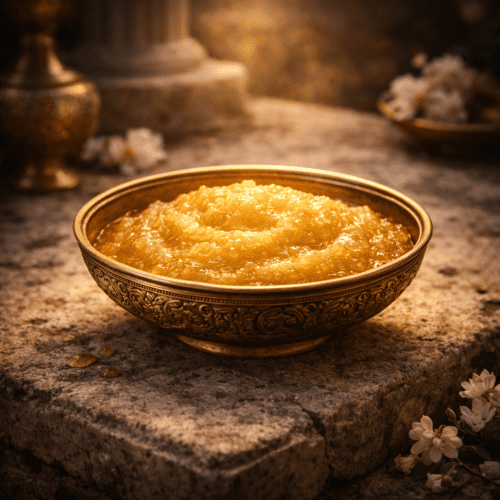
The Mead of Poetry is described as a blend of Kvasir’s blood and honey, fermented into a magical drink. While this cannot be recreated in reality, it reflects traditional Norse mead-making practices, where honey was fermented into alcohol.
What sets this mead apart is its symbolic composition. Blood represents life, memory, and knowledge, while honey represents preservation and sweetness. Together, they form a substance that captures both the intensity and beauty of creativity.
The lack of precise measurements or instructions reinforces its mythical nature. It is not meant to be reproduced but understood as a metaphor for how inspiration works. Creativity cannot be manufactured in exact terms. It emerges from a mix of experience, emotion, and transformation.
Instances of Serving and Procurement
The most significant moment involving the Mead of Poetry is Odin’s theft. After consuming it, he fled toward Asgard in eagle form, with Suttungr chasing him. As Odin reached safety, he released the mead into containers prepared by the gods.
However, some of the mead was spilled during his escape. According to the myth, this spilled portion became the source of poor poetry. This explanation adds a layer of humor while reinforcing the idea that true inspiration is rare.
Odin’s act also establishes him as the distributor of poetic ability. He shares the mead selectively, granting its power to gods and a few gifted humans. This selective distribution explains why great poets are uncommon and why their talent feels almost supernatural.
Effects
The effects of the Mead of Poetry are immediate and profound. Anyone who drinks it gains the ability to speak with clarity, compose poetry effortlessly, and understand complex ideas. It transforms ordinary individuals into scholars and artists capable of shaping culture.
Beyond skill, the mead represents access to higher knowledge. It allows individuals to connect ideas, interpret meaning, and communicate with depth. This aligns with the Norse respect for skalds, who were seen as both entertainers and keepers of history. At the same time, the myth acknowledges imperfection. Not everyone who attempts poetry achieves greatness. This reinforces the idea that true inspiration is both a gift and a responsibility.
Modern Influence
The concept of the Mead of Poetry continues to resonate today. It parallels the idea of the muse in Greek tradition, where inspiration is seen as something external and divine. In modern culture, it can also be compared to the notion of creative flow, where ideas seem to arrive effortlessly.
There are also parallels with artistic rituals involving substances, from ancient practices to modern interpretations. While these comparisons are symbolic, they highlight a consistent human belief that creativity involves altered states of perception.
Today, the Mead of Poetry survives as a powerful metaphor. It represents the pursuit of knowledge, the struggle to express ideas, and the belief that great art comes from something deeper than ordinary experience.


Sources
Lindow, J. (2002). Norse mythology: A guide to the gods, heroes, rituals, and beliefs. Oxford University Press.
Orchard, A. (1997). Dictionary of Norse myth and legend. Cassell.
Simek, R. (2007). Dictionary of Northern Mythology (A. Hall, Trans.). D.S. Brewer.
Sturluson, S. (1995). Edda (A. Faulkes, Trans.). Everyman. (Original work published ca. 1220)
Sturluson, S. (2018). The Prose Edda (J. Byock, Trans.). Penguin Classics. https://wevikings.com/library/prose-edda-snorri-sturluson/
Sundquist, S. (2021). The Mead of Poetry: Old Norse poetry as a mind-altering substance. In Essays on Norse Mythology. Academia.edu. https://www.academia.edu/44875406/The_Mead_of_Poetry_Old_Norse_Poetry_as_a_Mind_Altering_Substance
World History Encyclopedia. (2019, January 6). Norse alcohol & the Mead of Poetry. https://www.worldhistory.org/article/1307/norse-alcohol–the-mead-of-poetry/
Wikipedia contributors. (2024). Mead of poetry. Wikipedia. https://en.wikipedia.org/wiki/Mead_of_poetry
Frequently Asked Questions
What is the Mead of Poetry?
The Mead of Poetry is a mythical Norse drink made from Kvasir’s blood that grants wisdom, poetic skill, and deep knowledge.
Who created the Mead of Poetry?
The dwarves Fjalar and Galar created it after killing Kvasir and mixing his blood with honey.
Why did Odin steal the Mead of Poetry?
Odin sought ultimate wisdom and poetic power, so he used trickery to obtain and share it with gods and humans.
What happens if someone drinks the Mead of Poetry?
They instantly gain poetic talent, intelligence, and the ability to speak with great insight and creativity.
What does the Mead of Poetry symbolize?
It symbolizes divine inspiration, the value of knowledge, and the transformation required to achieve true creativity.