
Mani : The Norse Moon God Who Governs the Night Sky
Listen
At a glance
| Description | |
|---|---|
| Origin | Norse Mythology |
| Classification | Gods |
| Family Members | Mundilfari (Father), Sól (Sister) |
| Region | Norway, Sweden, Denmark, Iceland |
| Associated With | Moon |
The Mythlok Perspective
In Mythlok’s Perspective, Mani represents rhythm rather than dominance. He does not blaze like a conqueror but endures as a keeper of cycles. His myth frames time as something guided and protected, yet always vulnerable to disruption. Across cultures, lunar deities often embody similar traits. Mani’s role mirrors the Greek Selene in her celestial chariot and echoes the Japanese Tsukuyomi in his quiet authority over the night. Unlike more emotionally driven lunar figures in other traditions, Mani feels restrained and cosmic, embodying balance over passion.
Mani
Introduction
Mani is the divine personification of the Moon in Norse tradition. His story is preserved in the Poetic Edda and the Prose Edda, particularly in the works of Snorri Sturluson. In these sources, Mani is not simply a glowing object in the sky. He is a celestial being assigned a sacred responsibility: guiding the Moon across the heavens and regulating its phases.
In Norse cosmology, the sky is alive with movement and intention. The Moon does not drift randomly. Mani drives it in a chariot, maintaining rhythm in the night sky. His steady journey allows humans to measure time, observe seasons, and find reassurance in repetition. The waxing and waning of the Moon are expressions of his divine function.
Yet Mani’s path is not peaceful. He is pursued by a monstrous wolf named Hati Hróðvitnisson, who chases him relentlessly. This cosmic pursuit represents the fragile balance between order and chaos. At Ragnarök, the prophesied end of the world, the wolf is destined to catch and devour Mani, plunging the world into darkness. Until that day, Mani continues his nightly course, embodying resilience in the face of inevitable fate.
Physical Traits
Norse texts provide very little physical description of Mani. Unlike deities such as Thor or Odin, Mani’s form is not described in detail. His identity is inseparable from the Moon itself. He is luminous, cool, and reflective rather than blazing or overwhelming.
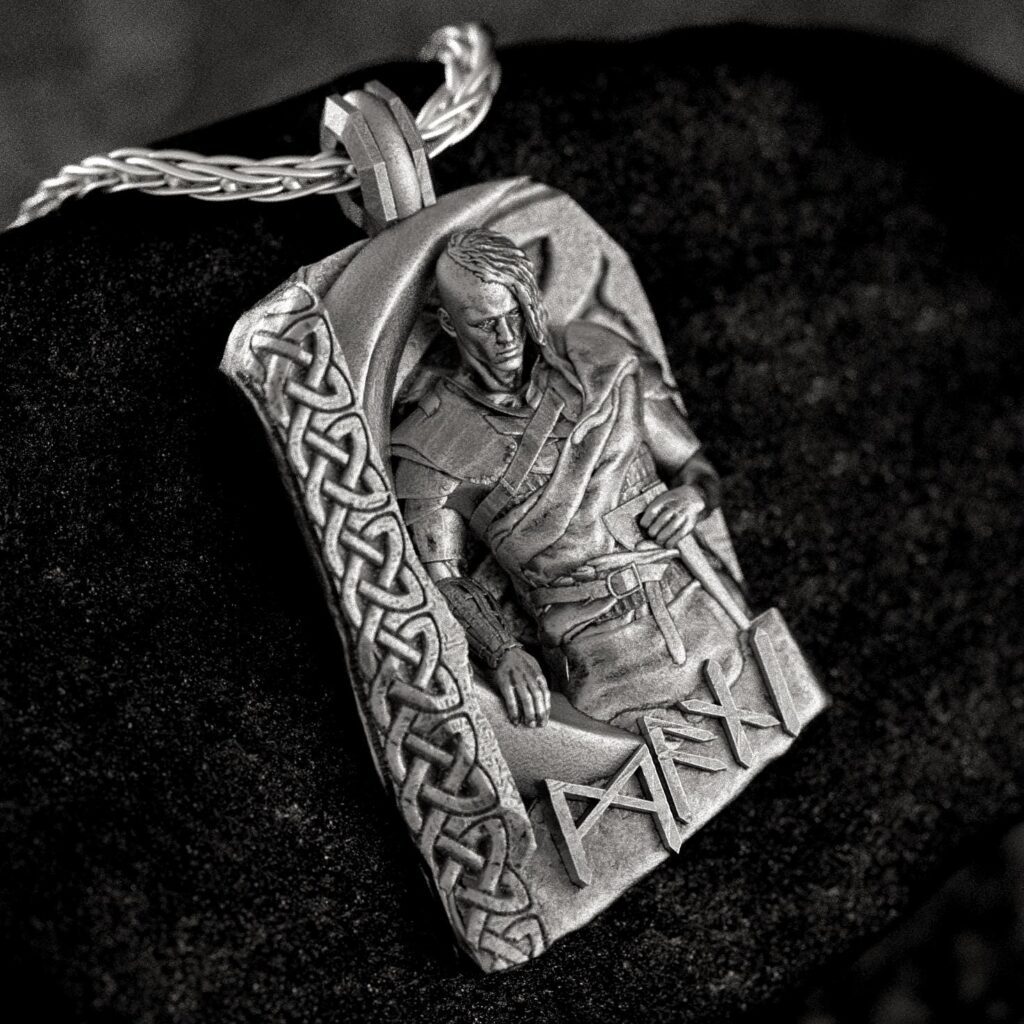
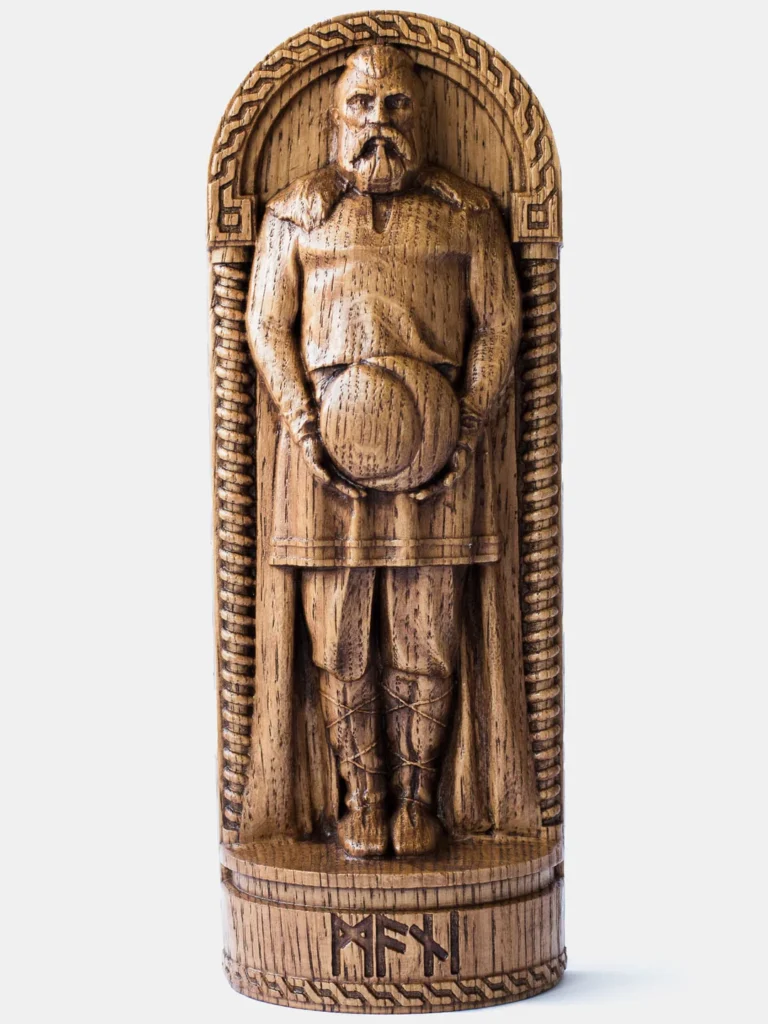
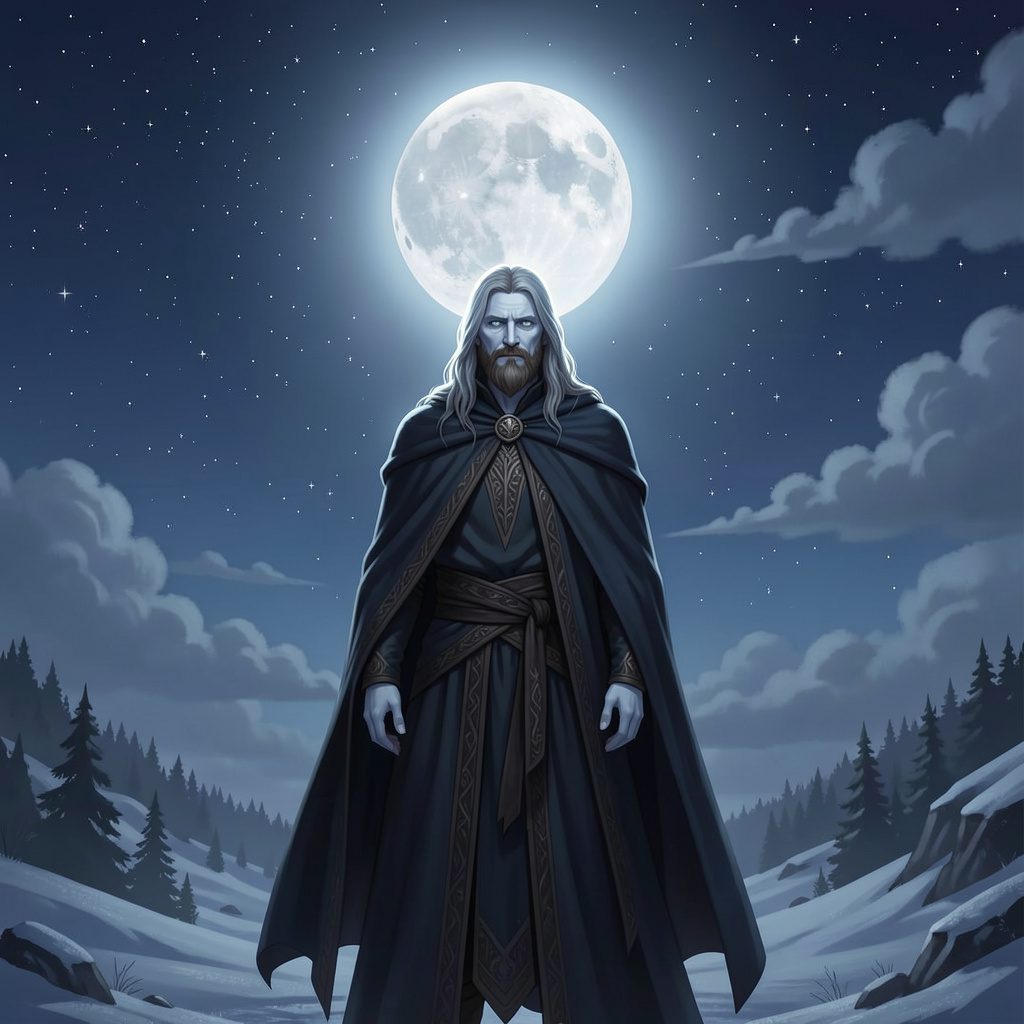
Later artistic interpretations portray him as a youthful figure guiding a chariot across the sky. This imagery mirrors that of his sister Sól, who drives the Sun. Mani’s light is softer and subtler, symbolizing contemplation and rhythm instead of intensity. He does not dominate the sky; he measures it.
The Moon’s phases define his presence. When the Moon grows, Mani appears to strengthen. When it diminishes, he seems to withdraw. These changing forms are not weaknesses but expressions of cosmic timing. His shifting appearance reminds observers that nature moves in cycles rather than straight lines.
Family
Mani’s father is Mundilfari. According to the Prose Edda, Mundilfari named his children after the Sun and Moon because of their beauty. The gods considered this prideful. As a result, they placed Mani and his sister Sól in the heavens, assigning them their celestial roles. This act transformed personal vanity into cosmic duty. Mani became responsible for steering the Moon, while Sól guided the Sun. Together, they established the structure of day and night. Their journeys create continuity in the Norse universe.
Mani is also associated with two human children, Hjúki and Bil. The Prose Edda recounts that Mani took them from Earth as they carried water from a well named Byrgir. They now accompany him in the sky. Many scholars interpret this story as a poetic explanation for the dark markings visible on the Moon’s surface. Unlike many gods, Mani has no recorded spouse or descendants in surviving sources.
Other names
The name Mani comes directly from the Old Norse word for “moon.” Linguistically, it shares roots with the English word “moon” and the German “Mond,” revealing a common Germanic heritage. In the poem Alvíssmál, part of the Poetic Edda, the Moon is described using various poetic names. Among these are “Year-teller,” emphasizing Mani’s role in timekeeping, and references that highlight the waxing and waning process. Such titles reflect how deeply lunar cycles influenced Norse society.
These alternative names are not separate identities but poetic expressions of his function. They reveal how different beings in myth—gods, giants, dwarves, and elves—perceived the Moon in their own symbolic language. Each name emphasizes rhythm, motion, and illumination.
Powers and Abilities
Mani’s principal power lies in his governance of the Moon’s movement and phases. By controlling its waxing and waning, he enables the measurement of months and seasonal change. For pre-modern societies, lunar observation was essential for agriculture, navigation, and ritual timing.
His chariot ride is a structured, ongoing act of cosmic maintenance. The wolf Hati’s pursuit keeps the tension alive, symbolizing the ever-present threat of disorder. According to prophecy, this chase will end during Ragnarök, when Mani will be devoured. The Moon’s disappearance at that moment reflects the collapse of natural order. The presence of Hjúki and Bil in the sky also connects Mani to humanity. Their story grounds his celestial role in earthly life. The Moon becomes both distant and familiar, divine yet visible to every observer.
Modern Day Influence
Mani continues to influence spiritual and cultural thought. In contemporary Heathen and Norse Pagan communities, he is honored during lunar observances. Monday, derived from “Moon’s day,” linguistically preserves his memory in modern calendars. In literature, games, and fantasy media inspired by Norse tradition, Mani appears as a symbol of calm power and cyclical wisdom. His myth resonates in environmental and ecological discussions about living in harmony with natural rhythms. The Moon remains a universal symbol of change, intuition, and reflection.
Folklore connections between Hjúki and Bil and nursery rhymes such as “Jack and Jill” suggest that Mani’s story may have echoes beyond Scandinavia. While direct links remain debated, the shared imagery of children connected to a well and elevation into the sky continues to intrigue scholars.
Related Images
Urban Legends
Glorious Epics
Mythical Events
Mythology Movies

Source
Snorri Sturluson. (1916). The Prose Edda (A. G. Brodeur, Trans.). Sacred Texts. (Original work published ca. 1220). https://www.sacred-texts.com/neu/pre/index.htm
Unknown. (n.d.). Grímnismál. In Poetic Edda. Sacred Texts. https://www.sacred-texts.com/neu/poe/poe07.htm
Unknown. (n.d.). Alvíssmál. In Poetic Edda. https://www.einherjar.org/the-poetic-edda/alvissmal/
Orchard, A. (1997). Dictionary of Norse myth and legend. Cassell.
Lindow, J. (2002). Norse mythology: A guide to the gods, heroes, rituals, and beliefs. Oxford University Press.
Simek, R. (2007). Dictionary of Northern Mythology. D.S. Brewer.
Vikingr.org. (2023). Máni: The Luminous Moon God of Norse Mythology. https://vikingr.org/norse-gods-goddesses/mani
Historylists.org. (n.d.). Máni – God of Norse Mythology. https://historylists.org/mythology/mani-god-of-norse-mythology.html
Frequently Asked Questions
What is Mani known for in Norse mythology?
Mani is known as the personification of the Moon who guides it across the sky and regulates its phases.
Who are Mani’s family members?
Mani is the son of Mundilfari and the brother of Sól, the Sun goddess.
Why is Mani chased by a wolf?
He is pursued by Hati Hróðvitnisson, symbolizing the constant tension between cosmic order and chaos.
What happens to Mani at Ragnarök?
During Ragnarök, Hati is foretold to catch and devour Mani, marking the collapse of cosmic balance.
Are Hjúki and Bil related to Mani?
They are human children taken by Mani and placed in the sky, often interpreted as figures visible on the Moon’s surface.