
Mac an Luinn : Ireland’s Mythic Weapon of Destiny
At a glance
| Description | |
|---|---|
| Mythology | Irish Mythology |
| Type | Carried |
| Power | 06/10 |
Mythlok Perspective
In Mythlok’s Perspective, Mac an Luinn represents the Celtic belief that weapons could carry spiritual purpose rather than existing solely for warfare. Irish heroes were often judged not only by strength, but by whether they were worthy to wield supernatural power. The weapon reflects a world where destiny and morality were deeply connected. Unlike many later fantasy weapons, Mac an Luinn feels unpredictable and almost alive. Its shifting identity as both sword and spear mirrors the fluid nature of oral Celtic storytelling itself. Similar themes appear in the Norse weapon Gungnir and the Japanese sword Kusanagi, where divine weapons symbolize authority granted by forces beyond humanity. Across cultures, legendary weapons become reflections of the civilizations that created them, and Mac an Luinn remains one of Ireland’s most powerful mythic symbols.
Mac an Luinn
Introduction
In Irish legend, weapons are rarely simple tools of war. They are living symbols of destiny, kingship, and supernatural power. Among the most fascinating of these mythic weapons is Mac an Luinn, the legendary blade associated with the hero Fionn mac Cumhaill and the warrior band known as the Fianna. Across the stories of the Fenian Cycle, Mac an Luinn appears as a weapon capable of turning battles, defeating monstrous enemies, and reinforcing the authority of its wielder.
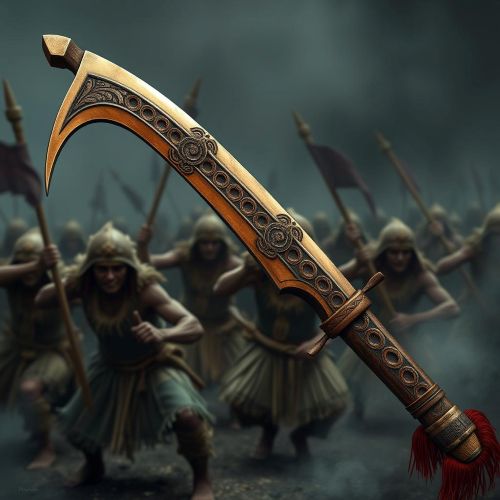
The exact nature of Mac an Luinn varies between surviving traditions. Some medieval sources describe it as a sword, while others connect it to a magical spear descended from older Irish legends. This fluidity is common in Celtic storytelling, where oral traditions evolved across centuries before being written down by medieval scribes. Despite these differences, Mac an Luinn consistently represents supernatural craftsmanship and heroic might.
The weapon’s name is often translated as “Son of the Spear” or linked to “Lúin,” an older mythic weapon from the Ulster Cycle. Scholars also connect it to the fiery spear known as the Lúin of Celtchar, suggesting that Mac an Luinn may have inherited the qualities of an earlier divine weapon. Because of this connection, the blade occupies an important place within the wider network of Irish heroic mythology.
Today, Mac an Luinn remains one of the most intriguing legendary weapons in Celtic tradition. Like Excalibur in Arthurian legend or Gram in Norse myth, it symbolizes the bond between a hero and the supernatural forces that guide fate.
Origins
The origins of Mac an Luinn are rooted in the mystical world of early Irish mythology. Traditional accounts describe the weapon as being forged by legendary smiths possessing supernatural skill. One prominent tradition attributes its creation to Lon mac Liomhtha, a master craftsman associated with the ancient Fir Bolg people. In Celtic tradition, smiths often occupied a sacred role because the act of forging metal was viewed as a form of divine transformation.
Other stories connect the weapon directly to the Otherworld, the supernatural realm inhabited by spirits, gods, and magical beings. In these accounts, Mac an Luinn was not merely crafted by human hands but shaped through enchanted fire and hidden knowledge. Such origins gave the weapon an aura of inevitability, as though it had been destined for heroic deeds long before Fionn ever wielded it.
Its name also carries mythological significance. Many scholars believe Mac an Luinn derives from the legendary Lúin of Celtchar, a terrifying spear from the Ulster Cycle known for its fiery and destructive power. The Lúin was said to burn so fiercely that it had to be cooled in vats of poison to prevent it from igniting everything around it. Medieval Irish literature frequently reused and adapted earlier mythic motifs, so Mac an Luinn may have evolved from this older weapon tradition.
This connection between the Fenian Cycle and the Ulster Cycle reveals how Irish mythology functioned as an interconnected narrative world rather than isolated stories. Heroes, weapons, and supernatural objects often reappeared across generations, creating a sense of continuity within Celtic storytelling.
Think you know your myths and legends? Dive into the world of ancient stories and test your knowledge with our engaging quizzes on Mythlok!
Powers
Mac an Luinn is remembered as one of the deadliest weapons in Irish legend because of its extraordinary supernatural abilities. Medieval texts repeatedly emphasize that it was capable of overwhelming even the strongest enemies.
One of its most famous qualities was its unmatched sharpness. The weapon was said to cut through shields, armor, and flesh with terrifying ease. Some stories describe it as leaving “no remnant from its blow,” suggesting that a successful strike was almost always fatal. This reputation transformed Mac an Luinn from a battlefield weapon into an instrument of destiny.
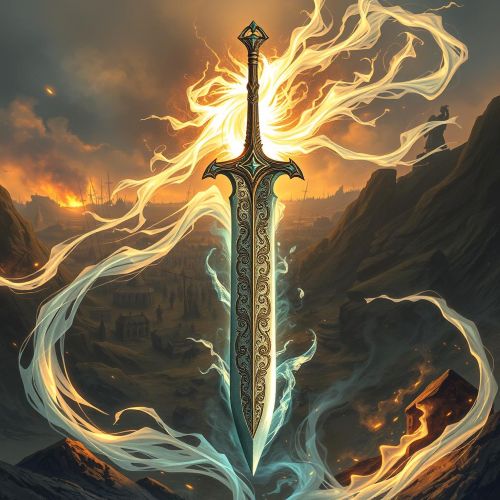
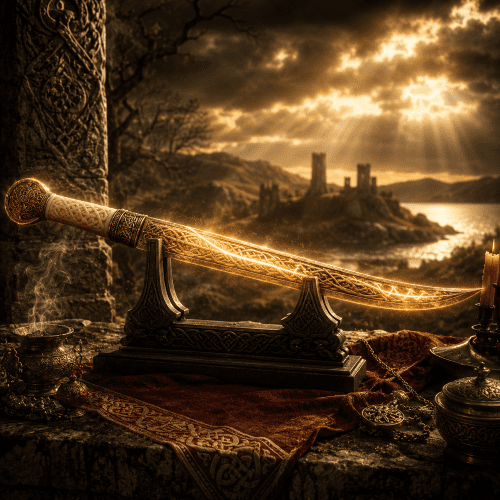
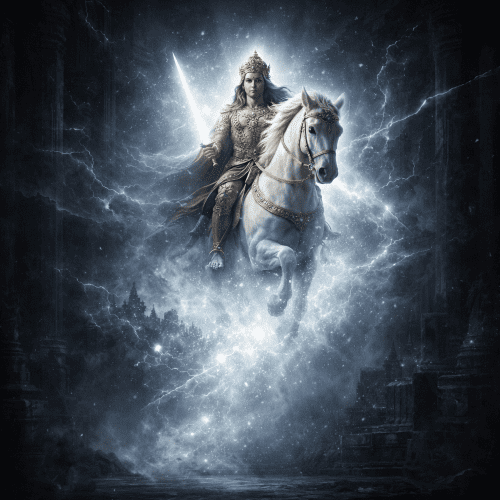
Several traditions also describe the blade as glowing or blazing during combat. This radiant appearance reflected the Celtic belief that magical weapons possessed a life force of their own. The imagery of fire and light appears repeatedly in Irish mythology, especially in stories involving divine authority or heroic transformation.
The weapon also carried anti-supernatural properties. In Irish legend, ordinary weapons were often ineffective against monsters, spirits, or magical beings. Mac an Luinn, however, could harm creatures protected by enchantment. This ability made it particularly valuable to the Fianna, whose adventures frequently involved encounters with giants, shape-shifters, and hostile beings from the Otherworld.
Some versions of the legend even suggest that the weapon possessed a will of its own. Similar to other enchanted Celtic weapons, it was believed to respond only to worthy warriors. This idea reinforced the close relationship between heroic virtue and divine favor in Irish storytelling.
Owners/Users
The figure most strongly associated with Mac an Luinn is Fionn mac Cumhaill, the legendary leader of the Fianna. Fionn stands among the greatest heroes in Irish mythology, celebrated for his wisdom, hunting skill, and military leadership. His possession of Mac an Luinn reflected both his authority and his connection to supernatural power.
Throughout the Fenian Cycle, Fionn uses the weapon while defending Ireland from invaders, monsters, and rival warriors. The blade became an extension of his identity, much like Excalibur became inseparable from King Arthur in later British tradition.
Some stories also connect the weapon to Oscar, Fionn’s grandson and one of the most tragic heroes of the Fianna. Oscar inherited the courage and strength of his grandfather, and later traditions suggest that he carried Mac an Luinn during the declining years of the Fianna. This passing of the weapon symbolized the continuation of heroic legacy across generations.
Certain medieval references additionally associate the weapon with earlier Irish kings and warriors, including figures linked to sovereignty and conquest. These shifting ownership traditions demonstrate how mythological objects evolved through oral storytelling, with different regions adapting legends to suit local heroic traditions.
Instances used
Mac an Luinn appears in several important episodes within the Fenian Cycle, usually during moments of extreme danger or supernatural conflict. The weapon often serves as the decisive factor that allows heroes to survive impossible odds.
One famous story involves Fionn battling the Ciuthach, a monstrous warrior immune to ordinary weapons. Mac an Luinn succeeds where conventional steel fails, reinforcing its reputation as a weapon capable of defeating magical enemies.
The blade also appears in stories involving the defense of Ireland against foreign invaders and hostile supernatural beings. In these tales, the Fianna operate as protectors of the land, traveling across forests, mountains, and coastlines while confronting threats beyond human understanding. Mac an Luinn symbolizes the strength needed to preserve order against chaos.
In “Duan na Ceàrdaich” or “The Lay of the Smithy,” Fionn acquires exceptional weapons from supernatural smiths before entering battle. The tale emphasizes the sacred relationship between warrior and weapon in Celtic tradition.
Some later legends describe the sword being gifted away and eventually reclaimed by Oscar. Although these stories were likely influenced by Christian-era adaptations, they reveal how Irish mythology continued evolving after the arrival of Christianity.
Source
Cross, T. P., & Slover, C. H. (Eds.). (1937). Ancient Irish tales. Barnes & Noble Books.
Jackson, K. H. (1961). The international popular tale: A closely parallel early Irish tale. Béaloideas, 30(1/4), 68-73. https://www.jstor.org/stable/20521355
MacCulloch, J. A. (1911). The religion of the ancient Celts. T. & T. Clark.
O hÓgáin, D. (2006). The lore of Ireland: An encyclopaedia of myth, legend & art. University College Dublin Press.
Wikipedia contributors. (2024). Lúin of Celtchar. Wikipedia, The Free Encyclopedia. https://en.wikipedia.org/wiki/L%C3%BAin_of_Celtchar
Breatnach, N. (1995). The Fianna and their Books. Irish Texts Society.
MacKillop, J. (2004). A Dictionary of Celtic Mythology. Oxford University Press.
Wright, G. (2015). Irish Mythology: Gods, Heroes, and Legends. The Collins Press.
Frequently Asked Questions
What is Mac an Luinn in Irish mythology?
Mac an Luinn is a legendary magical weapon associated with Fionn mac Cumhaill and the Fianna in Irish mythology.
Was Mac an Luinn a sword or a spear?
Different Irish traditions describe Mac an Luinn as either a sword or a supernatural spear linked to older Celtic legends.
Who wielded Mac an Luinn?
The weapon is primarily associated with Fionn mac Cumhaill, though later stories also connect it to Oscar and other heroes.
What powers did Mac an Luinn possess?
Mac an Luinn was believed to possess supernatural sharpness, radiant energy, and the ability to defeat magical enemies.
Is Mac an Luinn connected to the Lúin of Celtchar?
Yes. Many scholars believe Mac an Luinn evolved from the earlier Lúin of Celtchar found in the Ulster Cycle.