

Prophecy of Kalki Avatar : The Warrior Who Will End Kali Yuga
| Description | |
|---|---|
| Origin | Indian Mythology |
| Delivered By | Vishnu (as Kalki) |
| Type | Positive (restoration of dharma) |
| Outcome | End of Kali Yuga, dawn of Satya Yuga |
| Source Texts | Bhavishya Purana, Vishnu Purana, Agni Purana, Bhagavata Purana |
Mythlok Perspective
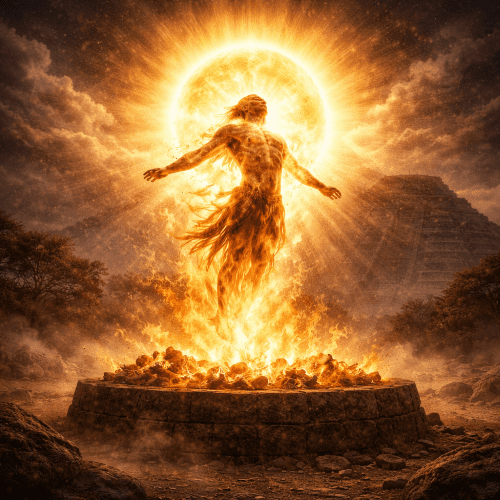
In Mythlok’s Perspective, the Prophecy of Kalki Avatar represents more than a future warrior descending from the heavens. It reflects a philosophical understanding of time itself, where destruction and renewal exist within the same cosmic rhythm. Kalki is not only a divine savior but also a symbol of the universe correcting its own imbalance. Similar archetypes appear across cultures. The returning Christ in Christianity and the Saoshyant of Zoroastrian tradition both embody the idea that history culminates in moral restoration. Even the Norse myth of Ragnarok ends with a renewed world rising from destruction. These parallels suggest that many civilizations imagined the same pattern: when darkness reaches its peak, renewal becomes inevitable.
Prophecy of a New Begining
Introduction
The Prophecy of Kalki Avatar is one of the most fascinating future visions described in Indian sacred literature. According to ancient traditions, Kalki will be the tenth and final incarnation of Lord Vishnu, destined to appear at the end of Kali Yuga, the current age of moral decline and spiritual darkness. Unlike earlier avatars such as Rama or Krishna, Kalki has not yet appeared in the world. His story belongs entirely to prophecy, anticipation, and cosmic destiny.
Indian cosmology describes time as a repeating cycle of four ages known as Yugas: Satya Yuga, Treta Yuga, Dvapara Yuga, and Kali Yuga. Each successive age represents a gradual decline in righteousness and spiritual awareness. Kali Yuga, which began after the departure of Krishna, is believed to be an era dominated by greed, dishonesty, injustice, and moral confusion. The prophecy states that when this decline reaches its most extreme point, divine intervention will occur through the arrival of Kalki.
Kalki is envisioned as a warrior who will appear riding a radiant white horse and wielding a blazing sword. His mission will be to remove the forces that corrupt society and restore the balance of dharma. Through his actions, the cycle of time will reset, allowing the world to enter Satya Yuga, the age of truth, harmony, and spiritual purity. For centuries, the Prophecy of Kalki Avatar has served as a powerful symbol of hope. It reminds believers that even during the darkest periods of human history, renewal and justice remain part of the cosmic order.
Source Texts
The prophecy concerning Kalki appears across several classical Indian scriptures, particularly within the Puranas, which contain mythological narratives, cosmological explanations, and spiritual teachings. These texts collectively provide the framework for understanding Kalki’s future arrival and mission.
One of the earliest detailed references appears in the Vishnu Purana, where Kalki is described as a divine warrior born at the end of Kali Yuga to restore righteousness. The text explains the moral conditions of the age and predicts the moment when Vishnu will incarnate again to correct the imbalance of dharma.
The Bhagavata Purana (Srimad Bhagavatam) also provides a vivid description of Kalki. In its twelfth canto, the scripture depicts a world plagued by corrupt rulers and widespread immorality. It states that Vishnu will descend in the village of Shambhala as Kalki to destroy those who abuse power and revive sacred knowledge.
Another important source is the Agni Purana, which expands upon Kalki’s role as a restorer of cosmic order. The Bhavishya Purana, whose name literally means “the Purana of the future,” contains additional references to events expected to occur toward the end of Kali Yuga.
The Kalki Purana, a later text dedicated entirely to this future avatar, provides a more elaborate narrative describing Kalki’s birth, training, battles, and eventual victory over the forces of chaos. Together, these scriptures shape the traditional understanding of the Prophecy of Kalki Avatar, presenting him as the final divine intervention within the current cosmic cycle.
The Prophecy
The Prophecy of Kalki Avatar describes a future period when society will reach its lowest moral state. Ancient texts portray the end of Kali Yuga as a time when truth becomes rare, rulers exploit their people, and spiritual traditions are forgotten or distorted.
During this period, wealth and power will replace virtue as the main measure of success. Families will fracture, compassion will decline, and religious institutions will lose their integrity. These descriptions are meant not only as predictions but also as warnings about the consequences of abandoning dharma.
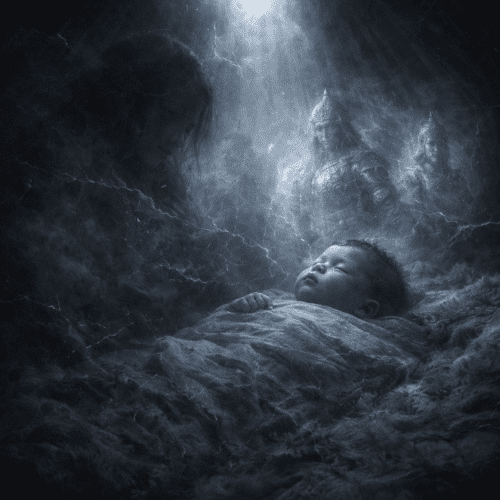
At the climax of this decline, Kalki will be born in the village of Shambhala to a Brahmin named Vishnuyasha and his wife Sumati. Despite his humble beginnings, Kalki will possess extraordinary strength, wisdom, and divine purpose. He is traditionally depicted riding a celestial white horse named Devadatta and carrying a radiant sword capable of destroying the forces of darkness. With this weapon, he will confront corrupt rulers and tyrants who have plunged the world into chaos.
The prophecy also mentions a cosmic alignment marking the transition between ages. When specific celestial bodies align, it will signal the end of Kali Yuga and the beginning of a new era. Through his actions, Kalki will remove the influence of evil and reestablish the moral foundations necessary for the return of Satya Yuga, the age when truth and virtue dominate human life.
Characters Involved
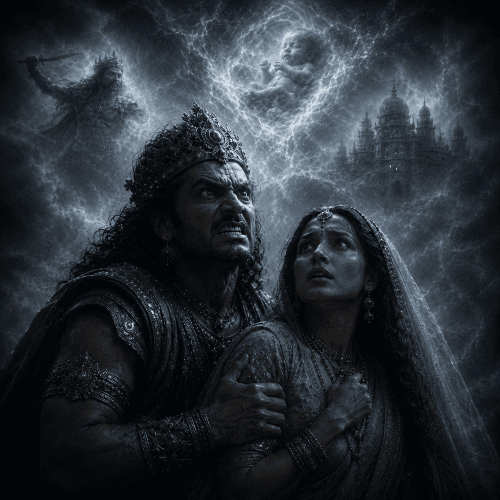
Several figures appear within the traditional accounts of the Prophecy of Kalki Avatar, each playing a role in the transformation of the world. Kalki himself is the central figure, representing the final manifestation of Vishnu’s power in the current cosmic cycle. His purpose is not merely destructive but restorative, ensuring that the universe returns to its natural moral balance. His father Vishnuyasha is described as a respected Brahmin in the village of Shambhala, while his mother Sumati represents purity and virtue. Together they symbolize the righteous lineage from which the future avatar will emerge.
According to certain traditions, Kalki will receive training from Parashurama, the immortal warrior sage and earlier incarnation of Vishnu. This mentorship emphasizes the continuity between Vishnu’s different avatars across time. Kalki’s future wife is named Padma, who is often interpreted as an earthly manifestation of the goddess Lakshmi. Their union symbolizes the restoration of prosperity and harmony once the world is purified.
The prophecy also describes adversaries such as Kali, the personification of the age of corruption, along with numerous tyrannical rulers who maintain power through injustice. Other figures include sages, divine beings, and future kings such as Maru and Devapi, who are said to survive until the end of Kali Yuga in order to help rebuild society after Kalki’s mission is complete.
Outcome
The climax of the Prophecy of Kalki Avatar marks the dramatic end of Kali Yuga. Through a series of battles and divine interventions, Kalki will remove oppressive rulers and dismantle systems built on injustice and deception. These events are described not merely as acts of destruction but as a process of purification. By eliminating corruption and restoring sacred knowledge, Kalki prepares the world for a new cycle of righteousness.
After the forces of adharma are defeated, society will gradually return to harmony. The scriptures describe humanity regaining clarity of mind, moral awareness, and spiritual discipline. Those who survive the transition will become the foundation for a new generation that lives according to the principles of dharma.
This transformation marks the beginning of Satya Yuga, the first and most virtuous age in the cosmic cycle. In this era, truth becomes universal, justice prevails, and spiritual wisdom flourishes. Once his task is complete, Kalki is believed to withdraw from the world, allowing the cosmic cycle of time to continue as it has for countless ages.
Cultural Significance
The Prophecy of Kalki Avatar has long held deep meaning within Indian philosophical and spiritual traditions. Rather than simply predicting a future event, the story reflects the broader idea that history moves through repeating cycles of decline and renewal. For many believers, Kalki represents the certainty that injustice cannot last forever. Even during periods of widespread corruption or social upheaval, the cosmic order ultimately restores balance.
The prophecy has also influenced religious art, temple traditions, storytelling, and philosophical discussions about the nature of time. In Indian cosmology, time is not linear but cyclical, meaning that destruction and rebirth are part of the same cosmic rhythm.
Because of this perspective, Kalki’s future arrival is often interpreted both literally and symbolically. Some view him as a physical figure who will appear in the distant future, while others see the prophecy as a metaphor for the moral awakening of humanity. Regardless of interpretation, the figure of Kalki continues to embody the enduring belief that dharma will ultimately triumph over chaos.
Comparative Parallels
The Prophecy of Kalki Avatar shares striking similarities with end-time traditions found in many cultures and religions. In Christianity, the Second Coming of Christ describes a future return of Jesus who will defeat evil and establish divine justice. Similarly, Islamic tradition speaks of the Mahdi, a righteous leader who appears before the Day of Judgment to restore order.
Buddhist teachings describe the arrival of Maitreya, the future Buddha who will appear when the teachings of the current Buddha have faded from the world. Like Kalki, Maitreya symbolizes spiritual renewal during a time of decline. Zoroastrianism contains the prophecy of Saoshyant, a savior who will defeat evil and bring about the final renovation of the world. These parallels reveal a universal theme across cultures: the hope that when moral decline becomes overwhelming, a transformative force will emerge to restore justice and balance.
Modern Influence
In modern times, the Prophecy of Kalki Avatar continues to inspire spiritual discussions, literature, and popular culture. Contemporary authors often reinterpret the prophecy to address modern concerns such as corruption, environmental crisis, and the loss of ethical values. Philosophical movements sometimes view Kalki not as a single individual but as a symbol of collective awakening. In this interpretation, humanity itself becomes responsible for restoring balance through ethical action and spiritual awareness.
The concept of Kalki also appears in films, novels, graphic literature, and online discussions that explore futuristic or symbolic interpretations of the prophecy. These portrayals keep the ancient narrative alive for new generations. Even outside religious contexts, the prophecy remains a powerful cultural metaphor for transformation. It reminds people that cycles of decline can eventually lead to renewal, and that the restoration of justice is an enduring hope within human civilization.

Sources
Acharya Ganesh. (2024). The Kalki Avatar role in Hinduism: A complete overview. https://acharyaganesh.com/blog/kalki-avatar/
Gayatri Heritage. (2024). Kalki – The prophesied tenth avatar of Lord Vishnu. https://gayatriheritage.com/blogs/our-blogs/kalki-the-prophesied-tenth-avatar-of-lord-vishnu
Kalki Maha Avatar. (2017). Prophesy from holy scriptures. https://www.kalkimahaavatar.org/prophesy-from-holy-scriptures/
Wikipedia. (2002). Kalki. https://en.wikipedia.org/wiki/Kalki
Dimmit, C., & Buitenen, J. A. B. van. (1978). Classical Hindu mythology: A reader in the Sanskrit Puranas. Temple University Press.
Hermann Jacobi. (1899). The Bhagavata Purana: A review. Journal of the Royal Asiatic Society.
Klostermaier, K. K. (2007). A survey of Hinduism (3rd ed.). State University of New York Press.
Rocher, L. (1986). The Puranas. Otto Harrassowitz Verlag.
Frequently Asked Questions
What is the Prophecy of Kalki Avatar?
The prophecy states that Kalki will be the final incarnation of Vishnu who appears at the end of Kali Yuga to destroy evil and restore righteousness.
Where will Kalki Avatar be born?
Scriptures such as the Vishnu Purana and Bhagavata Purana state that Kalki will be born in the village of Shambhala to a Brahmin named Vishnuyasha.
What weapon does Kalki carry?
Kalki is traditionally described as wielding a blazing sword and riding a divine white horse named Devadatta.
When will Kalki Avatar appear?
According to traditional cosmology, Kalki will appear near the end of Kali Yuga, the current age of moral decline.
What happens after Kalki arrives?
Kalki will defeat corrupt rulers and restore dharma, leading to the beginning of Satya Yuga, the age of truth and harmony.