

Arthur : Britain’s Ideal King and the Rise of Camelot
At a glance
| Description | |
|---|---|
| Origin | Arthurian Mythology |
| Classification | Mortals |
| Family Members | Uther Pendragon (Father), Igraine (Mother), Guinevere (Wife), Mordred (Son), Morgan le Fay (Half-sister) |
| Region | Great Britain |
| Associated With | Kingship, Justice, Unity, Chivalry, Warfare |
The Mythlok Perspective
From the Mythlok perspective, Arthur represents the elemental archetype of the crowned human, a ruler who stands between chaos and order rather than above it. Unlike thunder-wielding kings or divine lawgivers, Arthur’s authority is conditional, sustained only as long as justice is upheld. His fall is not punishment, but consequence. Across cultures, Arthur parallels figures such as Yudhishthira from Indian epic tradition and Romulus of Rome, rulers whose legitimacy is tested by moral choice rather than conquest alone. Where Arthur differs is in his promise of return, a mythic pause rather than an ending. In this way, Arthur becomes less a king of Britain and more a timeless symbol of leadership awaiting renewal.
Arthur
Introduction
Arthur stands at the crossroads of legend and history, emerging from early Welsh tradition as a post-Roman British war leader during the unstable centuries following the collapse of Roman rule in Britain. The earliest literary reference appears in the ninth-century Historia Brittonum, attributed to Nennius, which describes Arthur as a dux bellorum, a commander who led British forces in twelve decisive battles against invading Saxons, culminating at Mount Badon. Later, the twelfth-century chronicler Geoffrey of Monmouth reshaped Arthur into a grand imperial king in Historia Regum Britanniae, expanding his story into one of conquest, unity, and tragic downfall.
Over time, medieval romance transformed Arthur from a battlefield commander into the symbolic ruler of Camelot, a court defined by justice, chivalry, and moral aspiration. Writers such as Chrétien de Troyes and Sir Thomas Malory shifted focus toward the Knights of the Round Table, the ideals of equality, and the spiritual burden of kingship. Whether Arthur was a single historical figure or a composite of multiple leaders remains unresolved, but his narrative reflects Britain’s longing for order during an age of fragmentation. Arthur ultimately represents the idea that leadership is measured not only by strength, but by restraint, fairness, and sacrifice.
Physical Traits
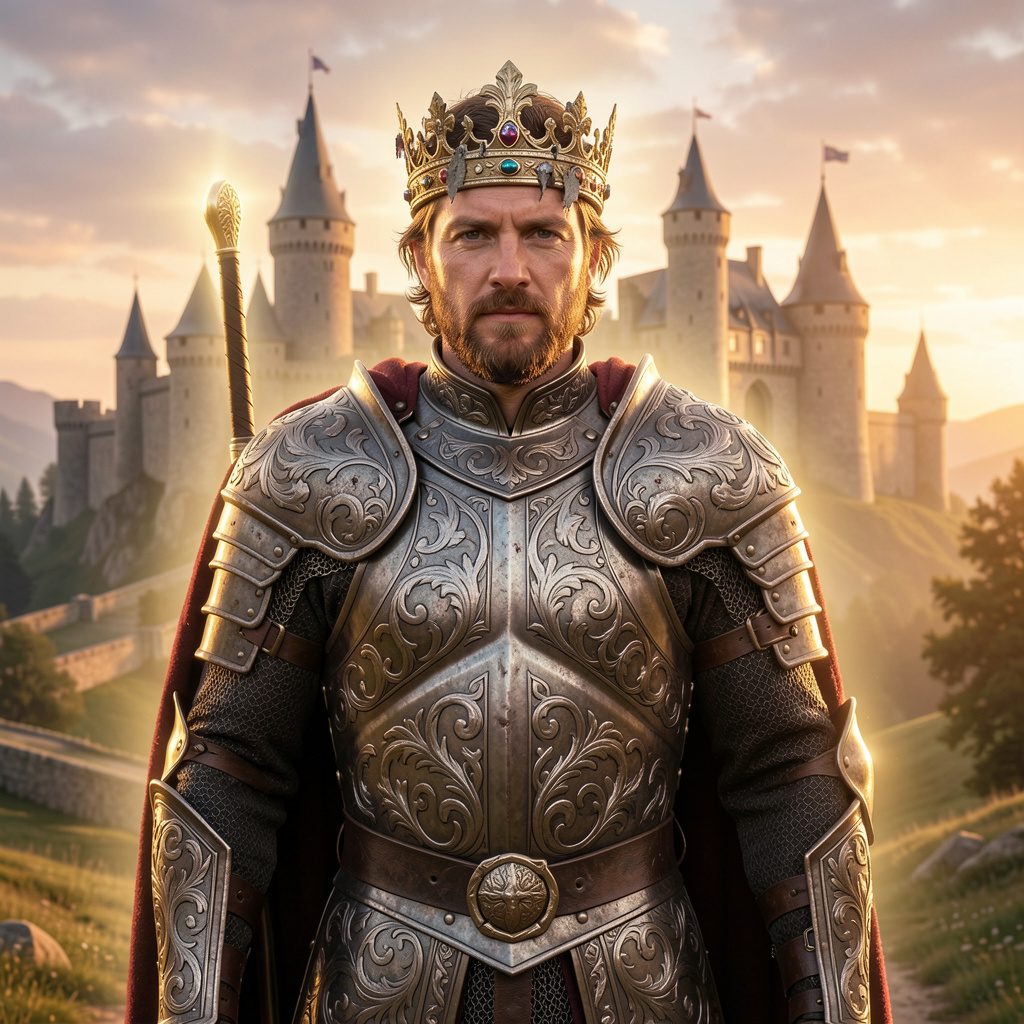
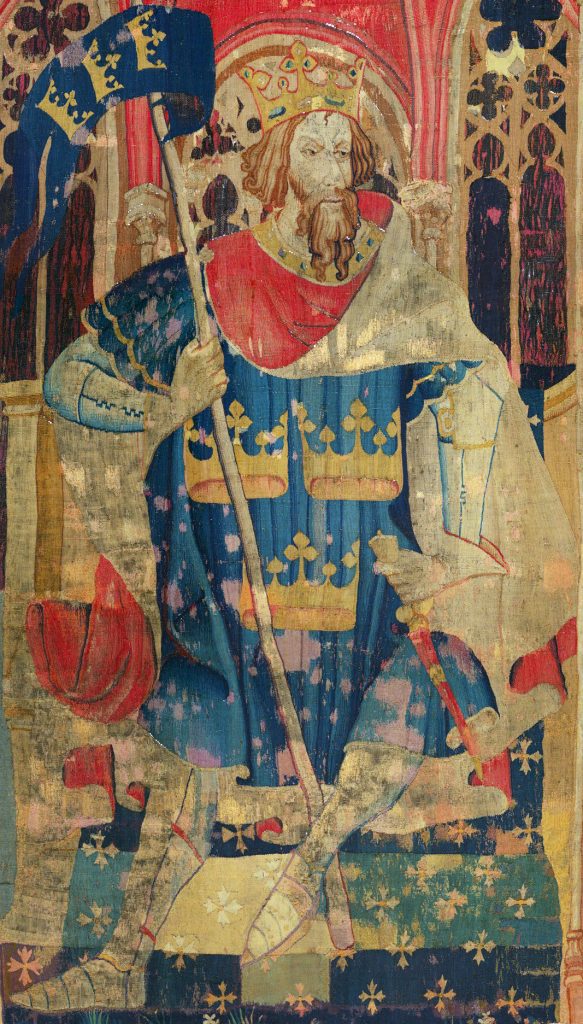
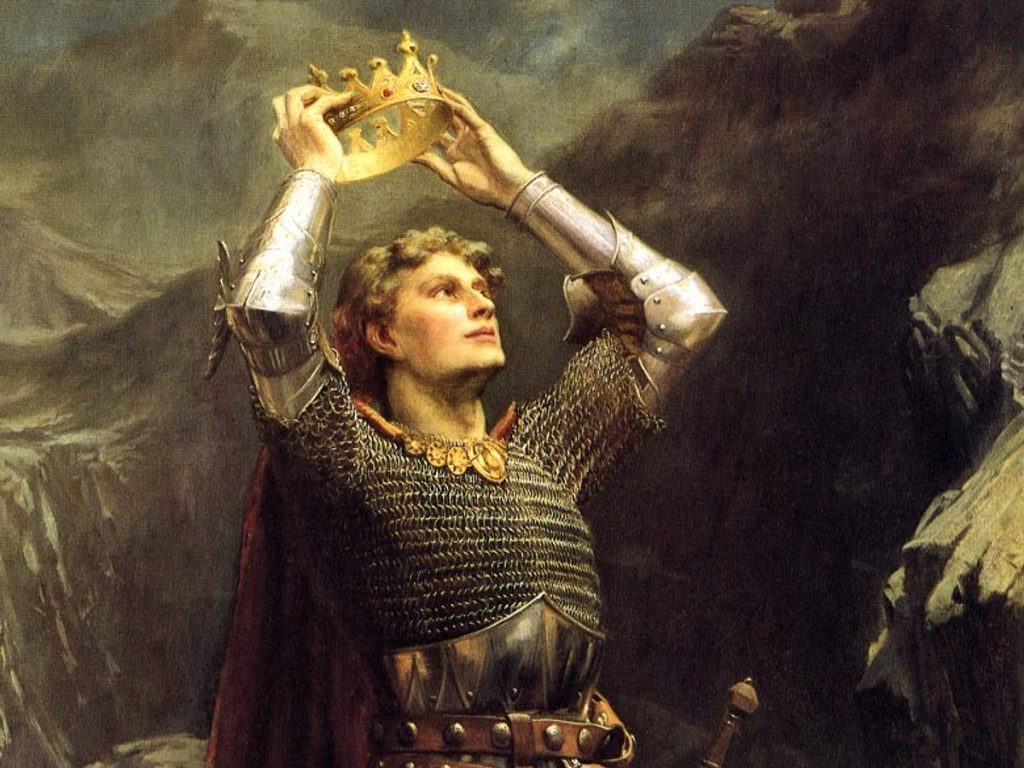
Descriptions of Arthur’s appearance vary across centuries of retellings, yet they consistently emphasize authority rather than ornamentation. Medieval romances portray him as tall and powerfully built, with broad shoulders and a commanding presence that immediately distinguishes him from other warriors. His physical strength is presented as natural and disciplined, reinforcing his suitability for kingship rather than brute dominance.
Later literary traditions refine this image further, presenting Arthur as balanced rather than exaggerated, a ruler whose body mirrors the harmony he seeks to impose upon his realm. Illuminated manuscripts frequently depict him crowned or armored, often larger than surrounding figures, visually reinforcing his role as both warrior and judge. While hair color, facial features, and clothing differ by source, Arthur’s defining trait remains his bearing. He is portrayed as a man whose authority is felt before it is announced, embodying leadership through composure as much as force.
Family
Arthur’s lineage forms one of the most complex and tragic threads of his legend. He is born to Uther Pendragon, king of Britain, and Igraine, Duchess of Cornwall, through a union orchestrated by Merlin’s magic. Conceived at Tintagel under deception, Arthur is separated from his parents at birth and raised by Sir Ector, ensuring his royal identity remains hidden until destiny reveals itself through the sword in the stone.
His marriage to Guinevere, daughter of King Leodegrance, is politically symbolic, uniting realms and bringing the Round Table to Camelot. However, this union also becomes the seed of Arthur’s downfall through Guinevere’s relationship with Sir Lancelot. Arthur’s family circle extends further into tragedy through his half-sister Morgause and his illegitimate son Mordred, conceived unknowingly through incest in many traditions. Mordred’s eventual rebellion leads directly to the Battle of Camlann, where Arthur receives his mortal wound. This familial collapse reflects a recurring theme in Arthur’s story: even the greatest kingdoms are vulnerable to internal fractures.
Other names
Arthur’s name shifts subtly across linguistic and cultural traditions, reflecting the breadth of his legend. In Latinized medieval chronicles, he appears as Arturus or Artorius, possibly derived from Roman naming conventions. Welsh genealogies refer to him simply as Arthur, while Middle English romances favor Arthour.
The title Pendragon, meaning “chief dragon” or supreme war leader, is inherited from his father and symbolizes sovereignty and martial authority. Arthur is also widely known as “the Once and Future King,” a prophetic title suggesting that his death is not final, but a withdrawal, and that he will return when Britain needs him most. This concept elevates Arthur beyond mortality, transforming him into a sleeping guardian of national identity.
Powers and Abilities
Arthur’s power lies not in innate sorcery, but in the fusion of human excellence and supernatural sanction. His greatest symbol of authority is Excalibur, the legendary sword associated either with the sword in the stone or the gift of the Lady of the Lake, depending on the tradition. Excalibur is often described as unbreakable and radiant, while its scabbard is said to prevent fatal wounds, reinforcing the idea that kingship itself protects the land.
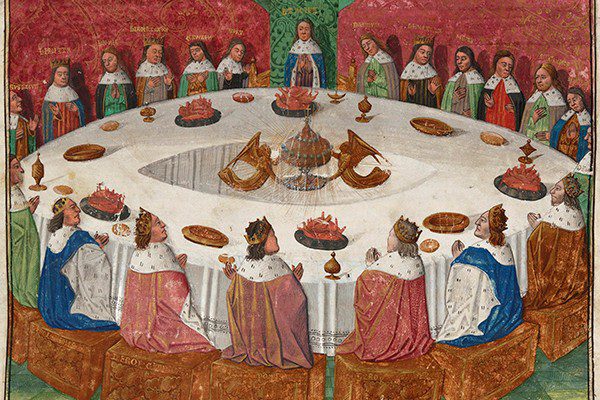
Beyond weaponry, Arthur is consistently portrayed as a master strategist and inspirational commander. He unites rival clans, enforces law among powerful knights, and presides over the Round Table as an equal rather than a tyrant. Though Merlin provides prophecy and magical guidance, Arthur’s true strength is moral gravity. His presence compels loyalty, his judgment sustains peace, and his failures reveal the cost of idealism when confronted by human desire.
Modern Day Influence
Arthur continues to shape modern storytelling across literature, cinema, and popular culture. Twentieth-century works such as T.H. White’s The Once and Future King reframed Arthur as a reflective and burdened ruler, while Marion Zimmer Bradley’s The Mists of Avalon retold the legend through marginalized voices, particularly women. Film adaptations ranging from Excalibur to The Green Knight reinterpret Arthurian themes for new generations, often emphasizing ambiguity rather than triumph.
Beyond fiction, Arthur functions as a cultural metaphor for ethical leadership. His legend is frequently invoked in discussions of governance, national identity, and moral responsibility. Locations such as Glastonbury and Tintagel continue to draw visitors seeking tangible connections to Camelot. Arthur’s endurance lies in his adaptability, serving as both ideal and warning, a reminder that unity must be constantly renewed.
Related Images




Source
Ashe, G. (1985). The discovery of King Arthur. Anchor Press/Doubleday.
Geoffrey of Monmouth. (1136). Historia Regum Britanniae. (Original work published c. 1136).
Higham, N. (2002). King Arthur: Myth-making and history. Routledge.
Malory, T. (1485). Le Morte d’Arthur. William Caxton.
Monmouth, G. (2004). The history of the kings of Britain (L. Thorpe, Trans.). Penguin Classics. (Original work published c. 1136)
Nennius. (9th century). Historia Brittonum. https://en.wikipedia.org/wiki/Historia_Brittonum
Tolstoy, N. (1985). The quest for Merlin. Little, Brown.
World History Encyclopedia. (2021, April 15). King Arthur. https://www.worldhistory.org/King_Arthur/
Frequently Asked Questions
Was King Arthur a real historical figure?
There is no definitive archaeological proof of Arthur’s existence, but he may represent a composite of post-Roman British leaders who resisted Saxon expansion.
What is Excalibur and why is it important?
Excalibur symbolizes rightful kingship and divine sanction, reinforcing Arthur’s legitimacy as ruler rather than serving only as a weapon.
Who betrayed King Arthur?
Arthur’s downfall results from multiple betrayals, most notably Mordred’s rebellion and the affair between Guinevere and Lancelot.
Where is Camelot believed to be located?
Camelot’s location is debated, with sites such as Tintagel and Cadbury Castle often proposed, though none are confirmed.
Will King Arthur return?
Many traditions describe Arthur as sleeping in Avalon, destined to return when Britain faces its greatest need.