

Sidhe : Ireland’s Hidden People of the Mounds
| Description | |
|---|---|
| Origin | Irish Mythology |
| Nature | Benevolent, Malevolent, Neutral depending on context |
| Notable Members | Aengus Óg, Brigid, Morrígan, Queen Medb |
| Symbolism | Nature’s mysteries, duality, thresholds, cultural memory |
| Epics | Tuatha Dé Danann |
Mythlok Perspective
From the Mythlok perspective, the Sidhe are not simply fairies reduced from gods, but living expressions of place-bound memory. They demonstrate how cultures preserve divinity by anchoring it to land when belief systems shift. Unlike sky-bound gods, the Sidhe endure because hills, rivers, and mounds cannot be converted or erased. Across cultures, similar patterns appear. The Sidhe mirror Norse elves who withdrew into hidden realms, and Japanese kami who never vanished but adapted to changing belief systems. In all cases, divinity survives by becoming invisible rather than extinct.
Sidhe
Introduction
The Sidhe (pronounced shee) occupy a unique and powerful place in Irish tradition, standing at the threshold between remembered gods and living folklore. The word itself comes from síd, meaning a mound or hill, referring to the ancient earthworks and burial sites scattered across Ireland. Over time, the term shifted from describing the landscape to naming the beings believed to dwell within it. The Sidhe are not decorative fairies or playful sprites but an ancient people bound to the land, memory, and sovereignty of Ireland itself. They embody a worldview in which hills breathe, time bends, and the past never truly disappears. To speak of the Sidhe is to speak of Ireland’s oldest relationship with the unseen world.
Physical Description
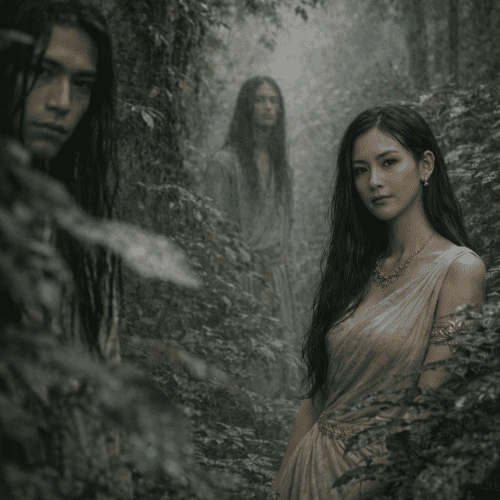
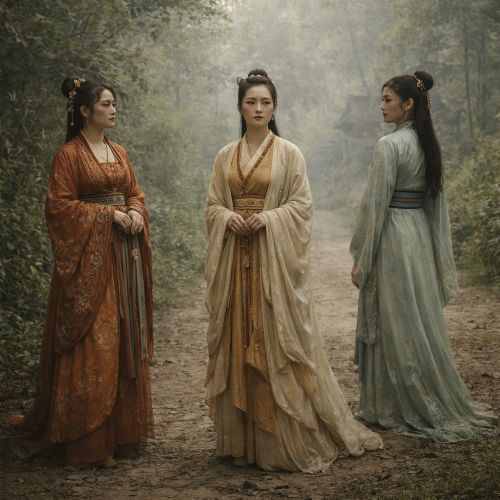
Descriptions of the Sidhe consistently emphasize their otherworldly refinement rather than fragility. They are usually portrayed as human-sized or taller, with an elegance that feels intensified rather than exaggerated. Their beauty is described as unsettling in its perfection: luminous skin, eyes that seem to reflect another sky, and hair that carries an unnatural sheen. Clothing often appears timeless, neither ancient nor modern, woven with subtle light or shifting colour. Some traditions describe a faint radiance surrounding them, while others note an uncanny stillness, as if the Sidhe exist half a moment out of sync with the mortal world. When they choose fear instead of allure, that same perfection becomes sharp, cold, and overwhelming.
Mythological Context
The Sidhe belong to the Otherworld, not as a distant afterlife but as a parallel realm that presses constantly against the human one. This realm intersects with reality at fairy mounds, lakes, stone circles, and ancient trees, particularly during liminal moments such as dusk or seasonal thresholds. Festivals like Samhain and Bealtaine were believed to thin the boundary between worlds, allowing the Sidhe to move freely among humans. Their influence extends beyond enchantment into fertility, weather, fortune, and fate. Encounters with them often involve altered time, where a single night among the Sidhe may equal years in the mortal realm, reinforcing their association with cycles rather than linear history.
Origins
The most enduring origin of the Sidhe ties them directly to the divine race known as the Tuatha Dé Danann. According to the medieval text Lebor Gabála Érenn, these beings ruled Ireland before the arrival of the Milesians, ancestors of the modern Irish. After their defeat, the Tuatha Dé Danann did not vanish but withdrew into the sídhe mounds, becoming the hidden people. This transition explains why the Sidhe possess godlike power yet remain bound to specific places. Later interpretations, influenced by Christian thought, reframed them as fallen angels or diminished spirits, but the older tradition preserves them as land-bound divinities whose authority was never fully erased.
Notable Members
Although the Sidhe are often described collectively, individual figures emerge with distinct personalities and domains. Áine appears as a radiant figure of sovereignty and summer, deeply tied to fertility and rightful rule. Manannán mac Lir stands as a master of boundaries, guiding souls and heroes between worlds with effortless command. Cliodhna rules the Sidhe of southern Ireland and embodies the dangerous beauty of the sea itself. The Banshee, whose name literally means “woman of the Sidhe,” represents their role as messengers of fate rather than agents of harm. Together, these figures show the Sidhe as rulers, guides, lovers, and witnesses to mortality.
Relationship with Other Beings
The Sidhe maintain a cautious and often tense relationship with humans. Respect brings protection, while disrespect invites swift consequence. Folklore repeatedly warns against damaging fairy mounds, refusing hospitality, or mocking the unseen, all of which could result in illness, loss, or abduction. At the same time, the Sidhe are known to form deep bonds with humans through love, patronage, or artistic inspiration. These relationships are rarely equal, as the Sidhe operate under laws older than human morality. Their interactions with other supernatural beings are less defined, but they appear to occupy a ruling tier within the Otherworld, commanding lesser spirits and ancient guardians tied to specific landscapes.
Similar Beings
Across cultures, the Sidhe find parallels among other hidden or land-bound beings. Norse elves reflect a similar duality of beauty and danger, inhabiting realms that mirror human society while remaining inaccessible. Icelandic Huldufólk echo the Sidhe’s intimate connection with rocks and hills, demanding respect for the land itself. Greek nymphs share their territorial nature, bound to specific rivers, trees, or mountains, while Japanese kami reflect the idea that place and spirit are inseparable. These similarities suggest a shared human impulse to personify landscape as conscious, powerful, and deserving of reverence.
Symbolism and Interpretations
Symbolically, the Sidhe represent continuity rather than disappearance. They are the past living alongside the present, refusing to be buried even when their worship fades. They embody the idea that land remembers its first rulers and that history leaves residues that cannot be erased. On a psychological level, they reflect humanity’s negotiation with forces beyond control: time, nature, fate, and death. Rather than moral judges, the Sidhe act as reminders that balance must be maintained, and that unseen consequences follow visible actions.
Modern Influence
The Sidhe continue to shape modern imagination, particularly in Irish literature, art, and identity. Writers of the Irish Literary Revival drew heavily on Sidhe lore to reconnect cultural memory with landscape and language. Contemporary fantasy reimagines them as high fae or ancient elves, preserving their aristocratic detachment and elemental power. Tourism across Ireland still respects fairy mounds and paths, not merely as superstition but as cultural inheritance. In modern storytelling, the Sidhe endure because they offer something rare: mystery without explanation, power without apology, and a world that refuses to be fully mapped.
Sources
Carey, J. (1999). A single ray of the sun: Religious speculation in early Ireland. Andover, MA: Celtic Studies Publications.
Evans-Wentz, W. Y. (1911). The fairy-faith in Celtic countries. London, England: Henry Frowde; Oxford University Press. https://www.gutenberg.org/ebooks/34853
Gregory, A. (1904). Gods and fighting men: The story of the Tuatha de Danaan and of the Fianna of Ireland. London, England: John Murray. https://www.sacred-texts.com/neu/celt/gfm/index.htm
Green, M. J. (1992). Dictionary of Celtic mythology and folklore. Oxford, England: Oxford University Press.
Koch, J. T. (Ed.). (2006). Celtic culture: A historical encyclopedia (Vols. 1–5). Santa Barbara, CA: ABC-CLIO.
Mac Cana, P. (1970). Celtic mythology. London, England: Hamlyn Publishing Group.
MacKillop, J. (2004). A dictionary of Celtic myth and legend. Oxford, England: Oxford University Press.
O’Donovan, J. (Ed. & Trans.). (1848). Lebor Gabála Érenn: The book of the taking of Ireland. Dublin, Ireland: Irish Archaeological Society. https://archive.org/details/leborgablare00odonuoft
Rees, A., & Rees, B. (1961). Celtic heritage: Ancient tradition in Ireland and Wales. London, England: Thames and Hudson.
Sjoestedt, M.-L. (1949). Celtic gods and heroes (M. Dillon, Trans.). London, England: Methuen.
Yeats, W. B. (1893). The Celtic twilight. London, England: Lawrence & Bullen. https://www.gutenberg.org/ebooks/4729
Frequently Asked Questions
Who are the Sidhe in Irish tradition?
The Sidhe are ancient supernatural beings associated with fairy mounds, widely believed to be the hidden descendants of Ireland’s former divine rulers.
Are the Sidhe the same as fairies?
While often called fairies, the Sidhe are traditionally portrayed as powerful, human-sized beings rather than small, whimsical sprites.
Where do the Sidhe live?
They are believed to dwell in fairy mounds, ancient hills, lakes, and other liminal places that act as gateways to the Otherworld.
Are the Sidhe good or evil?
The Sidhe are neither. Their actions follow ancient laws focused on balance, respect, and territorial boundaries rather than human morality.
Do people in Ireland still believe in the Sidhe?
Belief today is cultural rather than literal, but respect for fairy mounds and Sidhe lore remains deeply rooted in Irish identity.