

Nawia : The Mysterious Slavic Underworld of Ancestors
| Description | |
|---|---|
| Mythology | Slavic Mythology |
| Description | Green plains/swamp under World Tree |
| Ruler/Guardian | Veles, Zmey, Marzanna |
| Inhabitants | Souls of dead, Nawie, Spirits |
| Nature | Neutral |
Mythlok Perspective
In Mythlok’s Perspective, Nawia stands apart from many later underworld concepts because it treats death as part of nature’s cycle rather than eternal punishment. The realm reflects an older Slavic belief that ancestors remained spiritually connected to the living through ritual, memory, and the changing seasons. Its imagery of fertile meadows and hidden landscapes suggests that death was seen as transformation and continuity. Nawia shares similarities with the Egyptian Duat and the Celtic Otherworld through its connection to rebirth and ancestral presence, yet it remains uniquely Slavic in the way it blends agriculture, spirituality, and cosmic balance into a single vision of the afterlife.
Nawia
Introduction
Nawia, also known as Nav or Navia in different Slavic traditions, is the realm of the dead in Slavic belief systems. Unlike the fiery hells found in later religious traditions, Nawia was generally understood as a natural destination for souls after death. It represented continuation rather than eternal punishment. In Slavic cosmology, existence was often divided into three connected realms: the world of the gods, the world of the living, and the world of the dead. Nawia formed the hidden lower realm within this cosmic structure.
The word itself likely comes from the Proto-Slavic root navь, meaning “dead” or “corpse,” and related terms appear across several Slavic languages in connection with spirits and the afterlife. Although surviving pre-Christian Slavic records are limited, folklore, oral traditions, and comparative mythology provide valuable insight into how Nawia was imagined.
For many ancient Slavic communities, death was not viewed as a complete ending. The dead remained spiritually connected to their descendants, the land, and seasonal cycles. Because of this, Nawia became more than a distant underworld. It symbolized ancestry, memory, continuity, and the invisible relationship between the living and the dead.
Description
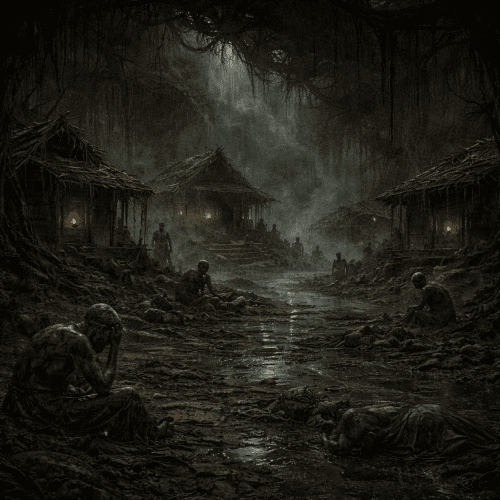
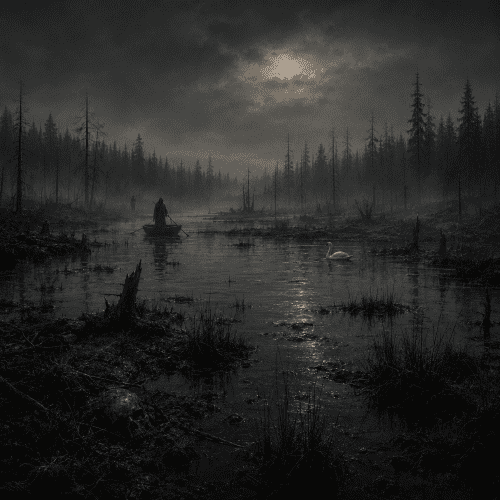
Nawia is often described as a shadowed but fertile realm located beneath the living world or at the roots of the cosmic World Tree. Some traditions portray it as a peaceful meadow where souls continue a quieter form of existence among fields, rivers, and phantom livestock. Other accounts depict it as misty, swamp-like, or separated from the living world by dangerous waters and dark forests.
This variation exists because Slavic mythology was never fully centralized. Different tribes and regions developed their own interpretations of the underworld. Despite these differences, several recurring themes remain consistent. Nawia is usually connected to nature, fertility, and cyclical renewal rather than endless suffering.
Many stories describe the realm as eternally green, even during winter in the human world. This imagery reflects the agricultural worldview of early Slavic societies, where death and rebirth were inseparable parts of nature’s rhythm. Crops died and returned each year, and human life was understood through similar cycles.
In reconstructed Slavic cosmology, Nawia is frequently paired with Jawia, the world of the living, and Prawia, the divine order of the gods. Together, these realms formed a balanced universe connected through cosmic harmony.
Ruler/Guardian
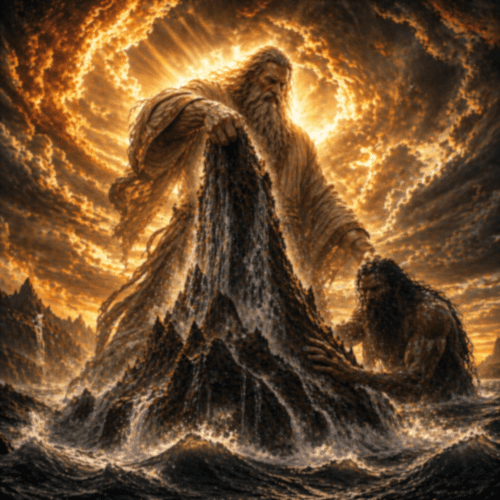
The deity most strongly associated with Nawia is Veles, one of the most important gods in Slavic mythology. Veles was connected with the underworld, cattle, magic, wisdom, trade, and spiritual knowledge. Unlike later depictions of demonic rulers of hell, Veles was not viewed as purely evil. Instead, he acted as a guardian of hidden realms and a protector of souls.
In Slavic cosmology, Veles often existed in opposition to the thunder god Perun. While Perun ruled the sky and celestial order, Veles governed the earth, roots, waters, and the realm below. This symbolic contrast represented balance rather than absolute good versus evil.
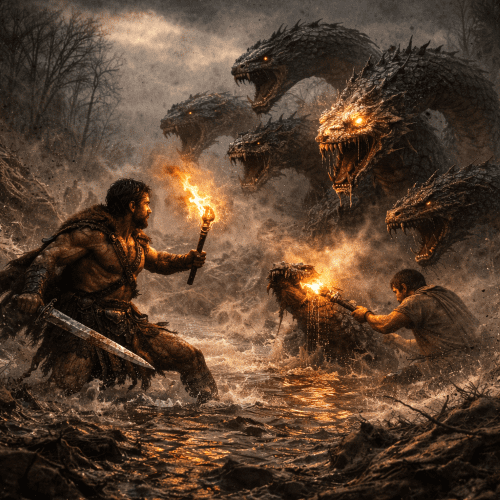
Some traditions describe Veles as a shepherd of the dead who guided souls into the afterlife. Others portray him as a gatekeeper who maintained the boundaries between the living and the dead. Serpents, dragons, and chthonic creatures are also linked to Nawia and may have served as symbolic guardians of its entrances.
The association between Veles and cattle is especially important. In ancient Slavic society, cattle represented wealth, survival, and prosperity. By connecting the underworld with livestock and fertility, Slavic belief systems reinforced the idea that death remained part of the natural order that sustained life.
Inhabitants
The primary inhabitants of Nawia are the souls of the deceased, especially ancestors who completed the proper funeral rites and spiritual transition into the afterlife. These souls were not always imagined as passive spirits. In many traditions, they continued a communal existence connected to family and land.
Some folklore describes the dead as dwelling in green pastures, tending spiritual herds, or resting among ancestral communities. Ancestors remained important to Slavic spiritual life because they were believed capable of influencing harvests, fertility, and family fortune.
Not all spirits within Nawia were peaceful. Slavic folklore distinguishes between honored ancestors and restless dead who failed to transition properly. Those who died violently, unexpectedly, or without proper rites could become dangerous spirits. These beings later evolved into vampire legends, revenants, and wandering ghost stories across Eastern Europe.
Figures such as the Rusalki, often linked to drowned women or restless spirits, also reflect fears surrounding improper death. Similarly, beings called Navki or Nawie were associated in some traditions with wandering spirits of the untimely dead. The diversity of these inhabitants demonstrates how Nawia was both a sacred ancestral realm and a dangerous liminal space where the boundary between life and death could become unstable.
Access
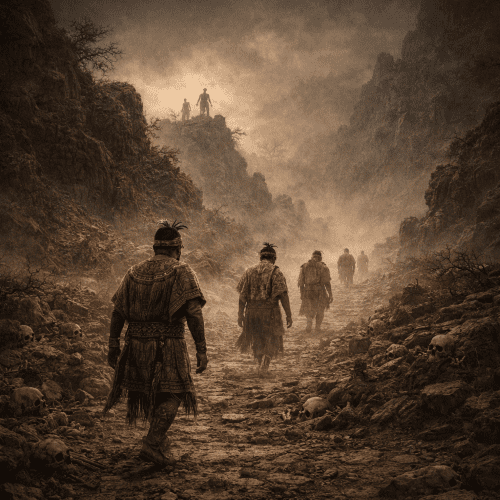
Access to Nawia is typically described as difficult and heavily symbolic. The dead were believed to cross spiritual boundaries through rivers, bridges, forests, or cosmic pathways separating the human world from the underworld.
One recurring motif involves crossing a dark river, similar to underworld journeys in many Indo-European mythologies. In some Slavic traditions, this boundary is associated with the Smorodina River and the Kalinov Bridge, which divide the realms of the living and the dead. Guardians or serpent-like creatures often protect these crossings.
Funeral rituals played an important role in ensuring safe passage into Nawia. Proper burial customs, offerings, and remembrance ceremonies helped the soul transition peacefully. Without these rites, spirits risked becoming trapped between worlds.
Slavic traditions also believed certain times of the year weakened the boundary between realms. Seasonal festivals honoring ancestors allowed symbolic communication between the living and the dead. During these moments, souls were believed capable of returning temporarily to visit their descendants. This idea reinforces that Nawia was not entirely separate from human existence. Instead, it existed alongside the living world as an unseen spiritual dimension.
Instances of Visit
Direct myths about heroes physically journeying into Nawia are relatively rare compared with Greek or Norse mythology. However, Slavic folklore frequently includes symbolic crossings into the realm of the dead through dreams, visions, rituals, and spiritual experiences.
Shamans, healers, and mystics were sometimes believed capable of communicating with spirits connected to Nawia. Folk traditions also describe individuals receiving ancestral guidance through dreams or trance-like states. These experiences functioned as temporary contact with the underworld rather than literal physical travel.
Some seasonal festivals symbolically recreated communication between realms. During ancestral remembrance rituals, families prepared offerings and meals for returning spirits. The dead were treated as continuing members of the household rather than completely absent beings.
In later folklore and modern retellings, Nawia sometimes appears as a mystical realm visited by warriors, wanderers, or spiritual seekers searching for wisdom or forbidden knowledge. These stories emphasize the underworld as a place of transformation and revelation rather than punishment alone.
Symbolism
Nawia symbolizes the continuity of existence after death and the eternal cycle connecting humans with nature. Rather than representing final destruction, the realm reflects transformation, renewal, and ancestral memory.
Its connection to fertile meadows, underground waters, livestock, and forests reveals how early Slavic societies viewed death through agricultural and ecological imagery. Just as seeds disappear beneath the soil before returning in spring, souls were believed to continue beyond visible life.
The underworld also symbolized the importance of social order and ritual responsibility. Proper funeral rites ensured balance between the living and the dead. Improper death threatened this harmony and created dangerous spiritual consequences.
The World Tree serves as another major symbol connected to Nawia. In many reconstructions, Nawia exists among the roots of this cosmic structure, linking the dead to the foundation of existence itself. This imagery reinforces the belief that ancestors remained deeply connected to the living world. Nawia therefore represents both fear and comfort. It is a mysterious land of spirits, but also a sacred reservoir of ancestry, memory, and continuity.
Comparative Analysis
Nawia shares similarities with many Indo-European underworld traditions while maintaining uniquely Slavic characteristics. Like Hades in Greek mythology, it functions as a realm where souls reside after death. However, Hades developed a far more structured moral system with distinct regions for punishment and reward.
Nawia also resembles Hel from Norse belief because both are lower realms governed by powerful chthonic figures. Yet Nawia is often portrayed as greener, more fertile, and more connected to ancestral continuity than the cold and bleak imagery commonly associated with Hel.
Unlike later Christian concepts of Heaven and Hell, Nawia was not primarily focused on eternal judgment. Moral punishment existed in some folklore traditions, especially for restless or cursed spirits, but the realm itself was generally understood as part of a natural cosmic cycle.
Its emphasis on ancestors, seasonal renewal, and fertility makes Nawia distinct among European underworld traditions. The Slavic vision of death remained deeply intertwined with land, family, and the rhythms of nature.
Modern Influence
In recent decades, Nawia has experienced renewed interest through Slavic neopaganism, folklore studies, fantasy fiction, gaming, and online mythology communities. Modern reconstructions of Slavic cosmology frequently place Nawia within the popular triad of Prawia, Jawia, and Nawia.
Fantasy writers and game developers often use Nawia as inspiration for atmospheric underworld settings centered on spirits, forests, ancestral memory, and mystical landscapes. Its imagery has become especially popular because it differs from the more familiar Western concept of hell.
Interest in Slavic cultural identity has also contributed to Nawia’s modern revival. As people explore pre-Christian traditions and folklore, Nawia serves as a symbol of ancestral heritage and spiritual continuity.
The influence of Slavic underworld beliefs can also be seen in modern vampire folklore, supernatural fiction, and dark fantasy aesthetics rooted in Eastern European traditions. Through literature, games, art, and digital media, Nawia continues to evolve while preserving echoes of ancient Slavic spiritual thought.
Sources
Vikingsons of Odin. (2025, August 25). Helheim: The frozen underworld of Norse mythology. https://vikingsonsofodin.com/helheim-the-frozen-underworld-of-norse-mythology/
Ancient Mythology. (2024, December 8). Helheim: Realm of the dead in Norse mythology.
https://ancientmythology.net/norse-mythology/helheim-realm-of-the-dead-in-norse-mythology/
Norse Mythology for Smart People. (2017, July 8). Hel (the underworld). https://norse-mythology.org/cosmology/the-nine-worlds/helheim/
Vikingr.org. (2024, November 29). The road to Hel. https://vikingr.org/norse-cosmology/helheim
Lindow, J. (2002). Norse mythology: A guide to gods, heroes, rituals, and beliefs. Oxford University Press.
Simek, R. (1993). Dictionary of Northern mythology. D.S. Brewer.
Sturluson, S. (1987). The Prose Edda (A. Faulkes, Trans.). Everyman. (Original work published ca. 1220)
Schjødt, J. P. (1994). Hel as an otherworldly realm in Old Norse mythology. Scandinavian Studies, 66(3), 257–270.
Frequently Asked Questions
What is Nawia in Slavic mythology?
Nawia is the Slavic underworld, a spiritual realm where the souls of the dead continue their existence after death.
Who rules Nawia?
The realm is most commonly associated with Veles, the Slavic god linked to the underworld, magic, cattle, and ancestral spirits.
Is Nawia similar to Hell?
No. Nawia was generally viewed as a natural realm of the dead rather than a place of eternal punishment.
How do souls reach Nawia?
Souls were believed to cross spiritual boundaries such as rivers or bridges, aided by funeral rites and ancestral rituals.
Why is Nawia important today?
Nawia remains influential in modern Slavic neopaganism, folklore studies, fantasy literature, and mythology-inspired media.