

Kasanaan : The Underworld of Judgment in Filipino Belief
| Description | |
|---|---|
| Mythology | Philippine Mythology |
| Description | Dark, ancestral underworld of spirits |
| Ruler/Guardian | Sitan |
| Inhabitants | Ancestors, Souls of the dead |
| Nature | Mixed |
Mythlok Perspective
In Mythlok’s View, Kasanaan is not merely a place of punishment but a reflection of how societies encode morality into landscape. It transforms social values into a lived afterlife, where consequence becomes environment. Unlike Naraka or Hades, which emphasize structured judgment, Kasanaan feels organic and human, mirroring everyday life in distorted form. It aligns more closely with Xibalba’s experiential trials, yet retains a uniquely Austronesian focus on community imbalance. Kasanaan ultimately represents a worldview where justice is not imposed from above but emerges naturally from one’s actions.
Kasanaan
Introduction
Kasanaan stands as one of the most compelling concepts in pre-colonial Philippine belief systems, particularly within Tagalog cosmology. It represents the lower world, a realm where souls face the consequences of their earthly actions. Unlike later interpretations influenced by colonial religion, Kasanaan originally functioned within a broader indigenous worldview that balanced morality, community harmony, and spiritual continuity.
In this cosmology, existence was layered. The upper world was often associated with divine order, the middle world with human life, and the lower world with the fate of the dead. Kasanaan specifically became known as the destination for those who lived unjust or harmful lives, in contrast to Maca, a peaceful resting place for the virtuous. Rather than a purely fire-based hell, Kasanaan reflects a distinctly Austronesian idea of justice grounded in lived experience and social ethics.
Description
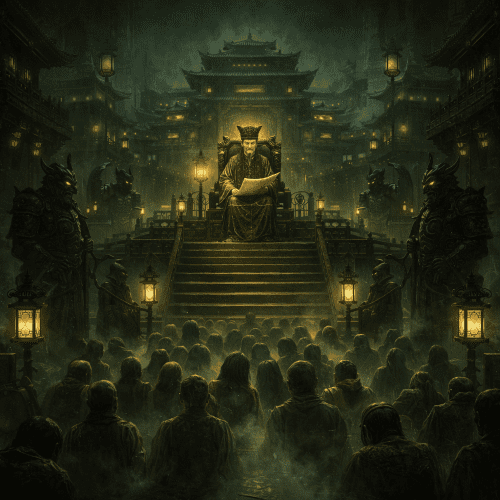
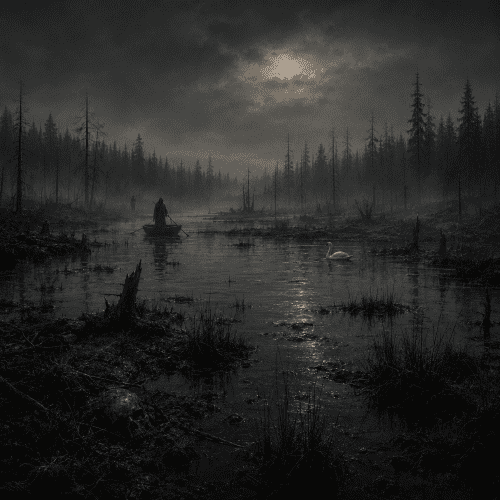
Kasanaan is best understood as a “village of affliction,” not a burning abyss but a shadowy reflection of the human world. It mirrors the structure of a barangay, yet everything within it is inverted. Instead of community, there is isolation. Instead of life, there is suffering.
Souls in Kasanaan endure punishments that often resemble the consequences of their own actions in life. Illness, decay, loneliness, and psychological torment replace flames and demons. This makes the realm feel deeply personal rather than abstract.
In broader Philippine traditions, particularly among Visayan groups, similar underworlds like Kasakitan expand this idea into multiple layers, each governed by specific forces or beings. These variations reinforce that the underworld was not a single uniform space but a complex moral landscape shaped by regional belief systems.
Ruler/Guardian
The central figure of Kasanaan is Sitan, a powerful being associated with judgment, punishment, and disorder. While often compared to later concepts of Satan, Sitan predates colonial influence and represents an indigenous embodiment of moral consequence rather than pure evil. Sitan operates within a larger cosmic order overseen by Bathala, the supreme deity. This relationship suggests that punishment in Kasanaan is not chaotic but part of a structured system of balance.
Sitan is aided by various agents who carry out specific forms of punishment. Figures such as Mangagauay, Mankukulam, and Hukloban are not random monsters but symbolic forces tied to disease, deception, and destruction. Their roles reflect fears embedded in everyday life, transforming social anxieties into mythological entities.
Inhabitants
The inhabitants of Kasanaan are primarily the souls of those who committed harmful or immoral acts during their lifetime. These include individuals who disrupted social harmony, caused suffering, or violated communal values.
These souls are not simply punished; they exist in a state of continuous consequence. Their suffering reflects the weight of their actions, reinforcing the idea that morality is not abstract but deeply tied to lived experience.
Alongside these souls are Sitan’s agents, who act as enforcers of punishment. Some traditions also hint at the presence of wandering or neutral spirits in adjacent layers of the underworld, suggesting that not all souls experience the same fate.
Access
Entry into Kasanaan occurs after death, when the soul leaves the physical world and undergoes a form of judgment. This process determines whether a soul ascends to Maca or descends into Kasanaan. Unlike Greek mythology, there is no universal ferryman or single defined path. Instead, access is often described as natural or spiritual descent, sometimes through caves, rivers, or unseen thresholds. In some traditions, spiritual intermediaries such as ancestral spirits or anitos guide the soul. The journey reflects the individual’s life, reinforcing the belief that one’s fate is self-determined rather than arbitrarily assigned.
Instances of Visit
Direct visits to Kasanaan by the living are rare in recorded myths. Unlike figures such as Orpheus in Greek tradition, Philippine narratives do not emphasize heroic descents to retrieve souls. However, shamanic practices offer a different perspective. Babaylans, or spiritual leaders, were believed to enter trance states that allowed them to traverse spiritual realms, including the underworld. These journeys were not acts of defiance but of healing, communication, and guidance. In some Visayan epics, heroes encounter underworld domains while facing powerful beings, suggesting that interaction with such realms was possible but not central to mythic storytelling.
Symbolism
Kasanaan symbolizes the moral structure of pre-colonial Filipino society. It reinforces the importance of balance, responsibility, and community harmony. Rather than representing absolute evil, it functions as a corrective force. It ensures that actions have consequences and that social order is maintained beyond death.
Its depiction as a village is particularly significant. It reflects the idea that society continues in the afterlife, but distorted according to one’s deeds. In this way, Kasanaan becomes both a warning and a reflection of human behavior.
Comparative Analysis
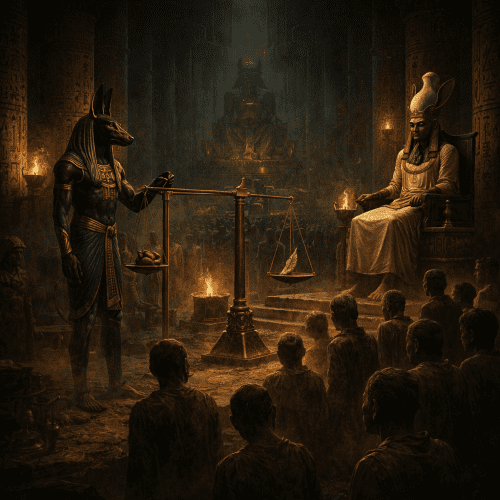
Kasanaan shares themes with other global underworlds, yet remains distinct in its structure and meaning. In Greek tradition, Hades serves as a realm of the dead with divisions for reward and punishment. Like Kasanaan, it includes judgment, but it emphasizes geography and divine bureaucracy.
In Maya belief, Xibalba presents a series of trials involving darkness, disease, and fear, closely aligning with Kasanaan’s emphasis on experiential suffering rather than fire. In Indian traditions, Naraka introduces layered punishments based on karma, but these are often temporary, unlike the more enduring consequences seen in Kasanaan.
In Norse belief, Hel represents a misty realm where not all souls are punished, reflecting a neutrality similar to the division between Maca and Kasanaan, ultimately aligning with Austronesian worldviews, where morality is tied to social harmony and the afterlife mirrors lived reality rather than abstract judgment.
Modern Influence
Kasanaan continues to shape Filipino cultural expression today. It appears in folklore, horror cinema, literature, and digital storytelling, often blended with later religious concepts. Modern platforms and cultural institutions have revived interest in indigenous beliefs, reintroducing figures like Sitan into contemporary narratives.
Festivals, academic studies, and creative works reinterpret Kasanaan not just as a place of fear but as a symbol of identity and heritage. In popular media, elements of Kasanaan merge with aswang lore and supernatural storytelling, creating a uniquely Filipino aesthetic that bridges ancient belief and modern imagination.
Sources
Aswang Project. (2022, June 1). Origins of Sitan: Deity of Kasanaan (the lower world) in Tagalog mythology. https://www.aswangproject.com/sitan/
Encyclopedia Mythica. (2008, July 6). Kasanaan. https://pantheon.org/articles/k/kasanaan.html
Aswang Project. (2022, June 1). The courts of the ancient Bisaya pantheon in Philippine mythology. https://www.aswangproject.com/ancient-bisaya-pantheon/
Landas ng Lahi. (2024, October 31). The spiritual realms of the underworld and afterlife. https://landasnglahi.com/2024/10/31/the-spiritual-realms-of-the-underworld-and-afterlife/
Eugenio, D. L. (1993). Philippine folk literature: The myths. University of the Philippines Press.
Jocano, F. L. (1969). Outline of Philippine mythology. Punlad Research House.
Plasencia, J. de. (1903). Customs of the Tagalogs. In E. H. Blair & J. A. Robertson (Eds. & Trans.), The Philippine Islands, 1493-1898 (Vol. 7, pp. 173-179). Arthur H. Clark Company. (Original work published 1589)
Kannappan, S. (1993). Cosmology in Philippine indigenous beliefs. Asian Folklore Studies, 52(1), 45-67.
Frequently Asked Questions
What is Kasanaan in Philippine belief?
Kasanaan is the Tagalog underworld where sinful souls face punishment after death, contrasting with Maca, the peaceful realm for the virtuous.
Who rules Kasanaan?
Kasanaan is ruled by Sitan, a pre-colonial deity associated with judgment and punishment of immoral souls.
Is Kasanaan similar to hell?
Kasanaan resembles hell but lacks fire imagery, focusing instead on suffering tied to personal actions and social consequences.
How do souls reach Kasanaan?
Souls enter Kasanaan after death through spiritual judgment, often guided by unseen forces based on their deeds in life.
Does Kasanaan still influence culture today?
Yes, Kasanaan appears in Filipino folklore, films, and literature, reflecting enduring interest in indigenous belief systems.